
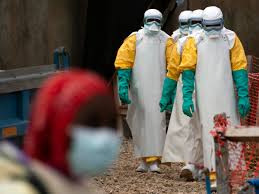
The World Health Organisation has assessed the risk of the Democratic Republic of Congo’s escalating Ebola outbreak as high at both national and regional levels, even as the United Nations health agency stopped short of declaring it a global pandemic emergency.
WHO Director General Tedros Adhanom Ghebreyesus made the assessment public on Wednesday, confirming that at least 51 cases have been officially confirmed across two eastern provinces of the DRC, specifically Ituri and North Kivu, while acknowledging openly that the true scale of the outbreak was considerably larger than confirmed figures suggested.
“WHO assesses the risk of the epidemic as high at the national and regional levels, and low at the global level,” Tedros said at a press conference held at the organisation’s headquarters in Geneva.
The outbreak has already crossed international borders. Uganda reported two confirmed cases in its capital, Kampala, including one fatality, while a United States national working in the DRC tested positive and was subsequently transferred to Germany for medical care. The cross-border spread has sharply raised the urgency of the international response.
Beyond the 51 confirmed cases, WHO disclosed that nearly 600 suspected cases and 139 suspected deaths had been recorded, figures the agency warned would continue to climb.
“We expect those numbers to keep increasing, given the amount of time the virus was circulating before the outbreak was detected,” Tedros said.
WHO technical officer on viral haemorrhagic fevers, Anais Legand, said investigations were actively ongoing to determine how long Ebola had been silently spreading before detection. “Given the scale, we are thinking that it has started probably a couple of months ago, but investigations are ongoing and our priority is really to cut the transmission chain by implementing contact tracing, isolating and caring for all suspect and confirmed cases,” she stated.
On Sunday, Tedros had declared the situation a public health emergency of international concern, the second highest level of alarm available under the legally binding International Health Regulations, triggering coordinated emergency responses across member states worldwide.
However, the WHO emergency committee, which convened on Tuesday to formally assess the outbreak, drew a critical distinction. Committee chair Lucille Blumberg, speaking from South Africa, confirmed that while the public health emergency threshold had been met, the situation did not satisfy the criteria for a full pandemic emergency declaration.
“The current situation and criteria for a public health emergency of international concern have been met, and we agree that the current situation does not satisfy the criteria for a pandemic emergency,” Blumberg told reporters.
The outbreak has simultaneously reignited tensions between the WHO and Washington. US Secretary of State Marco Rubio on Tuesday stated the WHO was “a little late” in identifying the deadly outbreak. The criticism arrives in a politically charged context. President Donald Trump, among his earliest actions upon returning to office, initiated a formal US withdrawal from the WHO, citing deep dissatisfaction with the agency’s handling of the COVID-19 pandemic.
Responding to Rubio’s remarks, Tedros suggested the criticism may reflect a misunderstanding of how international health regulations operate. “Maybe what the secretary said could be from lack of understanding of how IHR work, and the responsibilities of WHO and other entities,” he said, clarifying that the WHO functions in support of national governments rather than replacing them during outbreak responses.
Ebola, a severe and often fatal viral haemorrhagic fever, has historically caused devastating outbreaks across Central and West Africa. The eastern DRC has faced repeated Ebola episodes over the past decade, with the 2018 to 2020 outbreak in the same region ranking as the second deadliest in recorded history, claiming more than 2,200 lives.