
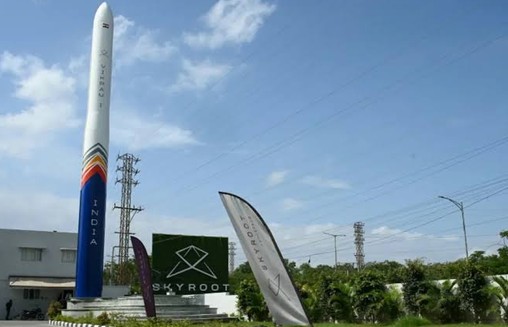
India has successfully launched its first privately built orbital rocket into space from the state-run Satish Dhawan Space Centre in Sriharikota. The four-stage Vikram-1 vehicle, developed by aerospace startup Skyroot Aerospace, successfully reached low-Earth orbit on Saturday morning. This maiden test flight makes India only the third country in the world with domestic private orbital launch capabilities, alongside the United States and China. Prime Minister Narendra Modi hailed the mission as a defining moment that will unlock massive commercial opportunities for the nation.
The seven-storey-tall rocket successfully deployed its payloads into a 450-kilometre orbit before completing its final burn. The vehicle is specifically engineered to carry small satellites weighing up to 350 kilograms, targeting a deeply constrained global market. The maiden cargo included an array of experimental items, ranging from space-debris removal arms to a lab-grown diamond. The startup hopes to break the current state monopoly on space travel by offering dedicated, rapid-response launch services to international clients. Access to space must become a simple commercial transaction.
Former space agency engineers Pawan Kumar Chandana and Naga Bharath Daka founded the Hyderabad-based startup in 2018. The enterprise gained global attention four years ago when its smaller suborbital rocket successfully pierced the edge of space. Following this initial victory, international venture funds poured capital into the company, turning it into India’s first space technology unicorn. The firm intends to run one more test flight before commencing full commercial operations next year. Global markets will likely provide eighty per cent of their future revenue.
This commercial milestone stems directly from aggressive sector reforms introduced by New Delhi in 2020. The state officially opened its tightly guarded aerospace industry to private investment to capture a larger slice of the global satellite market. The national space economy has since grown to an estimated value of eight point four billion dollars. The local market now boasts more than 400 space tech startups eager to challenge Western giants. State regulators admitted that this historic debut flight went far beyond their initial institutional expectations.
The success of the private sector complements India’s highly ambitious public space programme. The state-run space agency made global headlines last year by landing a lunar rover on the moon’s southern pole. Government planners are currently preparing deep-space exploration missions to Venus alongside an ambitious plan to construct an independent space station by 2035. Space experts believe this successful private launch will heavily boost India’s global reputation. Domestic startups are now proving they can handle the most complex machinery on earth.