
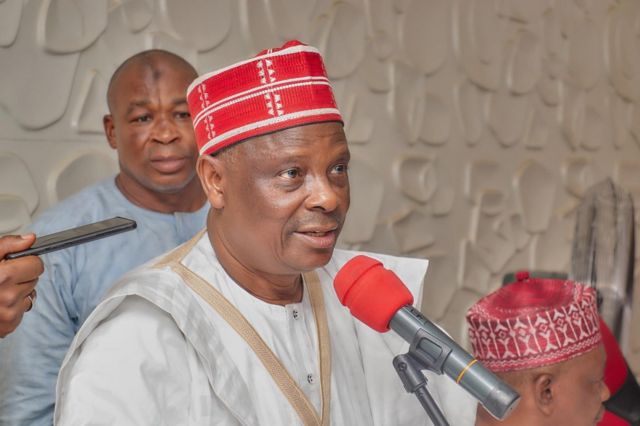
Former Kano State Governor and two-time presidential aspirant, Senator Rabiu Musa Kwankwaso, has argued that the death of former President Umaru Musa Yar’Adua in 2010 remains a turning point that fundamentally disrupted Nigeria’s informal power rotation arrangement and introduced a confusion that the country’s political system has never fully resolved.
Kwankwaso made the remarks while reflecting on Nigeria’s evolving political structure, noting that before Yar’Adua’s passing, there existed a relatively predictable pattern in the rotation of executive power between the northern and southern regions of the country, one that political stakeholders frequently referenced during negotiations and party decisions.
Yar’Adua, a Peoples Democratic Party (PDP) candidate from Katsina State, was elected President in 2007 under the platform widely seen as part of a broader zoning arrangement designed to ensure regional inclusiveness. His unexpected death in office on May 5, 2010, triggered a constitutional transition that brought his Vice President, Goodluck Jonathan of Bayelsa State in the South-South, to power, an outcome that many northern political actors argued deviated from the original sequencing of power rotation.
“The development introduced uncertainty into the zoning principle, as political actors were forced to adjust to a new reality where the expected sequence of power rotation became less predictable,” Kwankwaso was reported to have said during the engagement.
The former governor argued that many of the debates dominating Nigeria’s electoral cycles today can be traced directly to the altered expectations that followed Yar’Adua’s death. He noted that political parties have since struggled to maintain a consistent interpretation of zoning, as different groups routinely advance competing arguments rooted in regional interest and political advantage rather than a shared framework.
Kwankwaso’s remarks come at a politically significant moment. Ahead of the 2027 electoral cycle, debates over zoning and power distribution have once again intensified within major parties, including the PDP, with various interest groups invoking historical arrangements to justify their presidential and governorship aspirations.
While acknowledging the role zoning has played in managing Nigeria’s diversity, Kwankwaso stressed that the principle should not be applied at the expense of competence and governance capacity. He argued that Nigeria’s mounting challenges, including insecurity, inflation, unemployment, and infrastructure decay, demand leadership selected on the basis of vision and ability rather than regional arithmetic alone.
“Nigeria’s complex socioeconomic challenges require experienced and capable leadership that can deliver sustainable solutions across all sectors,” he stated.
Political observers have noted that Kwankwaso’s position reflects a broader tension within Nigeria’s democratic framework between the federal character principle and the practical demands of performance-based governance. The zoning arrangement, though informal and not constitutionally binding, has consistently shaped electoral outcomes and party alignments since the return to civilian rule in 1999.
Kwankwaso’s comments are expected to deepen ongoing national conversations about political equity, leadership succession, and the structural reforms needed to stabilise Nigeria’s democratic process ahead of future elections.