
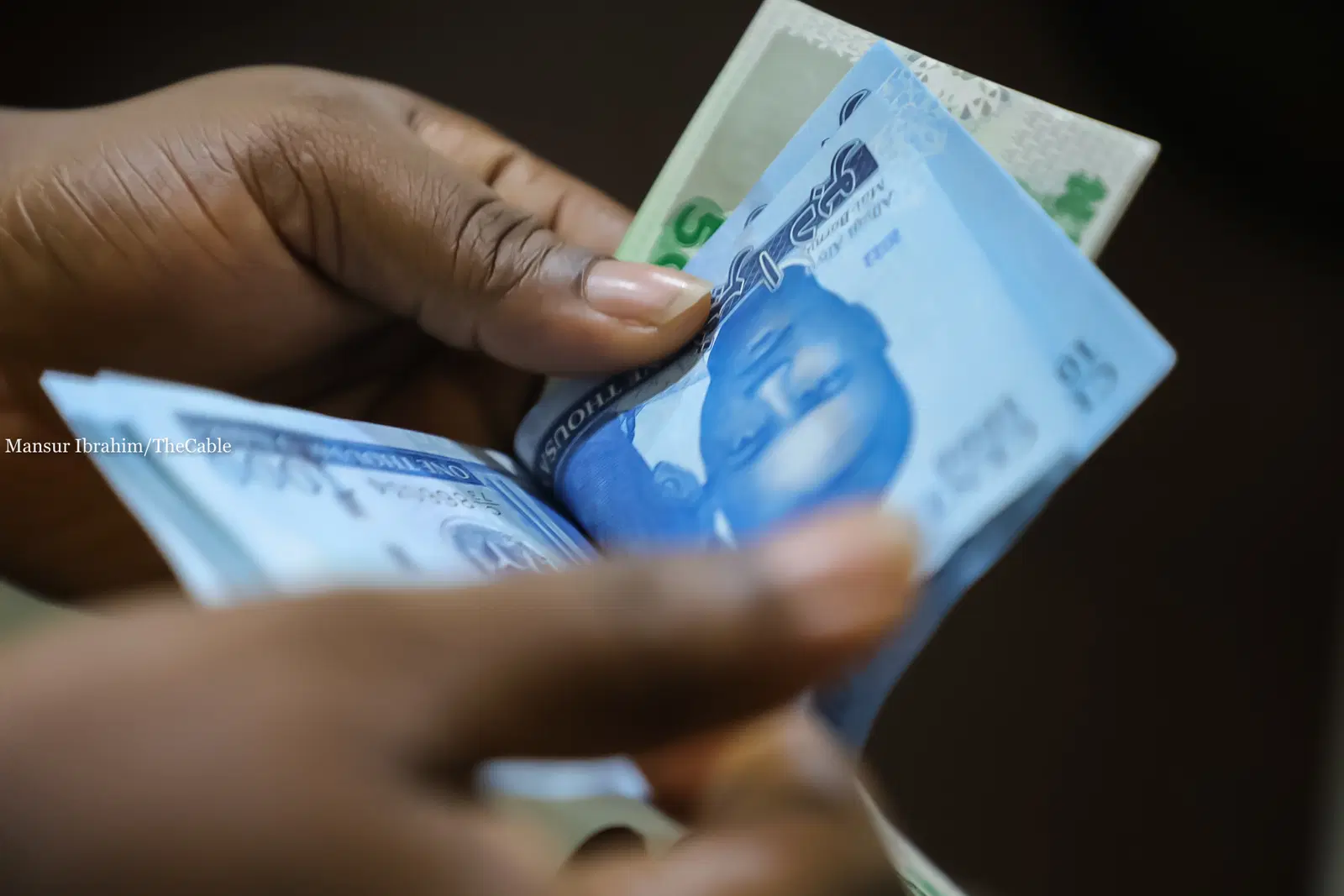
The naira strengthened in the parallel market , even as fresh official data confirmed that consumer price pressures continued to ease across the country, offering a mixed but broadly steadying picture of an economy still adjusting to more than three years of reform.
In the parallel market, the currency appreciated to about N1,380 to the dollar, from N1,390 the previous trading day, according to Central Bank of Nigeria references and independent market trackers. At the official Nigerian Foreign Exchange Market, the naira slipped marginally, with the CBN indicative rate closing at about N1,326.30 to the dollar on 14 September, and quoted around N1,329.5 in the following session, a movement of well under one per cent. The two readings pulled the market closer together, narrowing the gap between the official and street rates to roughly N50 to N54 a dollar from more than N60 earlier in the month.
Turnover told the more striking story. Interbank activity in the official window rose sharply, with data pointing to a jump of more than 170 per cent to about 262 million dollars, from under 100 million dollars in the preceding session. Thin turnover has been a recurring feature of the official market in recent weeks, with daily volumes swinging between roughly 55 million and 260 million dollars, so a single strong session should be read as a sign of liquidity returning on the day rather than a settled trend. A wider spread between the official and parallel rates generally signals unmet demand for dollars outside the formal window, so the narrowing seen on Monday, if sustained, would point to steadier supply.
The currency movement landed on the same day the National Bureau of Statistics released its Consumer Price Index report for August. Contrary to some early framing, the data did not show inflation climbing. Headline inflation eased to 15.39 per cent year on year in August, down from 15.43 per cent in July and sharply lower than the 23.14 per cent recorded in August 2025. It was the third consecutive month of moderation in the annual rate. On a month on month basis, the slowdown was more pronounced, with prices rising 0.71 per cent in August against 1.57 per cent in July, meaning the average price level was still climbing but at a much slower pace.
Food inflation, which had been the persistent sore point through the first half of the year, also turned. The year on year food rate fell to 19.57 per cent in August from 25.30 per cent a year earlier, while the monthly food figure dropped steeply to 1.02 per cent from 5.56 per cent in July. The bureau attributed the easing to changes in the average prices of items including palm oil, onions, pepper, beef, yam flour, fresh fish and frozen poultry. Core inflation, which strips out volatile farm produce and energy, fell to 13.29 per cent from 22.93 per cent a year earlier. The consumer price index itself rose to 146.3 points in August from 145.3 in July.
One important caveat applies to any comparison that reaches back beyond early 2025. The bureau rebased its price index during that period, changing the reference year and the basket of goods it tracks. That means the current single digit month on month figures and the sharply lower annual rates are not measured on exactly the same yardstick as the 30 per cent plus readings of 2024, and direct comparisons across the rebasing line overstate the scale of the improvement. The direction of travel through 2026, however, is measured consistently and points clearly downward.
The two data points speak to the same underlying question that has dominated Nigeria’s economic debate since May 2023, when the removal of the petrol subsidy and the floating of the naira triggered the steepest cost of living shock in a generation. The naira, which traded around N460 to the dollar before the float, fell past N1,600 at its weakest before recovering toward the N1,300 range at the official window through 2026. Headline inflation, which peaked above 34 per cent in the aftermath of the reforms on the old index, has since been brought down substantially, though the price of that adjustment has been borne heavily by households.
The moderation now visible in the figures does not mean prices are falling. It means they are rising more slowly. For a family that has already absorbed years of steep increases in the cost of food, transport and rent, a lower inflation rate offers relief only at the margin, since the elevated price levels reached during the shock remain in place. The Central Bank has kept its benchmark interest rate at 26.50 per cent, holding for a second straight meeting in July as it weighed the disinflation trend against the risk of renewed pressure on the currency. The Monetary Policy Committee is due to meet again on 21 and 22 September, and the August inflation reading, together with the recent firmness of the naira, will feed directly into that decision.
Analysts tracking the numbers have cautioned that the improvement remains fragile. Food prices, though easing, still account for the single largest share of the inflation basket, and any disruption to harvests, fuel supply or the exchange rate could quickly reverse the monthly gains. The naira’s strength at the official window has also coexisted with persistent demand pressure in the parallel market, where the rate has hovered between about N1,385 and N1,410 for much of September, indicating that dollar access outside the formal channels remains tight.
For now, the confluence of a firmer naira and cooling inflation gives the authorities a rare stretch of positive data to point to. Whether it hardens into a durable trend will depend on the exchange rate holding its ground, food supply staying stable through the rest of the harvest season, and the Central Bank’s next move on interest rates. The September foreign exchange figures and the bureau’s September inflation report, due next month, will be the first test of whether the steadier picture of the past three months can hold.