
Nigeria Fails US Fiscal Transparency Test For Second Year
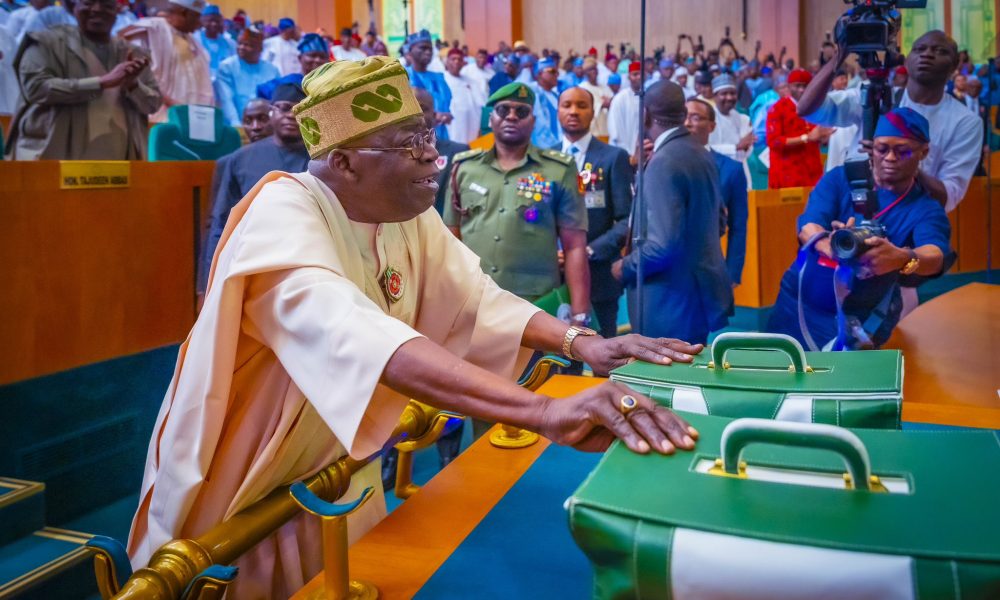
Nigeria has failed the United States’ fiscal transparency test for a second consecutive year, but the latest assessment is less about whether the country has a budget than about what citizens can actually see, verify and track after public money is appropriated.
The US Department of State’s 2026 Fiscal Transparency Report assessed 139 governments and the Palestinian Authority against minimum standards for public disclosure of government finances. Only 73 met the requirements, while 67 did not. Of those that failed, 14 made significant progress and 53, including Nigeria, were assessed as making no significant progress during the review period. The assessment covered information gathered between January and December 2025.
The distinction matters. A failed rating does not, by itself, establish corruption or prove that public money was stolen. The US State Department itself says fiscal transparency is concerned with whether governments provide enough reliable information for citizens, legislators and others to understand how public resources are raised and spent.
For Nigeria, the report identifies weaknesses at several points in the public finance chain, from budget preparation and execution to auditing and procurement.
One of the clearest concerns is budget credibility.
The 2025 US assessment described Nigeria’s budget documents as providing a substantially complete picture of planned revenue and expenditure and considered them generally reliable. The latest report says the documents reviewed did not provide a substantially complete picture and that actual revenue and expenditure did not reasonably correspond with the enacted budget.
That is an important shift.
A budget is essentially a plan. Transparency does not end when lawmakers approve it. The public also needs timely information showing what government actually collected, what it spent and how the final figures compare with the original plan.
BudgIT’s own analysis provides some context. Its review of the 2024 federal budget found that capital expenditure was significantly underexecuted in several sectors and criticised the provisional nature of parts of the budget implementation reporting. Its analysis of the 2026 proposed budget also identified vague project descriptions that could make it difficult to establish exactly what is being funded and where.
That does not independently prove every criticism in the US report, but it shows that concerns about the quality and usability of Nigerian budget information are not limited to the US government.
The report also raises a more fundamental question: who independently checks government spending?
The US assessment found that Nigeria’s supreme audit institution, the Office of the Auditor General for the Federation, did not meet the report’s standards for independence and had not published substantive audit reports within the expected timeframe.
The implication is straightforward. Parliament and citizens need an institution capable of examining government accounts independently and publishing its findings. Without that final layer of scrutiny, disclosure of budget figures alone provides only part of the accountability chain.
This is also an area where Nigeria’s transparency debate predates the current administration. BudgIT’s Open Budget Survey work has previously highlighted the need for stronger independence and resources for the Auditor General’s office.
The US report also questioned the accessibility of information about government contracts.
This matters because knowing that money has been allocated for a project is different from knowing who received the contract, for how much, under what terms and through what procurement process.
BudgIT’s 2026 budget analysis similarly identified problems with vague project descriptions, including budget lines that do not clearly identify projects or implementing institutions. Its earlier research also raised concerns about the visibility of procurement and project implementation information.
The issue is therefore not simply whether a figure appears in a budget document. It is whether that figure can be followed from appropriation to procurement, implementation and final expenditure.
The report is not an across the board rejection of Nigeria’s fiscal disclosure.
The US assessment recognised that Nigeria publishes its enacted budget and end of year report online and makes information on debt obligations, including major state owned enterprise debt, publicly available. It also recognised the legal framework governing the country’s sovereign wealth fund.
Those are meaningful positives.
The problem is that transparency works as a chain. Publishing one part of the financial record does not compensate for gaps elsewhere. If the approved budget is public but implementation data are incomplete, citizens cannot easily determine whether government delivered what lawmakers approved.
The Presidency has rejected any interpretation that the assessment represents a complete judgement on Nigeria’s public financial management.
Special Adviser to the President on Media and Public Communication, Sunday Dare, said fiscal transparency, accountability and effective public financial management remained priorities for the administration.
He argued that the US report should be understood as a specific assessment against the State Department’s minimum requirements rather than a comprehensive evaluation of every fiscal reform underway in Nigeria.
That is a relevant qualification. The report is an external benchmark, not an audit of every government account or a judicial finding of wrongdoing.
But the government’s response does not remove the specific questions raised by the assessment.
Fiscal transparency sounds technical until it affects a road that cannot be traced to a contract, a budget allocation whose implementation cannot be established, or public borrowing whose terms are difficult to scrutinise.
It also matters to investors and lenders because credible financial information reduces uncertainty about government finances.
Nigeria has made transparency reforms before. The Open Treasury initiative, for example, was introduced to make treasury information more accessible. The country has also participated in the Open Government Partnership and has institutions such as the Debt Management Office, Budget Office and NEITI that publish fiscal and extractive sector information.
Yet the recurring problem is consistency and completeness.
BudgIT’s recent work continues to identify weaknesses in budget implementation reporting and access to fiscal information. Its 2025 State Fiscal Transparency League also found persistent gaps in budget implementation reporting and procurement disclosure across Nigerian states, showing that the transparency challenge extends beyond Abuja.
The 2026 US assessment therefore presents Nigeria with a fairly specific test ahead of the 2027 budget cycle: publish clearer budget proposals on time, make implementation figures easier to reconcile with approved budgets, strengthen audit independence and publish procurement information in a form that citizens can actually use.
It is whether an ordinary citizen, legislator, journalist or investor can follow public money from the moment it is approved to the moment it is spent, audited and accounted for.
That is the gap the latest US report says Nigeria has yet to close.