
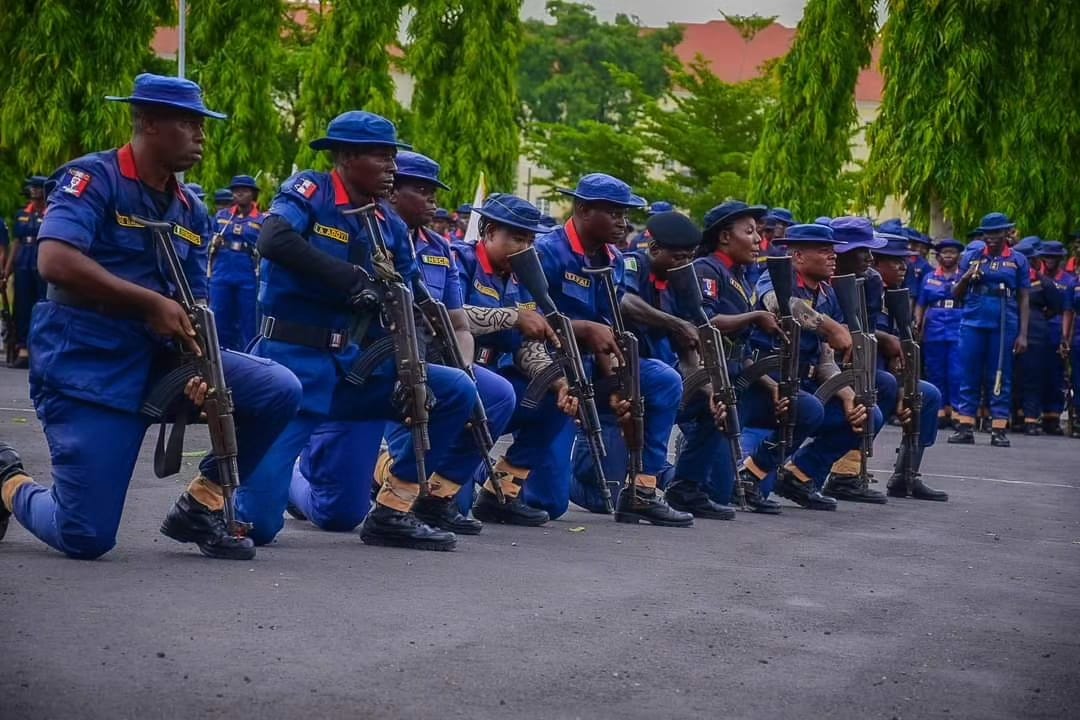
Operatives of the Nigeria Security and Civil Defence Corps rescued 15 trafficked minors who were sold for N2 million each across southern states, corps spokesman Babawale Afolabi confirmed on Friday, 4 September 2026, in Abuja. The criminal operation targeted destitute farming families in the Kokona local council area of Nasarawa State under the pretext of an academic charity. A rogue operator posing as a representative of the National Council of Child Rights Advocate took sixteen children from the Kama Madaki and Gudindi Mada settlements in January. He promised desperate parents full educational scholarships and shelter under a bogus welfare initiative dubbed the Back to School Project. Instead of classroom desks, the syndicate moved the infants through an interstate distribution pipeline, auctioning each child off as private domestic property. Cruelty wears the mask of public charity in the forgotten corners of the countryside. State welfare gaps invite predators to trade in human cargo.
The rescue operation highlights the calculated, commercial nature of modern human trafficking rings inside the federation. Led by Commander Dandaura Appollos, the Commandant General’s Special Intelligence Squad spent months deploying field tracking and technical surveillance to map out buyers. Operatives staged tactical raids across south-eastern transit hubs, pulling three children out of private residences in Anambra, Imo, and Enugu. Tactical teams recovered twelve more youngsters in coordinated sweeps along regional transport corridors, leaving only one child unaccounted for. Investigators also arrested three suspected buyers, comprising one man and two women, who are currently helping detectives unravel the wider customer list. The syndicate turned rural poverty into a lucrative trade that netted tens of millions of naira. The price of a human child now rivals the cost of a used motorcycle.
The case exposes the utter defencelessness of rural households against slick confidence men bearing forged credentials. In Kokona, parents surrendered their offspring because the state has practically abandoned public primary education in the agrarian hinterlands. Decades of chronic underfunding leave local government schools without desks, books, or teachers. When an official-sounding entity offers free schooling, indigent parents see a rare escape from generational squalor. Fraudsters exploit this deep maternal hope to harvest children from vulnerable hamlets without firing a single shot. Rural desperation lowers every natural guard. Broken public schools create an open market for child snatchers. The state fails citizens long before the kidnapper arrives.
The geographical route of the crime underlines an enduring domestic trade axis that runs from northern villages to southern cities. While armed bandits in the north-west snatch victims for quick ransom settlements, these child-buying rings operate a quiet, permanent adoption black market. Affluent urban households, illegal orphanages, and baby factories buy toddlers to meet the demands of infertile couples or acquire cheap domestic labour. Transporters move these children through interstate motor parks and security checkpoints without facing serious questions from highway patrolmen. Uniformed personnel focus on extorting cash from commercial bus drivers rather than checking suspicious travel manifests. A lorry load of stolen infants passes easily where petty bribery thrives. The domestic slave trade survives on bureaucratic indifference.
The briefing in Abuja also revealed deep institutional corruption within the security establishment itself. Corps Commandant General Ahmed Abubakar Audi confirmed the arrest of serving personnel caught diverting and selling service rifles to criminal networks. While one arm of the service chased child traffickers in the east, rogue armigers were quietly leaking lethal weapons from official armouries. The squad simultaneously smashed an interstate scrap syndicate in Delta State that stripped expensive components from telecom transmission masts. These simultaneous busts demonstrate how criminality has eaten into the very foundations of state institutions. The state cannot police the streets effectively when its own guards sell weapons to outlaws. Internal rot defeats external vigilance every single time.
Nigeria’s social safety net exists largely as an abstract talking point in Abuja conference rooms. Subnational governments allocate billions of naira to political security votes and luxury motorcades while child protection units operate without stationery or patrol vans. The National Agency for the Prohibition of Trafficking in Persons struggles with threadbare operational budgets that restrict proactive field investigations. Most trafficking cases come to light only after distraught village elders or local whistleblowers send distress petitions to federal agencies. Social welfare officers never visit remote farming hamlets to verify non-governmental welfare schemes or monitor vulnerable minors. State presence in rural areas remains almost entirely invisible. Criminals thrive wherever the sovereign presence recedes.
The federal Ministry of Humanitarian Affairs and the National Identity Management Commission must build workable biometric registries for children born in rural wards. Every non-governmental organisation claiming to run educational or welfare programmes must face mandatory biometric audits and community vetting before taking custody of any minor. State governments should criminalise the unregistered transfer of minors across provincial borders without clear judicial clearance from a family court. Security checkpoints along trunk expressways need strict instructions to inspect commercial buses carrying unaccompanied minors. The courts must now hand down deterrent prison terms to the buyers, proving that purchasing a child carries severe penalties. Buying a baby must lead straight to a prison cell. Without severe criminal penalties, human barter will remain a profitable trade.