
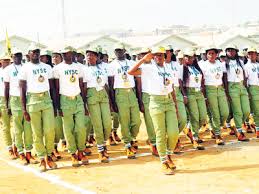
The Federal Government has approved the most far-reaching overhaul of the National Youth Service Corps since the scheme was created in 1973, extending the orientation programme from three weeks to six weeks, scrapping military drills and parades, and replacing the traditional Passing Out Parade with a graduation ceremony.
The decision was taken on Monday, June 29, 2026, at a Federal Executive Council meeting presided over by President Bola Tinubu at the State House, Abuja. The Minister of Youth Development, Ayodele Olawande, announced the changes to State House correspondents, describing them as “the first holistic review of the Scheme in its 53-year history.”
Beyond the longer camp, the reforms place the NYSC under civilian operational leadership for the first time, while the Nigerian military will continue to provide security for corps members. The council also approved a redesigned uniform meant to reflect professionalism, a technology-driven call-up process, risk-sensitive deployment, and the restructuring of the one-year scheme into 11 skills-based streams that corps members will select at registration based on their academic background.
Olawande said the reforms would reposition the NYSC as “a skills-driven, productivity-focused and youth-empowering institution that aligns with President Bola Ahmed Tinubu’s vision of building a $1 trillion economy.” The new orientation curriculum will emphasise leadership, entrepreneurship and digital skills rather than the parade-ground routines that have defined camp life for decades.
The Special Adviser to the President on Policy Coordination, Hadiza Bala-Usman, who oversees the implementation, said the safety component would remain with the military even as governance shifts to civilians. The Federal Executive Council directed the Attorney-General of the Federation, Lateef Fagbemi, working with the Ministry of Youth Development, to amend the NYSC Act and its regulations to give immediate legal effect to the changes.
The timing of the overhaul is closely tied to the deepening insecurity that has dogged the scheme. In December 2023, the Foundation for Investigative Journalism reported that at least 83 corps members were kidnapped over the previous decade, with 63 of those cases occurring between 2018 and 2023, and Rivers State recording the highest number. Public anxiety has only grown since. In January 2026, Musa Usman Abba, a graduate of Federal University Gusau, was kidnapped while travelling to Sokoto for service, with his captors demanding a N10 million ransom.
The pressure for change has been mounting from several directions. Human rights lawyer Festus Ogun recently threatened legal action against the NYSC, arguing that deploying corps members to states battling kidnapping and banditry exposes them to avoidable danger. Critics have also long faulted the scheme as overly ceremonial, contrasting its drills and parades with the harsh job market graduates face.
The NYSC was established after the civil war to foster national unity by posting graduates outside their home states. Former Director-General Major General Johnson Olawunmi has defended its relevance as an instrument of national integration, while experts have pushed for reform rather than scrapping, urging the inclusion of entrepreneurship and certification in fields such as technology and agribusiness.
With the framework now approved, attention turns to how quickly the National Assembly will pass the required amendments and whether the new structure can ease the security fears that have turned mobilisation season into a period of dread for many families.
NYSC, NYSC Reform, Bola Tinubu, Ayodele Olawande, Federal Executive Council, Six-Week Orientation, Hadiza Bala-Usman, Corps Members, NYSC Act, Youth Development
The Federal Government has approved the most far-reaching overhaul of the National Youth Service Corps since the scheme was created in 1973, extending the orientation programme from three weeks to six weeks, scrapping military drills and parades, and replacing the traditional Passing Out Parade with a graduation ceremony.
The decision was taken on Monday, June 29, 2026, at a Federal Executive Council meeting presided over by President Bola Tinubu at the State House, Abuja. The Minister of Youth Development, Ayodele Olawande, announced the changes to State House correspondents, describing them as “the first holistic review of the Scheme in its 53-year history.”
Beyond the longer camp, the reforms place the NYSC under civilian operational leadership for the first time, while the Nigerian military will continue to provide security for corps members. The council also approved a redesigned uniform meant to reflect professionalism, a technology-driven call-up process, risk-sensitive deployment, and the restructuring of the one-year scheme into 11 skills-based streams that corps members will select at registration based on their academic background.
Olawande said the reforms would reposition the NYSC as “a skills-driven, productivity-focused and youth-empowering institution that aligns with President Bola Ahmed Tinubu’s vision of building a $1 trillion economy.” The new orientation curriculum will emphasise leadership, entrepreneurship and digital skills rather than the parade-ground routines that have defined camp life for decades.
The Special Adviser to the President on Policy Coordination, Hadiza Bala-Usman, who oversees the implementation, said the safety component would remain with the military even as governance shifts to civilians. The Federal Executive Council directed the Attorney-General of the Federation, Lateef Fagbemi, working with the Ministry of Youth Development, to amend the NYSC Act and its regulations to give immediate legal effect to the changes.
The timing of the overhaul is closely tied to the deepening insecurity that has dogged the scheme. In December 2023, the Foundation for Investigative Journalism reported that at least 83 corps members were kidnapped over the previous decade, with 63 of those cases occurring between 2018 and 2023, and Rivers State recording the highest number. Public anxiety has only grown since. In January 2026, Musa Usman Abba, a graduate of Federal University Gusau, was kidnapped while travelling to Sokoto for service, with his captors demanding a N10 million ransom.
The pressure for change has been mounting from several directions. Human rights lawyer Festus Ogun recently threatened legal action against the NYSC, arguing that deploying corps members to states battling kidnapping and banditry exposes them to avoidable danger. Critics have also long faulted the scheme as overly ceremonial, contrasting its drills and parades with the harsh job market graduates face.
The NYSC was established after the civil war to foster national unity by posting graduates outside their home states. Former Director-General Major General Johnson Olawunmi has defended its relevance as an instrument of national integration, while experts have pushed for reform rather than scrapping, urging the inclusion of entrepreneurship and certification in fields such as technology and agribusiness.
With the framework now approved, attention turns to how quickly the National Assembly will pass the required amendments and whether the new structure can ease the security fears that have turned mobilisation season into a period of dread for many families.