
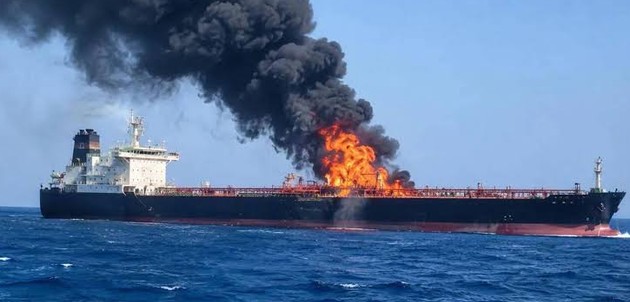
Iran’s military announced on Saturday, November 21, 2026, that a violating oil tanker caught fire before noon after striking a naval mine east of the Strait of Hormuz. State television carried the navy’s claim that the vessel entered a restricted zone with its tracking and navigation systems switched off. Mines turn narrow sea lanes into lethal traps when captains sail blind.
British maritime monitors had earlier reported two separate tanker strikes miles off the coast of Oman on the same morning. Neither the United Kingdom Maritime Trade Operations centre nor Iranian commanders confirmed whether those reports involved the same burning vessel, and no crew casualties emerged immediately. Fog hangs thick over naval clashes long before smoke rises from a steel deck.
Tehran insists that commercial ships must clear their transit plans with Iranian forces and stick strictly to designated corridors. Captains frequently turn off their transponders to dodge detection during hostile blockades, yet running dark offers zero protection against floating explosives. Hiding from radar only makes an unescorted hull easier to blame when disaster strikes.
Saturday’s blast directly challenges recent claims from the American military that its minesweepers had cleared the strait’s main shipping routes. Either Washington missed hidden ordnance in the eastern approaches, or Iranian forces quietly laid fresh charges under cover of darkness. Naval supremacy means little when cheap explosives keep merchant crews guessing where the next blast will land.
This latest fire extends a relentless string of maritime strikes that has rattled the Persian Gulf throughout November 2026. Iran reclosed the waterway on July 12 after American airstrikes resumed, and Tehran boasts of hitting over 140 vessels since the wider regional war erupted on February 28. A June memorandum of understanding failed to hold because neither Washington nor Tehran would yield control over navigation rights.
Roughly a fifth of the world’s seaborne crude passes through this narrow choke point, making every burning tanker a direct threat to global energy supply. Until naval commanders enforce a durable ceasefire or clear the eastern approaches, commercial shipping through Hormuz will remain a costly gamble. Insurers and shipowners must now weigh soaring war risks against the steep price of sailing blind through contested waters.