
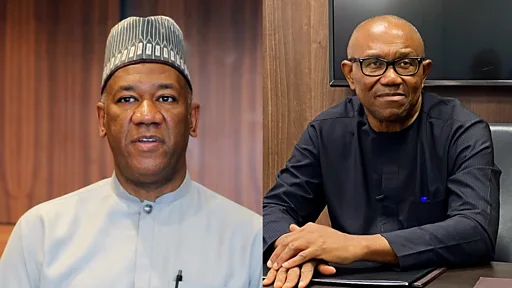
The political alliance that produced one of Nigeria’s most closely watched presidential campaigns in 2023 continues to shape conversations ahead of the 2027 general elections, as former allies offer different interpretations of what happened after the polls.
Kenneth Okonkwo, spokesperson for the African Democratic Congress (ADC) presidential candidate Atiku Abubakar, has attributed Yusuf Datti Baba-Ahmed’s recent criticism of major presidential contenders to what he described as a “post-political identity crisis” linked to his experience as Peter Obi’s running mate.
The comments have reopened debate over the expectations, internal challenges and political consequences surrounding the Labour Party’s 2023 presidential campaign, which attracted significant public attention and support before and during the election.
Speaking during an interview on Arise TV’s Daybreak programme, Okonkwo responded to Baba-Ahmed’s recent position that none of the leading figures being discussed for the 2027 presidency had demonstrated the capacity to transform Nigeria.
Baba-Ahmed, who was Obi’s running mate during the 2023 presidential election, had argued that many of the prominent figures seeking political relevance ahead of 2027 were connected to the same political establishment responsible for Nigeria’s longstanding challenges.
Okonkwo said Baba-Ahmed’s assessment could be linked to his experience within the Labour Party campaign structure and the developments that followed the election.
“I understand why he made his comment about Peter Obi, because we were in the same trenches together, and I can tell you that he may be suffering from what I call post-political identity crisis,” Okonkwo said during the interview.
The term used by Okonkwo is his own description of Baba-Ahmed’s political situation and was not presented as a medical or independently verified diagnosis.
According to Okonkwo, many people who supported the 2023 Labour Party movement did so with expectations that it would represent a major shift in Nigeria’s political direction.
He said participants entered the movement believing they were contributing to a new political pathway, but later became disappointed by developments within the party.
“After working with Peter Obi, you run the risk of suffering that, because we all came in in 2023 with high hopes, and we thought that a new Nigeria is birthed,” he said.
The 2023 presidential election marked a significant moment for Nigeria’s opposition politics, with the Labour Party candidate Peter Obi attracting substantial support, particularly among young voters and urban constituencies. However, the party’s post-election direction has remained a subject of debate among political actors.
Okonkwo argued that the enthusiasm surrounding the movement was unusual because many supporters were motivated by what they could contribute rather than what they expected to gain personally.
He said the supporters provided resources and energy for the political project but expected effective leadership in return.
“For the first time in my life, I saw people coming into an association for what they can give, and nobody was talking about what he can take, what he can receive,” Okonkwo said.
However, he linked the eventual disappointment among some supporters to what he described as Obi’s failure to effectively manage the Labour Party’s affairs.
“So, if such an association ends the way the Labour Party ended, you will see everybody coming out with political trauma, because that spoke of incompetence and incapacity of the political leader then called Peter Obi to manage the affairs,” he said.
The comments reflect a wider disagreement among political figures over how to interpret the Labour Party’s experience after the 2023 election. While supporters of the movement have continued to highlight its impact on Nigerian politics, critics have questioned its internal organisation and long-term sustainability.
Okonkwo also referred to Baba-Ahmed’s previous statement that he could no longer assist Obi after his experience with the Labour Party, interpreting it as an indication that Baba-Ahmed had lost confidence in Obi’s leadership.
“That was why in his own words, he said after Labour Party, he couldn’t do anything again for Peter Obi. In other words, after what happened in Labour Party, I lost confidence in him. I was there with him,” Okonkwo said.
Baba-Ahmed’s recent comments have added another layer to the ongoing discussions around possible presidential contenders ahead of the 2027 elections. His remarks suggested dissatisfaction with the available political options, while Okonkwo’s response focused on the internal history of the 2023 opposition alliance.
As political realignments continue ahead of the next general election, the debate over the legacy of the 2023 Labour Party campaign is likely to remain part of Nigeria’s political conversation.
The questions surrounding leadership, party organisation, voter expectations and the ability of political movements to transform electoral support into lasting structures remain central issues for opposition parties seeking greater influence in Nigeria’s democratic landscape.