
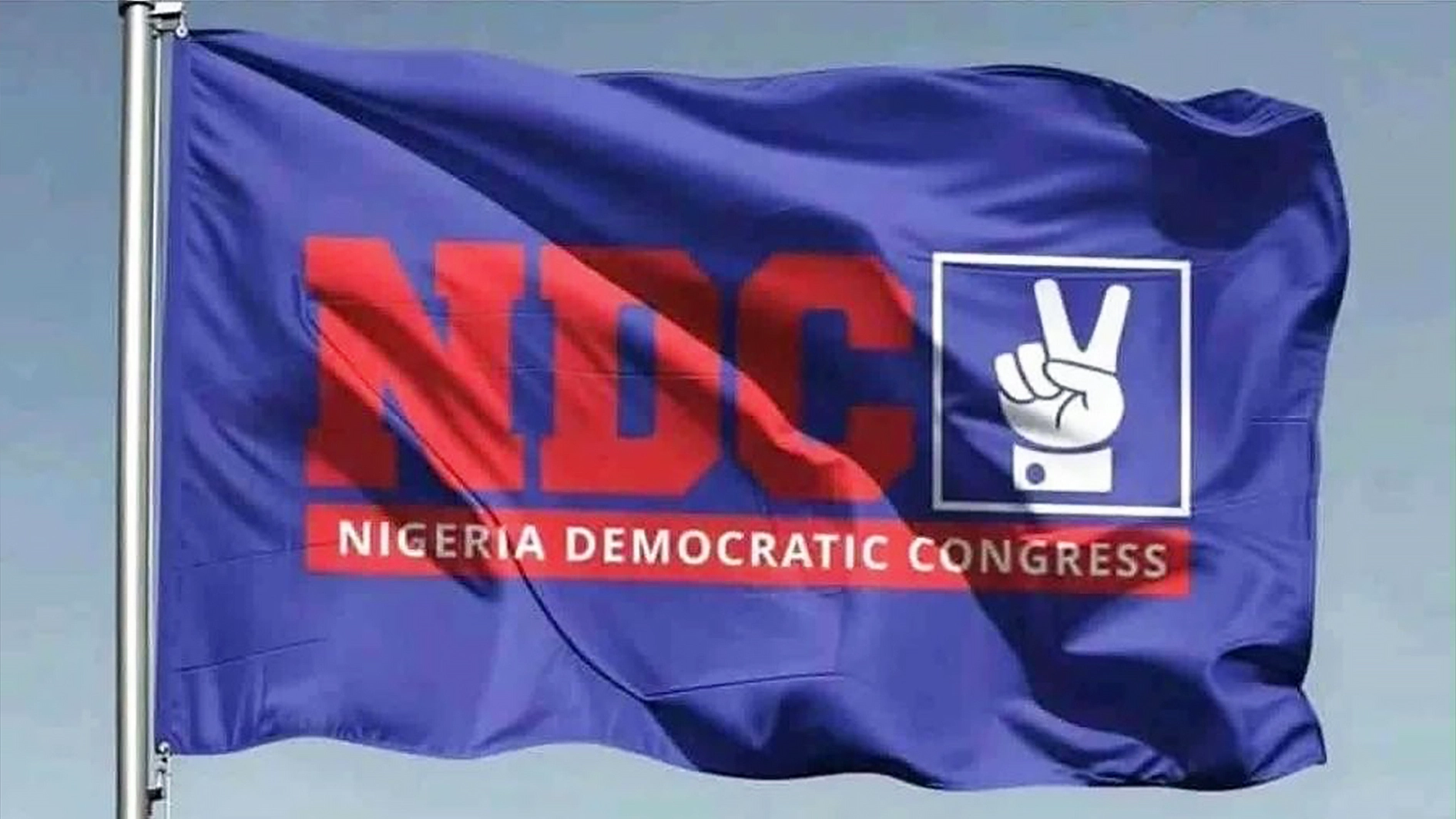
The Nigeria Democratic Congress has unveiled a set of resolutions aimed at strengthening internal structures, enforcing accountability, and reinforcing party supremacy in what its leadership described as a deliberate push to institutionalise the young party.
The resolutions were contained in a statement issued on Sunday by the party’s National Publicity Secretary, Osa Director, following the second meeting of the National Executive Committee. The NDC, founded in February 2026 by Senator Henry Seriake Dickson, currently holds 17 seats in the House of Representatives and three in the Senate.
According to the party, it is committed to building “a strong and enduring institution” and ensuring that governments elected on its platform remain accountable to the party structure. “The NDC is committed to building the party as a strong and enduring institution, with emphasis on party supremacy,” the statement said.
It added that “the programs, policies, and appointments (except personal staff) of all governments elected on the platform of the party must be made in consultation with the party structure.” The party stressed that members must subordinate personal interests to collective objectives, noting that “the party remains supreme, and members are expected to align their personal interests and agendas with those of the party.”
As part of measures to streamline operations, the NDC directed that all affiliated groups and non-governmental organisations operate under the guidance and control of the party. “All affiliated groups and NGOs shall operate under the guidance and control of the party and must not function in parallel with, or independently of, the party structure,” the statement said.
The NEC also approved the development of a comprehensive Code of Conduct for party officials and candidates. A committee headed by the National Legal Adviser has been constituted to develop the framework and guidelines. In addition, the party announced the inauguration of a National Reconciliation Committee to engage and reconcile aggrieved members.
The resolutions follow a turbulent stretch for the party, which on May 31 disowned results of its nationwide primaries held on May 28 and 29 that were circulating on social media, describing them as fake and insisting that only the NEC was authorised to announce official outcomes.
The NDC emphasised that it was being built as a long-term political institution rather than a vehicle for individual ambitions. “The NDC is being built as an institution, not a personality cult, political movement, or Special Purpose Vehicle (SPV) to be used and discarded,” the party stated. It urged members that “at all times, and for all candidates and aspirants, total allegiance must be to the party and the national interest.”
On finances, the party pledged strict accountability. “On financial probity, the party will enforce strict accountability in the management of party resources by all officers, and party funds must be used strictly for party business,” the statement said. It further directed that “monies sourced by candidates at all levels, and contributions made by candidates to campaign accounts, must be fully disclosed to the party at the appropriate levels.”