
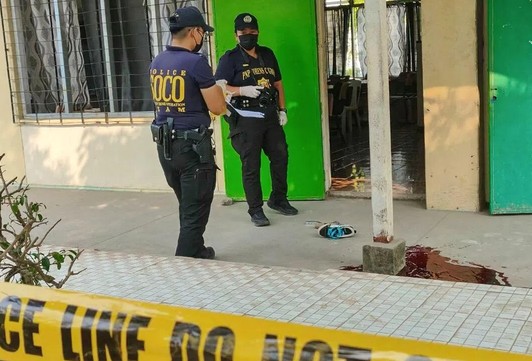
When classes resumed after the midday break on Friday afternoon at Banga National High School, students in the quiet southern province of South Cotabato, Mindanao, expected the usual routine of afternoon lessons. Instead, the corridors erupted into panic, chaos, and gunfire – shattering the sense of sanctuary traditionally afforded to secondary educational institutions in the region.
A 16-year-old student opened fire on his classmates inside the school premises, taking two lives and inflicting gunshot wounds on eight others before turning the weapon on himself. The two deceased victims were both 14-year-old pupils attending the school in Banga town. According to local chief executive Albert Palencia, four of the surviving eight casualties were left in critical condition, fighting for their lives in regional medical facilities.
For international observers, policy analysts, and citizens across developing nations where youth security and public safety remain pressing concerns, the tragedy highlights an alarming trend. While gun violence itself is far from unprecedented in the Philippines, the sudden, violent penetration of firearm rampages into secondary school classrooms points to a troubling shift in youth safety, weapon accessibility, and institutional protection.
In the moments preceding the carnage, subtle signs of the approaching tragedy went unnoticed due to the perpetrator’s established personality among his peers. During a lunchtime conversation on Friday, the 16-year-old gunman explicitly advised his group of friends to depart the campus grounds early, warning them that he intended to carry out a predetermined scheme immediately after the break. Municipal Mayor Albert Palencia revealed that the teenager’s peers dismissed the statement entirely, treating it as a lighthearted jest because the boy was widely regarded as a natural joker among his classmates.
The gravity of the warning became apparent shortly after the lunch hour concluded. The student produced a firearm and systematically fired into a crowd of learners, striking ten individuals in rapid succession. The assault ended when the gunman ended his own life on the campus grounds.
Emergency response teams were quickly deployed to the scene. The Philippine Red Cross confirmed receiving an emergency alert at approximately 2:00 PM local time (06:00 GMT), immediately dispatching an ambulance staffed by four trained paramedics to render emergency triage and life-support intervention to the victims.
While mass school shootings have historically been viewed as a predominantly Western phenomenon, the incident at Banga National High School represents the third deadly campus shooting recorded in the Philippines within a brief four-month span.
The recent pattern of academic bloodshed began earlier in the year:
- June Incident: Three secondary school students were killed, and several others wounded when their peers opened fire at a high school located in the central region of the country. Police investigators attributed the attack to a deep-seated grievance stemming from campus bullying.
- August Incident: A student attending a Catholic junior high school in the southern Philippines fatally shot a fellow learner before taking his own life. During that occurrence, the assailant initially targeted a classroom teacher, missed, and subsequently proceeded into an adjacent classroom where he shot a student.
- September Incident: The attack in Banga town resulted in three fatalities—including the perpetrator – and left four adolescents in critical condition.
In the immediate aftermath of Friday’s shooting, municipal authorities moved to secure the area and stabilise the community. Local disaster management agencies announced a total suspension of academic activities across all educational levels throughout the entire municipality of Banga as law enforcement personnel initiated forensic investigations on the school grounds.
The surge in youth-led firearm incidents has placed severe pressure on national education authorities and local governance structures. The Philippine Department of Education issued a formal declaration expressing profound concern regarding the tragedy, emphasising that its paramount focus remains the physical protection and psychological well-being of learners, educators, and administrative staff.
Education officials confirmed ongoing coordination with law enforcement agencies to verify investigative details and provide institutional support to affected families, while appealing to the public and social media users to exercise restraint and avoid disseminating unverified reports.
The tragedy has also reopened intense domestic debates regarding firearm proliferation, civilian gun ownership, and parental oversight. The Philippines maintains one of the highest rates of civilian gun ownership in Southeast Asia, creating an environment where weapons can occasionally leak into the hands of minors if not properly secured.
Addressing the broader systemic vulnerabilities exposed by the attack, South Cotabato Provincial Governor Reynaldo Tamayo appealed directly to adult citizens and licensed gun holders regarding weapon security. Governor Tamayo emphasised that adult firearm owners bear a strict responsibility to store weapons securely and ensure that underage individuals cannot gain access to lethality.
Highlighting the practical limitations of institutional security, the governor observed that municipal authorities cannot realistically expect a sparse cadre of security personnel to effectively monitor thousands of students across expansive campuses. He maintained that preventing future massacres requires active, collaborative vigilance between households, communities, and state security apparatuses.
As law enforcement officers continue their investigation into the exact sourcing of the weapon used in Banga, the incident leaves a community in deep mourning and prompts urgent questions for policymakers across the region on how to safeguard young learners within the walls of their own schools.