
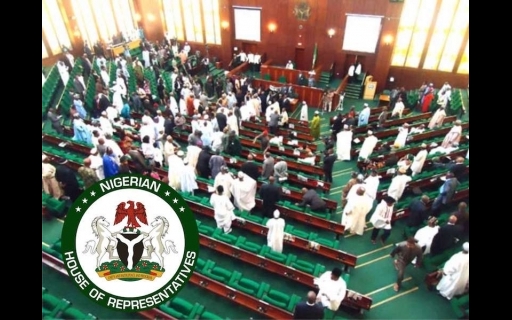
The House of Representatives has passed a landmark constitutional amendment bill to establish a decentralized state police structure across Nigeria. Titled “A Bill for an Act to Alter the Constitution of the Federal Republic of Nigeria 1999 to Provide for the Establishment of State Police; and for Related Matters (Sixth Alteration) Bill, 2026,” the legislation scaled a decisive vote on Thursday during a plenary session presided over by Speaker Tajudeen Abbas. The chamber adopted a manual voting procedure where members raised their hands to cast their votes. Ultimately, an overwhelming majority of 288 lawmakers voted in favor of the bill, easily meeting the two-thirds constitutional threshold, while only four members voted against the measure.
The successful passage represents the culmination of intense legislative drafting led by Deputy Speaker Benjamin Kalu and the House Committee on Constitution Review. Prior to the vote, Kalu delivered a passionate floor argument urging lawmakers to set aside partisan divisions and embrace localized policing as the only pragmatic solution to the nation’s severe security crisis. The approved text fundamentally unbundles the nation’s rigid security architecture by systematically altering Section 214 of the 1999 Constitution. The revised section formally splits internal security responsibilities between the existing federal command and incoming sub-national police forces, marking the end of a decades-long centralized monopoly over law enforcement.
Under the strict regulatory guidelines built into the new bill, individual state governors cannot unilaterally launch state police commands through simple executive decrees. The legislation explicitly mandates that no local force can commence operations until its enabling framework is formally passed by the relevant State House of Assembly and verified by a federal regulatory body. The state-level units must strictly comply with national minimum standards and operational benchmarks prescribed by an upcoming Act of the National Assembly. Furthermore, the bill incorporates transitional protective clauses ensuring that the Federal Police will maintain full, uninterrupted operations within any state that lacks a fully certified local framework.
The overwhelming legislative consensus follows a highly coordinated public relations push by the presidency and the Nigeria Governors’ Forum to dismantle deep-seated political resistance to the reform. For years, conservative political blocs and civil rights advocates routinely opposed the devolution of policing powers, arguing that predatory state governors would weaponize local police units to suppress dissent and target political opponents. To neutralize these anxieties, the National Assembly, in collaboration with the Attorney-General of the Federation, designed the current draft to include independent institutional oversight boards, centralized funding guidelines, and plain-language code-of-conduct mandates. The administration believes these extensive safeguards will successfully insulate the incoming forces from regional executive overreach.
The legislative milestone arrives amid an acute, ongoing national security emergency that has completely exhausted the capacity of centralized agencies. Rural communities across the country continue to face coordinated incursions from armed bandits, while urban transit corridors remain heavily exposed to sophisticated kidnapping syndicates. Public anger reached a boiling point following a recent high-profile mass abduction in Oyo State, forcing federal representatives to prioritize immediate local defense autonomy. House Spokesman Akintunde Rotimi emphasized that the tenth assembly is determined to give citizens a highly responsive, locally rooted security apparatus capable of curbing active domestic terrorism in real-time.
Despite the sweeping victory in the lower house today, the state police bill must still navigate a demanding, multi-layered ratification timeline before it can secure final presidential assent. The approved text must now be transmitted to the Senate, where it is expected to undergo an identical fast-tracked voting sequence before the end of the current legislative week. Once both chambers of the National Assembly achieve concurrence, the constitutional package will be sent to the 36 states, where at least 24 provincial houses of assembly must pass matching resolutions to ratify the amendment. Political analysts observe that because the governors have already bought into the framework, sub-national concurrence will likely move with unprecedented speed.