
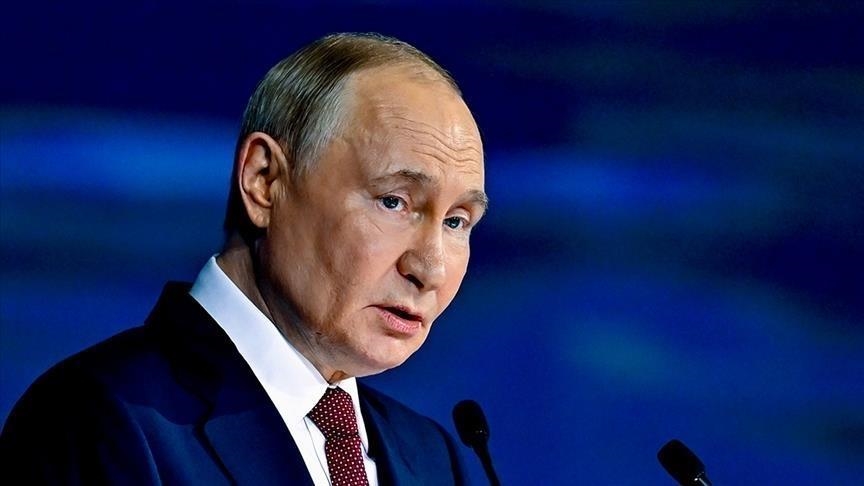
Moscow answered a fresh Ukrainian truce offer with threats of renewed missile barrages on Friday, 4 September 2026. Ukrainian President Volodymyr Zelenskyy had offered to pause long-range drone strikes on Russian airspace during a sensitive American diplomatic mission. United States special envoy Steve Witkoff and presidential adviser Jared Kushner plan to land in Moscow on Saturday before travelling to Kyiv on Sunday. Zelenskyy promised safe skies over Russian territory so the American negotiators could travel without fear. He urged the Kremlin to match his gesture with an immediate halt to missile raids across Ukrainian cities. Russian commanders brushed the offer aside, preparing fresh air salvos against civilian infrastructure instead. Guns rarely fall silent when pride dictates military strategy. The Kremlin prefers raw force to mutual diplomatic pauses.
Donald Trump dispatched his two personal emissaries to restart stalled talks aimed at ending the four-year war. Witkoff has visited the Russian capital more than six times, but this trip marks Kushner’s first formal entry into Kyiv. American officials spent weeks urging both combatants to freeze air raids while the delegates moved between capitals. Washington wants to stop Ukrainian drones hitting Moscow oil plants while shielding Kyiv from incoming ballistic missiles. Trump claims his negotiators carry a workable blueprint to settle territorial disputes in the occupied Donbas basin. He told reporters in Washington that personal hatred between the two leaders blocks common ground. Strong personal grudges routinely wreck sensible peace proposals. Deep animosity blinds both war rooms to practical deals.
Ukraine makes this conditional truce offer from a position of acute tactical strain. Exhausted air defence crews have run out of Western interceptor missiles to shield major cities. Russian rocket batteries strike power plants and residential neighbourhoods without meeting serious anti-ballistic resistance. Zelenskyy has spent months pleading with Western partners to release more Patriot interceptor batteries from domestic depots. European allies offer warm words of solidarity while keeping their own missile stockpiles locked away. Kyiv faces devastating high-speed aerial strikes every single night. Scant ammunition leaves large cities defenceless against incoming salvos. Empty missile tubes invite heavier strikes from the east.
Kyiv countered Russian missile barrages by sending home-grown attack drones deep into the Russian heartland. Ukrainian drone operators struck oil refineries, railway depots, and storage hubs with surgical precision throughout the summer. Those long-range raids forced Russian motorists to queue for hours at empty petrol stations in provincial towns. By threatening air traffic around Moscow, Ukraine proved it could inflict economic pain on ordinary Russian citizens. Zelenskyy used that leverage to offer safe skies for the visiting American diplomats. The offer showed that Kyiv can turn its drone fleet off and on at will. Striking Russian oil refineries hurts the Kremlin war machine. Deep drone raids give Ukraine real bargaining power today.
Vladimir Putin sees little reason to grant Kyiv a temporary diplomatic respite. Russian generals believe their superior missile stockpiles will eventually break the will of the Ukrainian public. Moscow treats any call for a temporary pause as a sign of enemy exhaustion. Kremlin spokesman Dmitry Peskov insists that Ukraine must accept Russian territorial conquests before firing stops. Russian state media portrays American peace envoys as messengers who must accept Moscow’s military terms. Russian forces continue to assemble heavy bombers and launch pads for another combined assault. Autocrats seldom compromise when they smell weakness across the line. The Russian military uses aerial terror to force total surrender.
The American initiative creates fresh friction between Washington and European capitals. Trump and Treasury Secretary Scott Bessent alarmed European allies by inviting Russia back to international economic tables. European leaders fear that Washington will force Ukraine to cede sovereign land in exchange for a fragile ceasefire. North Atlantic Treaty Organisation officials insist that any settlement must guarantee the territorial integrity of Ukraine. Western capitals cannot sustain their arms pipelines without deep political consent from Washington. European governments cannot fill the financial and military gap alone if Washington pulls back. Divided allies hand cheap diplomatic victories to their adversaries. Weak Western unity encourages further aggression from Moscow.
The impending arrival of Witkoff and Kushner in Moscow tests the limits of personal diplomacy. Real estate executives and political fixers cannot easily erase years of slaughter with quick private meetings. Ukrainian citizens will spend the weekend watching the skies for incoming cruise missiles rather than studying American statements. Russian commanders will likely mark the American visit by firing fresh salvos to show their defiance. A truce requires mutual respect for human life that neither military command currently shows. Peace will not come through hasty handshakes in gilded Moscow hotel suites. Hollow diplomatic gestures cannot silence heavy artillery along the front. True peace requires hard military balance, not wishful thinking.