
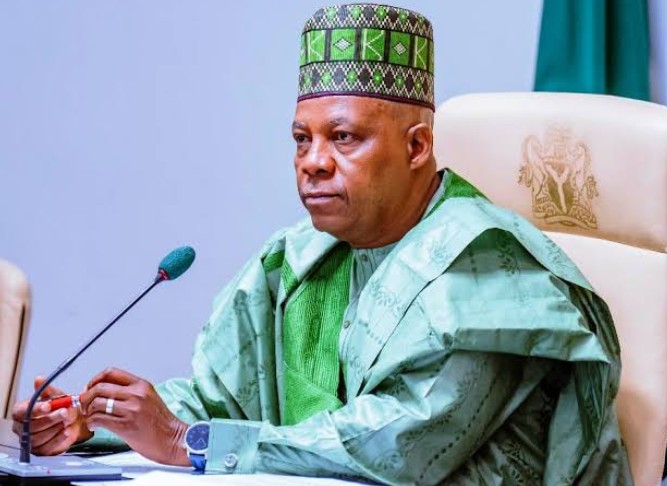
President Bola Tinubu has directed Vice President Kashim Shettima to lead Nigeria’s delegation to the 81st Session of the United Nations General Assembly in New York. The vice president departs Abuja to take charge of high-level diplomatic talks and deliver the national statement during the general debate. The assignment marks a sudden shift from earlier official arrangements that placed the president himself at the podium. Tinubu returns to Abuja on Sunday after spending roughly three weeks in Europe, choosing domestic desk work over Manhattan cocktail parties. Power at home matters more than applause abroad.
The late withdrawal upends two months of detailed diplomatic planning by Nigerian envoys in the United States. In July, Nigeria’s Permanent Representative to the United Nations, Ambassador Jimoh Ibrahim, announced that the president had confirmed his personal attendance following meetings in the capital. Global organisers had even placed Tinubu on the provisional schedule as the tenth speaker during the high-level debate on Wednesday, 23 September. Diplomats had framed the planned address as an opportunity to sell market reforms and attract foreign investment into local energy grids, state schools, and hospitals. That promotional roadshow now falls to a deputy whose words carry far less sovereign authority.
This decision establishes an unmistakable pattern of presidential absenteeism from the world’s main diplomatic gathering. Tinubu last attended the General Assembly in person during his debut year in office in 2023. Shettima stood in his place at the 79th session in 2024, ostensibly to oversee domestic recovery efforts after catastrophic flooding in Borno State. The vice president stepped in again at the 80th session in 2025, and now undertakes the same voyage for a third straight year. Skipping three consecutive summits diminishes Nigeria’s claim to direct diplomatic leadership across West Africa. World leaders notice when regional heavyweights send surrogates to head-of-state meetings.
The official theme for the gathering, restoring trust and managing transformation, sits uncomfortably alongside Nigeria’s domestic economic record. Global financiers want to know how the administration intends to contain double-digit consumer inflation, stabilise volatile exchange rates, and clear deep infrastructure deficits. Shettima will attempt to reassure sceptical development partners during side-door roundtables on clean energy, social housing, and climate finance. Yet foreign investors rarely sign major bilateral deals with a deputy who cannot sign binding executive orders on the spot. Substantive capital waits for the man holding the primary chequebook.
The domestic political context offers the real clue to the president’s sudden retreat from the East River. Managing angry domestic voters during economic adjustment requires round-the-clock political firefighting inside Abuja. Fuel prices continue to bite household budgets, while labour unions and state governors bicker over unpaid minimum wage pledges. Lingering abroad for an extra week after a three-week European tour would have invited intense public anger from a weary population. Staying home preserves political capital that the presidency cannot afford to waste on foreign flights.
The tactical burden on Shettima remains exceptionally heavy throughout the week in Manhattan. Beyond delivering the national statement, the vice president must coordinate dozens of bilateral sessions with international heads of state, multilateral lenders, and private equity funds. Nigerian delegations to New York have earned a poor reputation over decades for ballooning hotel bills, overcrowded entourages, and negligible treaty outcomes. Shettima must keep his delegation disciplined, enforce tight negotiating agendas, and deliver concrete financial commitments. High-profile speeches mean nothing if ministerial aides treat the trip as a shopping junket.
The 81st session also coincides with a push by developing states to reform the United Nations Security Council. African nations have demanded permanent, veto-wielding seats on the council for decades, pointing to their growing populations and security contributions. Nigeria considers itself the natural candidate for any permanent African seat that might emerge from structural reform. Yet claiming continental hegemony requires constant, visible diplomacy by the head of state himself. Leaving regional rivals such as Kenya, South Africa, and Egypt to field their actual presidents gives those competitors a clear diplomatic edge.
Shettima will handle his assigned script with customary rhetorical flair, but the optics of the substitution remain awkward. The vice president possesses sharp intellectual gifts, yet foreign heads of state prefer to deal directly with sovereign principals. Tinubu’s retreat confirms that domestic survival takes precedence over global posturing every single time. The government wants foreign cash, yet its leader avoids the room where the money gathers. Shettima takes the flight to New York, while the real political battles wait in Abuja.