
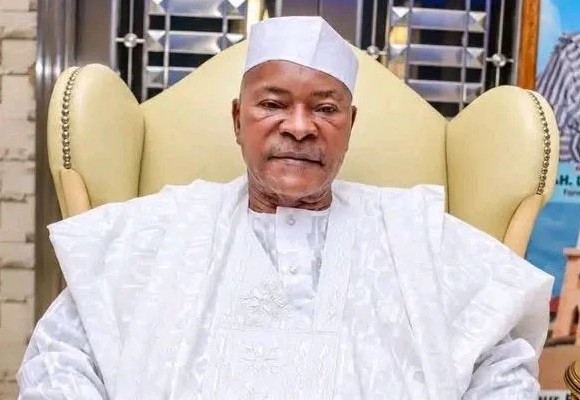
Former Kogi State governor Ibrahim Idris died in the United Kingdom on Sunday, 20 September 2026, at the age of 77. Incumbent Governor Ahmed Usman Ododo has declared a three-day period of state mourning and ordered flags flown at half-mast across public buildings. The state government announced that it will bear the full cost of a state burial for the veteran politician. Idris steered the confluence state for nearly nine tumultuous years between 2003 and 2012 under the banner of the Peoples Democratic Party. His death closes an influential chapter in the fraught political history of north-central Nigeria.
The reaction from the current state leadership in Lokoja was swift and deliberately collaborative. Governor Ododo led a high-level government delegation, including former governor Yahaya Bello, to commiserate with the Idris family at their Abuja residence. In a formal condolence message, Ododo framed the nine-year tenure of Idris as an important pillar in the institutional evolution of Kogi State. The incumbent lauded his predecessor for investing heavily in classrooms, rural clinics, and arterial road networks. Political decorum usually conceals bitter local rivalries when prominent figures die.
The long tenure of Idris demonstrated the unusual resilience required to retain state power in Nigeria. Voters first elected him in 2003 when he defeated the incumbent Prince Abubakar Audu of the All Nigeria Peoples Party in an upset victory. The courts later annulled his 2007 re-election following a protracted legal battle brought by Audu over unlawful disqualification. Idris returned to the ballot box in the court-ordered rerun of March 2008 and won handily, cementing his grip on the state treasury until January 2012. He remains the longest-serving chief executive in the history of Kogi State.
His route to political power began far outside government ministries and administrative secretariats. Born in Idah in 1949, Idris pursued his early education across commercial centres in Onitsha, Kano, and Buguma before earning a law degree from the University of Abuja. He built a fortune as an independent businessman, establishing the Ibro Trading Company with substantial holdings in furniture production, construction, and hospitality. His popular hotel chains across Abuja, Kaduna, and Lokoja provided the cash reserves that funded his initial gubernatorial ambitions. Private wealth provided the stepping stone to executive office.
His years in Lugard House reflected the mixed legacy of Fourth Republic governors who ruled during the oil windfall. Flush with booming federal allocations, Idris focused his spending on civil infrastructure, rural electrification projects, and tertiary educational institutions. Yet critics constantly pointed to severe wage delays, unfinished municipal utilities, and bitter ethnic friction that alienated the central and western senatorial districts. The eastern Igala voting bloc dominated state politics for decades under his watch, breeding deep political resentment among Ebira and Okun minorities. That regional dominance eventually collapsed when power shifted across ethnic boundaries after his departure.
Idris also mastered the art of behind-the-scenes patronage to preserve his authority after leaving office. In late 2011, he handpicked Captain Idris Wada, a quiet commercial pilot and political novice, as his successor on the PDP ticket. Wada won the December ballot, ensuring that his mentor retained immense leverage over state contracts and party delegates for another four years. That succession dynasty broke down in 2015 when Audu died during election collation, opening the door for Yahaya Bello to claim the governorship. Power slips away the moment kingmakers lose control of state machinery.
His death in a London medical facility underscores an enduring paradox of the Nigerian political class. Governors spend years overseeing health ministries and inaugurating community healthcare centres across rural constituencies. Yet almost every prominent politician flies to European private clinics the moment serious illness strikes. Thirty years after military rule ended, domestic hospitals still lack the specialised equipment and diagnostic technology to treat senior statesmen. The elite continue to import their personal healthcare from abroad.
The three days of state mourning will temporarily pause the fierce political combat that defines Kogi State. Party loyalists will remember Idris as an approachable patriarch who ran a consensus-driven administration and financed political apprentices across three senatorial zones. Opponents will view his two terms as a missed opportunity to turn the mineral-rich state into a modern industrial engine. In the end, his longevity in office proved that quiet commercial pragmatism can triumph over ideological bluster. Kogi will bury its veteran governor with full state pomp, but the deep regional fissures he managed so carefully remain wide open.