
N’Mazi Obiomah O. Igbokwe
Nigeria is on the Brink of a Climate and Humanitarian Emergency, even as it stands at a dangerous intersection of climate vulnerability, economic hardship, food insecurity and inadequate public infrastructure. Against this troubling background, the Super El Niño deserves serious attention, not as a distant meteorological phenomenon, but as a potential threat to the livelihoods, health and survival of millions of Nigerians.
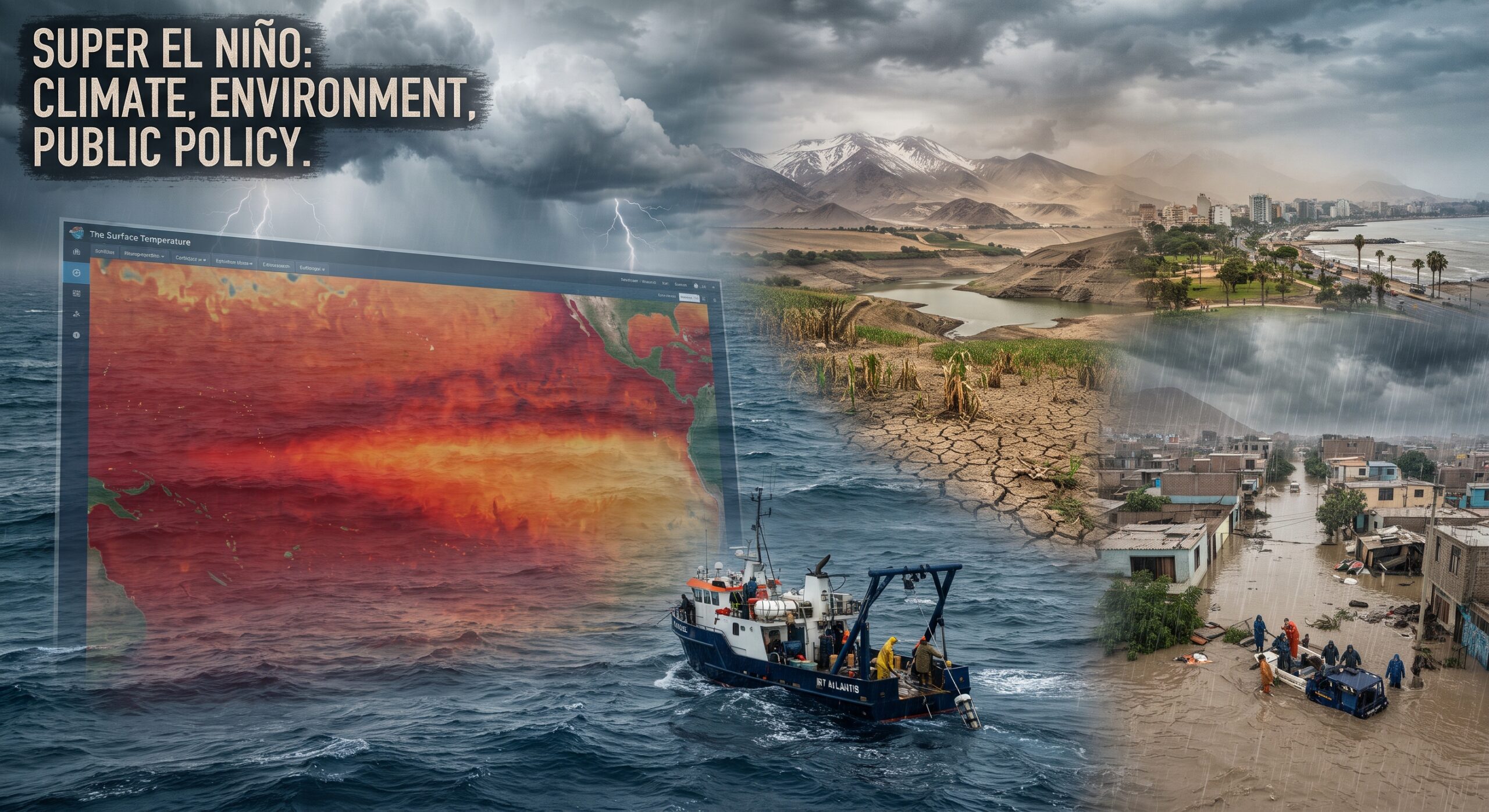
El Niño is a natural climate phenomenon associated with unusually warm sea surface temperatures across the central and eastern tropical Pacific Ocean. It alters atmospheric circulation and influences rainfall and temperature patterns worldwide. A particularly strong episode is a “Super El Niño”, although the term has no single universally accepted scientific threshold.
Its consequences can include severe heat, drought, flooding in some regions, agricultural losses and disruptions to water supplies. The effects vary geographically, and no two El Niño events are identical.
For Nigeria, the critical question is not simply whether an exceptionally strong El Niño will occur, but whether the country is adequately prepared for the climate shocks that may accompany it.
That question demands urgent national attention.
The Nigerian farmer is usually the first in the line of fire.
The first major concern is agriculture. Nigeria’s food system depends heavily on rain-fed farming, particularly among smallholder farmers who lack irrigation facilities, modern storage systems, agricultural insurance and sufficient access to climate information.
If changing climate conditions bring hotter-than-normal weather or disrupt rainfall in vulnerable farming communities, the consequences could be devastating. Maize, rice, millet, sorghum, cassava and other essential crops may suffer from water stress, reduced yields or altered planting seasons. Livestock farmers could face shortages of pasture and water, while fish farmers may experience higher operating costs as water temperatures and quality deteriorate.
However, it is important to recognise that El Niño does not automatically produce drought throughout Nigeria. Its effects depend on the season, regional weather patterns and other climate influences. Nigeria must therefore rely on local forecasts rather than assume that every part of the country will experience the same conditions.
The danger lies in our lack of preparedness. A country already struggling with food affordability cannot afford another major shock to domestic food production.
When harvests decline, food prices rise. When prices rise, poor households reduce the quality and quantity of their meals. Children suffer first, pregnant women become more vulnerable, and families already living below the poverty line are pushed deeper into deprivation.
Super El Niño could thus become not merely a climate story, but a story of hunger, malnutrition and social injustice.
Heat, health and human survival
Extreme heat presents another serious threat. The World Meteorological Organisation has warned that the developing 2026 El Niño is expected to intensify and influence global temperature and rainfall patterns into 2027. It has also emphasised that the severity of impacts varies from region to region.
For Nigerians, already familiar with uncomfortable temperatures, additional heat could increase the risks of dehydration, heat exhaustion and heatstroke, particularly among outdoor workers, market traders, construction workers, farmers, commercial drivers and people living in poorly ventilated homes.
The elderly, infants and people with existing health vulnerabilities deserve particular protection.
Heat also affects productivity. Workers exposed to high temperatures may be unable to sustain normal working hours, while businesses face higher cooling costs and possible interruptions to operations. Schools without adequate ventilation could become uncomfortable and potentially unsafe environments for pupils.
Our public health authorities must therefore prepare health facilities, educate communities about heat-related illness, and establish practical public warnings in local languages. This is where the National Orientation Agency should step in.
Climate preparedness must include the human body, not merely the environment. This brings us to Water scarcity, electricity and the economy.
Water is central to life, agriculture, sanitation, manufacturing and public health. If local conditions produce prolonged dry spells, communities dependent on shallow wells, streams and unreliable public water systems could experience serious shortages.
In urban centres, the consequences could include higher water prices and greater pressure on already inadequate infrastructure. Rural communities could face longer journeys to obtain safe drinking water, while poor sanitation conditions increase the risk of diseases.
Electricity supply is another concern. Extreme heat can increase demand for cooling, placing additional pressure on Nigeria’s unreliable power system. Businesses may spend more on diesel and alternative power, while households must choose between purchasing essential food and paying for energy.
These pressures are interconnected. Expensive electricity increases production costs; higher production costs can raise prices; and rising prices further weaken household purchasing power.
For small businesses, manufacturers and informal sector operators, the cumulative effect could be severe.
Floods are still part of the warning.
It would be a mistake to interpret Super El Niño exclusively as a drought threat. El Niño alters global atmospheric circulation, producing different rainfall outcomes in different regions. The strength of the Pacific warming alone cannot tell Nigerians precisely where flooding or drought will occur.
Nigeria has repeatedly experienced destructive flooding, with homes, roads, farmland and public infrastructure exposed to damage. Even if some areas experience below-normal rainfall, others could still suffer intense rainfall and flooding because of local weather systems and other climate drivers.
The implication is clear. The Federal Government and state governments must not abandon flood preparedness in anticipation of drought.
Drainage maintenance, floodplain management, protection of wetlands, responsible urban planning and effective emergency response systems remain essential.
The country needs a comprehensive climate risk strategy, not a single weather event response.
What must the Tinubu government do?
The emerging threat demands action before a crisis overwhelms public institutions.
First, the Federal Ministry of Environment, the Nigerian Meteorological Agency (NiMet), the Nigeria Hydrological Services Agency and the National Emergency Management Agency must coordinate their forecasts, risk assessments and public communications. Citizens need timely, understandable and geographically specific warnings about rainfall, heat and water availability.
Second, the Federal and state ministries responsible for agriculture should support farmers with reliable seasonal forecasts, drought-tolerant seeds where appropriate, improved irrigation, water conservation and practical advice on planting schedules. Agricultural extension services must reach rural communities before planting decisions are made.
Third, governments should strengthen strategic food reserves, improve rural storage and transport, and monitor food prices. Emergency support should prioritise households most exposed to hunger and malnutrition.
Fourth, health authorities must prepare hospitals and primary healthcare centres for heat-related illnesses and possible climate-sensitive disease outbreaks. Public education should explain hydration, heat exposure, food safety and access to safe drinking water.
Fifth, state governments and local councils should repair drainage systems, protect water sources and identify vulnerable communities before emergencies occur. Urban authorities must enforce development rules that prevent construction in high-risk flood zones.
Finally, Nigeria must invest in long-term climate resilience. Renewable energy, efficient irrigation, better water management, climate-smart agriculture and stronger public infrastructure are not luxuries. They are investments in national survival.
The price of waiting
There is an uncomfortable truth about disasters. The poorest people frequently pay the highest price for events they did the least to cause.
A wealthy household may afford air conditioning, borehole water, stored food and emergency medical care. A low-income family may have none of these protections. A large commercial farm may possess irrigation equipment, while a smallholder farmer depends entirely on rain.
Super El Niño could deepen these inequalities if public policy fails to protect the vulnerable.
Nigeria must not wait for empty granaries, distressed hospitals, failed harvests and desperate communities before responding. The purpose of climate forecasting is to give society time to act before danger becomes disaster.
The developing El Niño is a global phenomenon, but the consequences for Nigerians will depend substantially on the quality of our decisions. We cannot control the temperature of the Pacific Ocean. We can, however, improve our agricultural systems, protect our water resources, strengthen our health services and prepare our citizens.
The Tinubu administration must demonstrate that climate security is an essential component of national security.
Super El Niño should be treated as a warning, not a prophecy of inevitable catastrophe. The science provides an opportunity to prepare; leadership must convert that opportunity into action.
The real test is not whether Nigeria can predict the coming climate shock. It is whether Nigeria can protect its citizens before the shock arrives.