
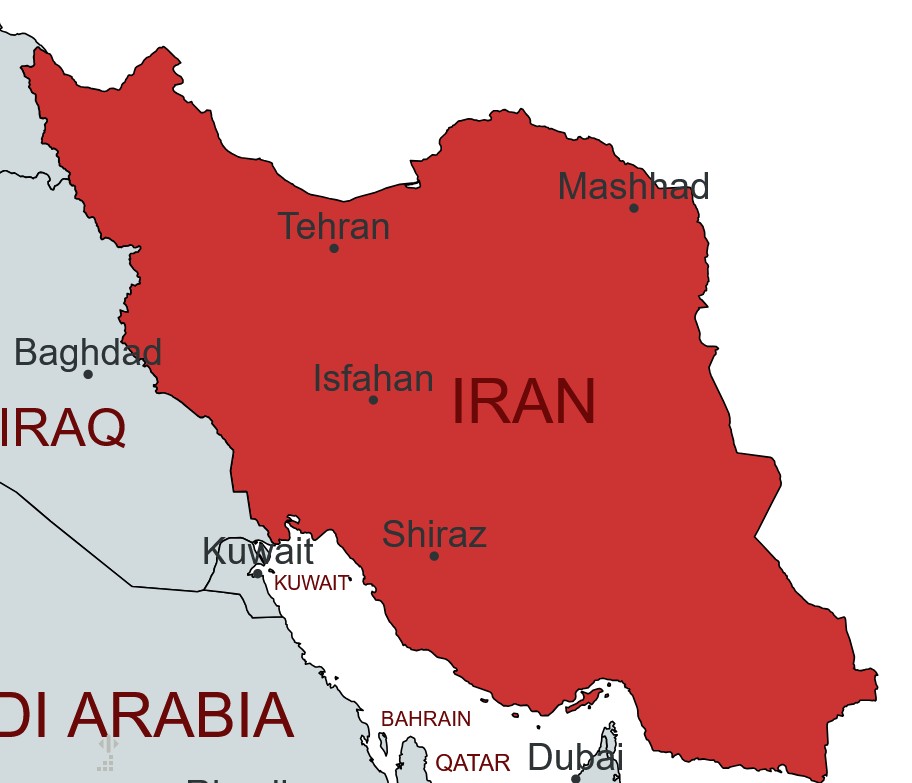
On September 1, inside the quiet coastal settlement of Bandar Kuhestak in southern Iran’s Sirik County, families gathered under the evening sky to celebrate a private wedding. In a region routinely shadowed by naval patrols, trade vessels, and strategic tension along the Strait of Hormuz, the gathering offered a brief, cherished space for music, laughter, and community ties.
Hours later, that venue was reduced to rubble and grief.
A sudden, destructive military strike ripped through the residential gathering, leaving 68 civilians killed or wounded. Among the dead and injured were women and children whose lives were instantly caught in the crossfire of international conflict. The diplomatic aftermath was immediate and fierce. Through a formal statement issued by its press department, the Embassy of the Islamic Republic of Iran condemned the incident as an act of military aggression by the United States, accusing U.S. forces of unleashing precision munitions on defenceless non-combatants.
A Pattern of Escalation and Unanswered Questions
The strike at Bandar Kuhestak did not occur in a vacuum. It represents the latest flashpoint in an intensifying cycle of regional confrontation between Washington and Tehran. In its official release, the Iranian diplomatic mission directly linked the tragedy in Sirik County to an earlier strike on the Shajareh Tayyebeh School in Minab, where numerous children and civilians were similarly killed by precision missile strikes.
The juxtaposition of a classroom in Minab and a wedding canopy in Kuhestak highlights a central, uncomfortable question of contemporary warfare: How do non-combatants, entirely detached from command centres and state policy, become casualties in high-tech geopolitical battles?
“From the school in Minab to the wedding ceremony in Kuhestak, ordinary Iranian people are paying the price of U.S. military aggression,” the Iranian diplomatic statement declared.
The embassy challenged the strategic logic behind targeting private gatherings, asking what conceivable connection a school or a nuptial gathering could have to foreign national security interests. The statement noted that the victims possessed no military affiliations, held no command authority, and posed zero threat to overseas interests.
International Law and the Imperative of Defence
In framing its response, the Iranian government invoked fundamental provisions of international law to challenge the legality of the strikes and justify its broad strategic posture.
Citing Article 51 of the United Nations Charter – which explicitly guarantees a sovereign state’s inherent right to individual or collective self-defence when subjected to an armed attack – Tehran maintained that it did not initiate the latest hostilities. The diplomatic mission argued that a state under active attack cannot have its defensive measures automatically categorised as destabilising or aggressive by the international community.
At the core of the Iranian petition lies a fundamental principle of international humanitarian law: the absolute requirement to distinguish between military objectives and civilian populations, regardless of political or strategic goals. “The life of an Iranian child, an Iranian woman, or an ordinary Iranian citizen is no less valuable than the life of any other human being.” – Press Department, Embassy of the Islamic Republic of Iran. The embassy urged global institutions and sovereign nations to resist normalising civilian casualties in armed conflicts, warning that passive silence from the international community inevitably encourages broader violations of war rules.
Global Governance and the Precedent of Silence
For a digital news readership across Africa and the global South, where questions of sovereignty, state intervention, and the selective enforcement of international law are debated with sharp interest, the tragedy in Bandar Kuhestak carries resonance. It demonstrates how swiftly regional friction can degrade into human catastrophe when standard protocols of caution are sidelined.
The Iranian statement emphasised that the loss of life in Sirik County must not be dismissed as a routinely reported statistic in an ongoing news cycle. Instead, it argued, the incident warrants rigorous independent scrutiny regarding the rules of engagement and targeting procedures applied in sovereign territories. “A wedding ceremony should never become a battlefield,” the embassy asserted, concluding that innocent citizens should never be made to carry the human cost of geopolitical ambitions.
As diplomatic fallout from the attack spreads, international observers, legal scholars, and human rights organisations continue to watch closely for formal responses, operational reviews, and accountability mechanisms from all parties involved.