
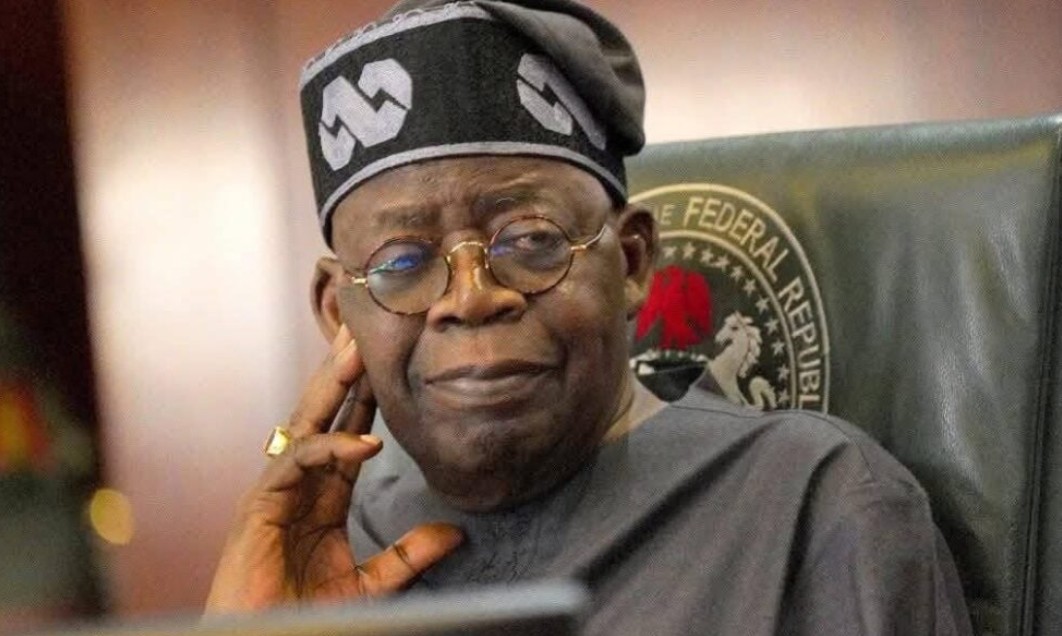
President Bola Ahmed Tinubu’s Independence Day address on October 1, 2026, was built around a powerful political and economic proposition: Nigeria has endured the pain of reform, the worst of the adjustment is over, and the country is now entering an “age of prosperity”.
It is an attractive proposition. But it raises a difficult question: is Nigeria’s economy actually growing fast enough, and broadly enough, for ordinary Nigerians to experience prosperity within the next four years?
The answer, judging from the available evidence, is neither an emphatic yes nor an outright no. There are genuine reasons for optimism. But there are also powerful reasons for caution.
The President was candid about the hardship Nigerians have endured. He acknowledged that “millions” still struggle to pay for food, school fees, medical bills and transportation, and conceded that the problems predated his administration. His argument is that the reforms of the past three years have corrected the country’s economic direction and created the foundation for prosperity.
That distinction is important. Economic reform and economic prosperity are not the same thing.
The President has a point about the reforms
It would be unfair to dismiss the President’s claim that the Nigerian economy is in better macroeconomic shape than it was immediately after he took office.
The International Monetary Fund (IMF) says Nigeria’s reforms over the past three years have strengthened macroeconomic stability and resilience. Foreign-exchange reforms, tighter monetary policy and the removal of fuel subsidies have reduced some of the distortions that had weakened public finances and the external position. Gross international reserves increased from about $40 billion at the end of 2024 to $46 billion in 2025. (IMF)
The IMF estimates that Nigeria’s economy grew by 4.0 per cent in 2025 and projects growth of 4.1 per cent in 2026 and 4.3 per cent in 2027. That broadly supports the President’s assertion that growth has returned to around 4 per cent. The speech also points to higher non-oil exports, improved foreign-exchange conditions, stronger reserves and declining inflation as evidence that the reform programme is beginning to work. There is therefore a credible economic case behind the administration’s optimism.
But there is a major difference between stabilisation and prosperity.
Read Also: Tinubu Declares Age of Prosperity on Independence Day
Four per cent growth is not enough
The biggest weakness in the prosperity argument is the growth rate itself. Nigeria’s population is growing by about 2.1 per cent annually. (World Bank Open Data) If the economy grows at approximately 4 per cent, the increase in output per person is only around 2 per cent a year, assuming the population and output figures move broadly as projected. That is positive, but it is hardly transformational.
At roughly 2 per cent annual per-capita growth, four years would produce only a modest cumulative improvement in average economic output per person. For a country with widespread poverty, inadequate infrastructure, low productivity and millions of young people entering the labour market, that is unlikely to be enough to create the dramatic improvement in living standards implied by the word “prosperity”.
The World Bank has repeatedly made this point essentially: Nigeria needs faster and more inclusive growth to reduce poverty substantially. Its April 2026 assessment says macroeconomic stabilisation is taking hold, but household incomes have not fully recovered and poverty remains high.
The challenge is therefore not merely to keep Nigeria growing. It is to make Nigeria grow much faster than its population and in sectors capable of raising household incomes.
The poverty question cannot be wished away
This is where the President’s speech encounters its most serious test. The IMF estimated in June that poverty had reached about 63 per cent of Nigerians on the national poverty line, while an estimated 27 million Nigerians faced food insecurity in late 2025. (IMF)
The World Bank similarly estimates that more than 60 per cent of Nigerians were living below the national poverty line in 2025. It also notes that poor households can spend as much as 70 per cent of their income on food.
These figures provide the necessary context for evaluating the President’s declaration that Nigeria has entered an “age of prosperity”. A country cannot reasonably be described as prosperous simply because GDP is rising, foreign reserves are increasing, or inflation is falling. Prosperity must eventually appear in the household budget.
Can families buy more food with their incomes?
Can workers afford transportation without sacrificing meals?
Can parents pay school fees?
Can businesses employ more people?
Can farmers produce at lower cost?
Can young graduates find productive work?
These are the tests that will determine whether the promised prosperity is real.
Inflation is falling—but prices remain high
The President is also right to highlight the substantial decline in inflation from its earlier peak. The IMF reported that inflation had fallen to 15.1 per cent year-on-year in February 2026 before rising to 15.4 per cent in March as higher international food and fuel prices began to exert pressure. The IMF projects end-2026 inflation at about 17 per cent.
This is progress in the rate at which prices are rising. But Nigerians do not buy the inflation rate. They buy food, transport, medicine, electricity and other necessities at the prices prevailing in the market.
A reduction in inflation does not reverse the enormous increase in prices that households have already absorbed.
This is why the administration must be careful about presenting disinflation as though it were equivalent to cheaper living. It is not. The real breakthrough will occur when inflation falls substantially, and incomes rise faster than prices.
Jobs may determine whether the promise succeeds
Perhaps the most consequential section of the President’s speech was his emphasis on productive employment. He correctly identified Nigeria’s youthful population as both an opportunity and a danger. His government says it will focus on jobs, enterprise, industrial growth, gas-based industries, digital connectivity, skills, infrastructure and business finance. That is the correct direction. But the scale of the challenge is enormous.
The World Bank estimates that about 3.5 million Nigerians enter the labour force every year. Yet the country continues to struggle to create sufficient numbers of quality jobs.
This means that the government cannot measure success simply by counting new projects, loans or training programmes. It must measure how many Nigerians move into productive, adequately paid employment.
Nigeria needs millions of jobs, but it needs more than jobs. It needs productive jobs. A person working long hours in a low-productivity activity without earning enough to escape poverty is employed, but is not necessarily prosperous.
The infrastructure and productivity test
The President’s proposed solution—lowering the cost of producing and moving goods—is economically sound. Better roads, railways, ports, electricity, irrigation, storage and logistics can reduce production costs and make Nigerian businesses more competitive. The speech’s argument that lower costs should eventually translate into lower consumer prices is therefore reasonable. But implementation will determine whether the theory works.
Nigeria has spent decades announcing infrastructure programmes without always achieving the level of execution required to transform productivity.
The World Bank continues to identify electricity, transport and logistics gaps as constraints on productivity and domestic market integration. If electricity remains unreliable, manufacturers will continue to depend heavily on expensive alternatives. If insecurity prevents farmers from reaching their fields, agricultural production will remain constrained. If transport costs remain high, cheaper production at the farm gate may not translate into cheaper food in Lagos, Abuja or Port Harcourt.
Prosperity therefore depends on the government turning infrastructure promises into measurable reductions in the cost of doing business.
Human capital is another warning sign
There is also a less visible obstacle: education and skills. A February 2026 World Bank human-capital assessment found that existing deficits in health, education and workplace skills in Nigeria are costing the country an estimated 111 per cent of future labour earnings. Nigeria’s education pillar score was only 64, compared with a median of 88 for lower-middle-income countries (World Bank). That is a sobering statistic.
Nigeria cannot build a prosperous economy merely by constructing roads and attracting investment. Its workers must possess the skills required by modern agriculture, manufacturing, technology, finance, healthcare and other productive sectors.
The President’s emphasis on skills is therefore welcome. But education reform produces its greatest returns over time, not overnight.
So, should Nigerians expect prosperity by 2030?
The fairest conclusion is that Nigerians should expect improvement, but should be cautious about expecting prosperity in the broad sense within four years.
The administration has a credible argument that it has inherited and confronted serious distortions. The IMF and World Bank both acknowledge meaningful improvements in macroeconomic stability. But the same institutions also warn that poverty remains high, household incomes have not recovered sufficiently, food insecurity persists and growth is not yet strong enough to deliver broad-based improvements in living standards.
The President himself implicitly recognises the difficulty. His speech concedes that Nigeria cannot erase in four years problems accumulated over generations. That may ultimately be the most realistic part of the speech. The “Promised Land” is possible, but it is not yet visible enough to justify complacency.
For Nigerians to experience genuine prosperity by the end of the decade, annual growth will probably need to rise materially above the current 4 per cent range, while inflation falls much further. Productivity must accelerate. Agriculture must become more commercial and secure. Electricity supply must improve dramatically. Manufacturing must expand. Millions of productive jobs must be created. Human capital must improve. And the benefits of growth must reach households rather than remain concentrated in financial and asset markets.
There is also an important political uncertainty: Nigeria is entering another electoral cycle, and the sustainability of reforms will depend on whether the next government maintains, improves or reverses the current policy direction.
So, should Nigerians believe Tinubu’s promise?
They should believe that prosperity is possible. They should acknowledge the evidence of economic stabilisation. But they should demand more evidence before declaring that prosperity has arrived.
The next four years should not be judged by the size of Nigeria’s GDP alone. They should be judged by the size of the Nigerian worker’s pay packet, the purchasing power of the family budget, the number of productive jobs created, the price of food, the reliability of electricity, the safety of farmers and traders, and the number of Nigerians lifted permanently out of poverty.
That is the real meaning of prosperity. Nigeria may indeed have passed through the most painful phase of its economic adjustment. But the harder task may just be beginning: turning reform into rising incomes, rising productivity and a better life for the majority.
The age of prosperity, therefore, should not be treated as a destination already reached.
It should be treated as a promise that the government must now prove—one job, one productive investment, one cheaper basket of food and one lifted household at a time.