
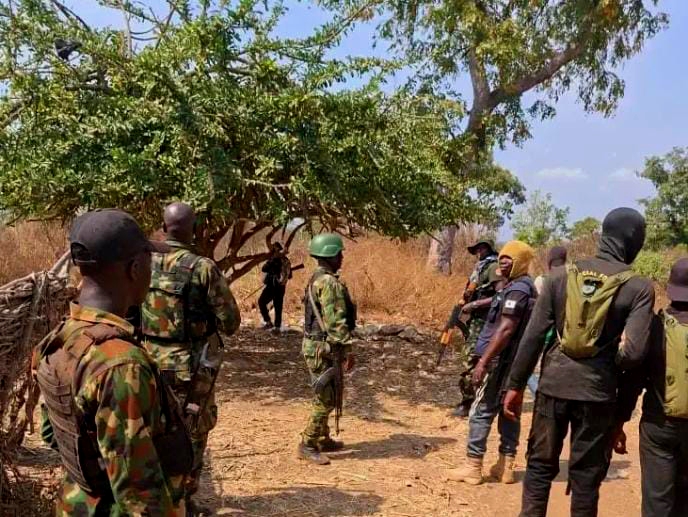
The Armed Forces of Nigeria rescued 66 kidnap victims, killed scores of insurgents, and arrested dozens of suspected collaborators between 11 and 17 September 2026. Major General Michael Onoja, Director of Defence Media Operations, released the operational summary in Abuja on Friday. The nationwide push spanned five geopolitical zones, targeting forest redoubts and rural highways. These periodic tactical sweeps yield impressive tallies of freed captives and captured small arms. Yet they expose a military stretched thin across domestic police duties. Routine army deployments cannot substitute for permanent territorial policing.
The biggest single hostage rescue unfolded in the North Central zone. On 15 September, soldiers from 18 Brigade under Operation Savannah Shield confronted an armed gang at Muchiya Village in Rafi Local Government Area of Niger State. Troops drove the fighters into the scrub, freeing 22 hostages on the spot. Medics evacuated one wounded villager to a hospital before the unit returned the surviving captives to local leaders. Niger State sits along vast forest tracts that link the federal capital territory to the north-west. Those roadless tracts remain open transit corridors for mobile kidnap gangs.
The north-western theatre saw parallel assaults under Operation Fansan Yamma. Soldiers clashed with armed bands around Gumki near the frontier with Niger Republic in Arewa Dandi Local Government Area of Kebbi State, killing several fighters and seizing machine guns, rifles, and motorcycles. In Katsina State, a raid at Unguwan Rimi in Sabuwa Local Government Area freed 10 captives, while units in Kaduna pulled three hostages from Danhonu 2 in Chikun. Nigerian infantry units have become proficient at tracking kidnappers on foot. But rescuing victims after abduction does not stop the extortion racket. Ransom cartels replenish their ranks as quickly as army units clear individual camps.
The prolonged insurgency in the North East presents a far grimmer, static picture. Troops in Borno State intercepted a woman who escaped her captors after five months in the bush. They also found two children held for six months inside the Suyaka redoubt on the Mandara Mountains in Gwoza. The rugged highland range has shielded Islamist cells from ground armour for over a decade. In the plains below, troops stopped a rebel attempting to plant improvised explosives near a military post along the Dikwa-Ajiri supply route. Explosive ordnance teams defused 12 home-made bombs during the week, including nine buried along the road between Machan-Gyada and Masaka. The insurgents rely on cheap pressure plates to slow army logistics and isolate rural garrisons.
The report also pointed to a growing military focus on logistics providers and informants. In Borno, troops arrested two suspected collaborators in Monguno and apprehended a returning fighter in Kukawa. Farther south in Benue State, soldiers rounded up the deputy commander of a criminal gang at Abako in Katsina-Ala. In Kaduna, troops linked with local vigilantes to free a husband and wife snatched from Ateli Village in Sanga. Military headquarters clearly recognises that rural bandits cannot survive without town informants, fuel couriers, and black-market arms runners. Cracking those civilian supply webs hurts the gangs far more than brief firefights in the mud.
The Chief of Defence Staff, General Olufemi Oluyede, praised the troops for their bravery and urged local communities to supply actionable intelligence. That plea highlights the central vulnerability of rural security. Villagers often withhold information from distant soldiers because informants face swift reprisal from forest gangs the moment patrol vehicles depart. Trust dissolves when the state fails to leave permanent security detachments behind. A military patrol can clear a hamlet in twenty minutes, but local farmers must live there all night. Without trusted local police stations, rural intelligence will remain dry.
The broader numbers tell an exhausting operational tale. During the second quarter of 2026, the armed forces killed 662 fighters, arrested over a thousand suspects, and rescued 951 kidnapped victims. The army now runs active combat deployments in over thirty of Nigeria’s thirty-six states. That footprint blurs the constitutional line between external defence and domestic law enforcement. Regular infantry soldiers spend their careers chasing highway robbers and cattle thieves instead of preparing for conventional warfare. Constant tactical firefighting exhausts soldiers, grinds down combat transport, and drains scarce operational budgets.
Freeing 66 citizens from captivity brings undeniable relief to traumatised families. The soldiers who tracked the tracks through heavy brush earned their commendations. Yet celebrating weekly casualty counts obscures the deeper institutional collapse behind rural banditry. The armed forces cannot kill their way to national stability while porous borders, mass youth unemployment, and absent civil courts persist. The country needs functional rural police, uncompromised judicial systems, and economic alternatives for idle hands. Until civilian administration returns to ungoverned rural spaces, military rescue tallies will remain a weekly ritual rather than an exit strategy.