


Trump Backs Japan’s Takaichi Ahead Of High-Stakes National Election
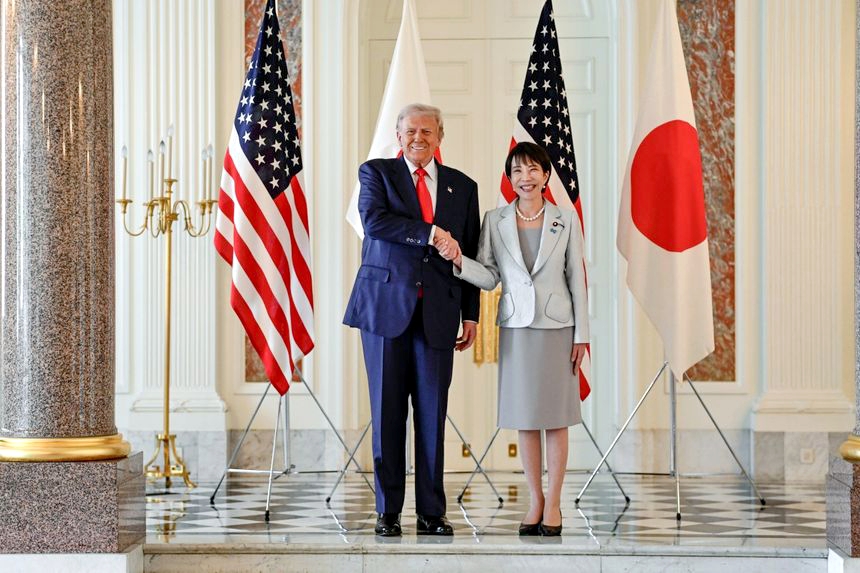
U.S. President Donald Trump has thrown his full support behind Japanese Prime Minister Sanae Takaichi ahead of Japan’s national election scheduled for Sunday, a move that adds a new international dimension to a closely watched vote with major economic and geopolitical implications.
In a statement posted on his Truth Social platform on Thursday, Trump said he was giving Takaichi his “complete and total endorsement,” praising her leadership and the direction of her governing coalition. He also announced plans to host the Japanese leader at the White House on March 19, signalling continued close ties between Washington and Tokyo.
Takaichi, Japan’s first female prime minister, assumed office in October and is seeking a fresh public mandate for policies that include expanded government spending, tax relief for households and a significant strengthening of Japan’s defence posture. Opinion polls suggest her Liberal Democratic Party (LDP), in coalition with the Japan Innovation Party (Ishin), is on course for a decisive victory.
Surveys indicate the ruling bloc could secure around 300 seats in the 465-member lower house of parliament, comfortably improving on the narrow majority it currently holds. Such a result would consolidate Takaichi’s authority and reduce internal party pressure as she presses ahead with ambitious reforms.
Despite her strong political standing, Takaichi’s economic agenda has unsettled financial markets. A key campaign pledge to suspend Japan’s 8 percent sales tax on food, aimed at easing the burden of rising living costs, has raised concerns among investors about fiscal discipline in a country already carrying the world’s heaviest public debt burden.
Market jitters intensified in recent weeks, with investors selling Japanese government bonds and pushing the yen lower amid fears over how Tokyo would fund an estimated 5 trillion yen ($30 billion) annual revenue shortfall. Nevertheless, analysts note that alternative opposition proposals involving deeper tax cuts and broader spending could pose even greater risks, making an LDP victory the “least disruptive” option for markets.
On the foreign policy front, Takaichi’s tenure has been marked by a firm stance on national security. One of her first major engagements after becoming prime minister was hosting Trump in Tokyo, where she reaffirmed Japan’s commitment to the U.S.-Japan alliance and pledged billions of dollars in new investments.
However, her public remarks outlining Japan’s possible response to a Chinese attack on Taiwan sparked the most serious diplomatic row with Beijing in more than a decade. China has accused Takaichi of reviving militaristic thinking, while Japanese officials say her defence build-up is a necessary response to growing regional threats.
Sources familiar with the matter revealed that Trump later urged Takaichi, during a private phone call, to avoid further antagonising China as Washington seeks to preserve a fragile trade truce with Beijing. Still, a strong electoral mandate could embolden her to push ahead with defence reforms despite Chinese objections.
Domestically, Takaichi remains popular, particularly among younger voters, even as geopolitical tensions and market volatility persist. Turnout, however, could be affected by record snowfall in parts of the country. Takaichi has said she would resign if her coalition loses its majority.
Trump’s endorsement reflects a broader pattern of U.S. involvement in foreign elections. He has recently backed leaders such as Argentina’s Javier Milei and Hungary’s Viktor Orbán, moves analysts say underline a growing effort to align with ideologically sympathetic governments abroad.