
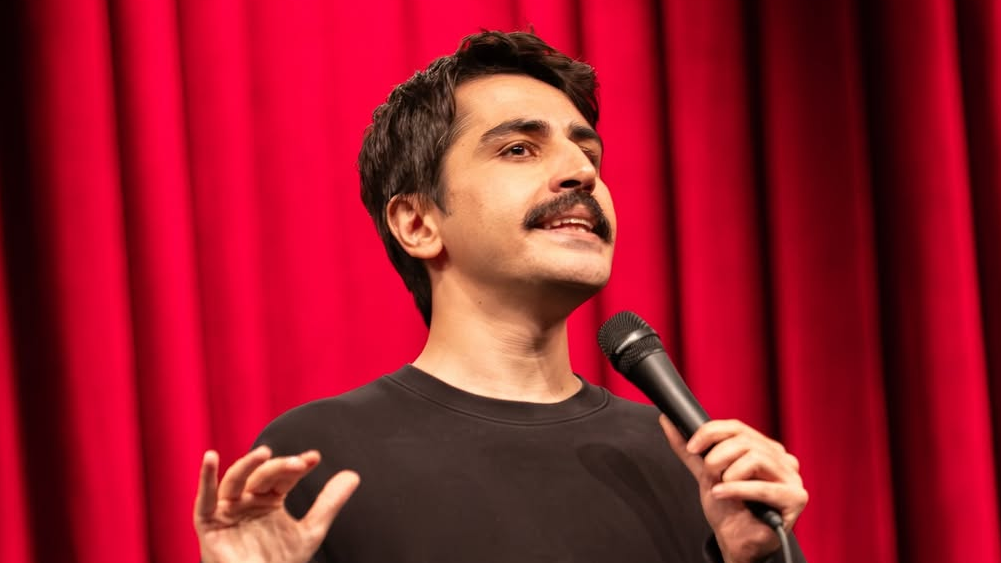
A Turkish stand-up comedian went on trial in Istanbul on Monday over jokes he made about President Recep Tayyip Erdogan, in a case that free expression campaigners say reflects a widening crackdown on dissent in Turkey.
Deniz Goktas, 32, appeared in person at the Caglayan courthouse to answer charges of insulting the president, inciting public hatred, and praising crime and criminals. Prosecutors say the offences flowed from his 90 minute show, “Olu Deniz”, or Dead Sea, which was posted on YouTube in late June and has since been watched millions of times. Goktas denied wrongdoing and asked the court to acquit and release him.
According to the indictment cited by Turkish news agencies, prosecutors singled out a line in which the comedian described Erdogan as “a shy dictator”. Goktas rejected the reading, telling the court that the word was political language rather than an insult. “Dictator is not an insult: it is a political characterisation,” he said, adding that a satirical show that never mentioned Erdogan’s name would not be believable given his quarter century in power.
He spent much of his defence turning the courtroom to laughter. He argued that Turkey’s most celebrated comedians and satirists had never been prosecuted in earlier decades, and that the law protecting free expression had not changed since then. “The joke hasn’t changed. What has changed is the increasingly fragile leadership that can no longer tolerate the joke,” he said.
The charges carry serious weight. Prosecutors have relied on Articles 299, 216 and 215 of the Turkish Penal Code, which cover insulting the president, incitement to hatred and hostility, and praising crime, respectively. By Turkish media calculations, a conviction on all counts could carry a sentence in the region of a decade.
Goktas has already spent about three months behind bars. Police detained him at Istanbul Airport in early July as he returned from abroad, and a court ordered him held pending trial the following day. He has been kept at Karatepe high security prison, roughly 120 kilometres west of Istanbul.
His detention has followed an unusual path. Reports from Turkish outlets say a court in August ordered his release on the presidential insult and incitement counts, but he stayed in custody after prosecutors secured a separate detention order tied to a newly added charge of praising crime, over a joke about an organised crime group known as the Daltons. A later ruling then reversed the release order on the first two counts, leaving him inside.
From prison, Goktas has posted occasional wry notes on social media. On the eve of the hearing, he wrote that after 88 days he would be handcuffed and hear a car horn for the first time in months, adding that he would not miss the handcuffs. In an earlier post, he complained that “a 90-minute show spawns a new charge every two months”.
The trial drew a visible show of support. About 50 protesters gathered in heavy rain outside the courthouse under the watch of several dozen police officers, chanting that Goktas was not alone, according to an Agence France-Presse correspondent at the scene. Among the audience inside were comedians from the Istanbul comedy club where he began performing in 2019, alongside observers reported to be from the Dutch and United States embassies.
Rights groups place the case within a broader pattern. The prosecution of Goktas has been described as the latest in a widening crackdown on figures seen as critical of Turkey’s conservative government, an effort that campaigners say has drawn in hundreds of politicians, artists, musicians, journalists and LGBTQ activists.
The practice of prosecuting perceived insults against the president is long established in Turkey. Thousands of people, ranging from ordinary social media users to well known performers, have faced charges under the presidential insult law since Erdogan took office, and previous cases have targeted veteran actors and columnists. Critics argue the law has become a tool to silence satire and commentary, while the government maintains that the courts are applying the penal code independently.
What happens next rests with the court. No verdict was delivered at Monday’s hearing, and the case is expected to continue at a later date, leaving unresolved both the outcome of the charges and whether Goktas will remain in custody in the meantime. For now, the confirmed facts are narrow: he is on trial, he has denied the charges, and he faces the prospect of years in prison if convicted.