
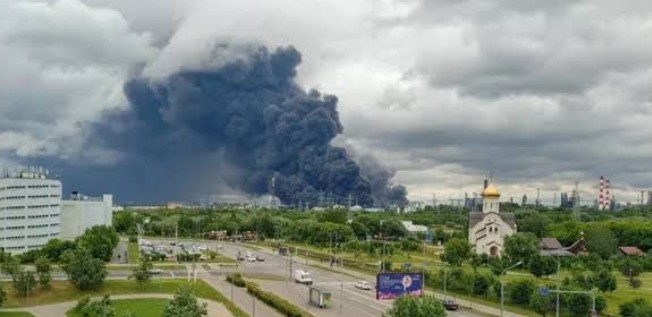
Ukrainian forces launched their largest drone attack on Moscow on Sunday, 20 September 2026, striking deep into the capital as Russians voted in parliamentary elections. The assault killed two people in the Moscow region and struck an oil refinery in the city. Two further deaths occurred in Russian-held Kherson, where a strike killed an election official. Russian air defences downed dozens of incoming aircraft over suburban districts. War has shattered the calm of the capital.
The strikes coincided with the final day of a three-day vote for the State Duma, the first parliamentary ballot since Russian troops marched into Ukraine in 2022. President Vladimir Putin framed the election as a direct test of popular resolve for his military campaign. The Kremlin orchestrates these ballots to project national harmony to the outside world. Ukrainian planners intended their strikes to puncture that official calm. Exploding drones provide a blunt counterpoint to official television broadcasts.
Mayor Sergei Sobyanin declared that city defences successfully repelled an unprecedented assault designed to wreck the vote. Falling wreckage ignited fires at an oil refinery that has suffered repeated attacks since the summer. Debris crushed multi-storey apartment roofs and set cars ablaze in outer residential quarters. Russian civil aviation authorities halted flights across regional airports to clear flight paths for interceptors. Modern air warfare brings immediate domestic disruption.
The Kremlin relies on tightly managed civic rituals to demonstrate stability. Central Election Commission chief Ella Pamfilova reported turnout running above 45 percent by late Sunday morning despite widespread digital attacks against online voting servers. The ruling United Russia party will comfortably keep its grip on the 450-seat legislature. Yet forcing voters to run for air-raid shelters strips the regime of its claim to total domestic safety. Managed democracy looks frail when anti-aircraft batteries rattle residential windows.
Read Also: US Approves $2.7bn Air Defence Sale to Ukraine
Russian officials have eliminated independent political opposition through arrests, exile, and legal bans. The liberal Yabloko party saw its candidates struck from the ballot by the Supreme Court after leaders openly opposed the war. Some party loyalists cast blank or spoiled ballots as private protests against state censorship. Those who express open dissent face harsh sentences under military censorship laws. When citizens cannot choose their leaders, silent resistance takes many forms.
Public discontent may still register through compliant, Kremlin-approved opposition channels. Think tanks tracking Russian politics note that economic stress and war fatigue could drive protest votes toward the Communist Party or the New People’s Party. These managed groups vote with the Kremlin on core foreign policy goals. Yet they offer frustrated citizens an officially sanctioned outlet to withhold votes from United Russia. Even tightly rigged political systems must occasionally absorb public irritation.
The assault exposed the deepening vulnerability of Russian infrastructure far from the front line. Ukrainian engineers build long-range composite drones that fly beneath radar nets to hit fuel depots and government centres. Western allies bar Ukraine from firing foreign ballistic missiles deep into sovereign Russian soil. Kyiv compensates by building thousands of domestic strike drones to hit industrial targets at home. Cheap domestic hardware now matches expensive foreign weapons.
Vladimir Putin urged Russians to vote to show that millions stand firmly behind the soldiers fighting in Ukraine. He painted the conflict as an existential clash against Western powers bent on dismembering Russia. Yet bringing combat into the Moscow suburbs reveals that five years of fighting have failed to isolate the Russian heartland from the front. Ukraine has made the cost of war impossible to hide. A state that wages war abroad will eventually fight fires at home.
Initial election returns will emerge on Sunday night, with full counts due by Monday. United Russia will announce another commanding majority. Official media will praise the courage of citizens who cast their ballots under fire. Yet the sight of black smoke rising over the Moscow refinery will linger far longer than any official election tally. War remains an unpredictable beast that refuses to follow official scripts.