
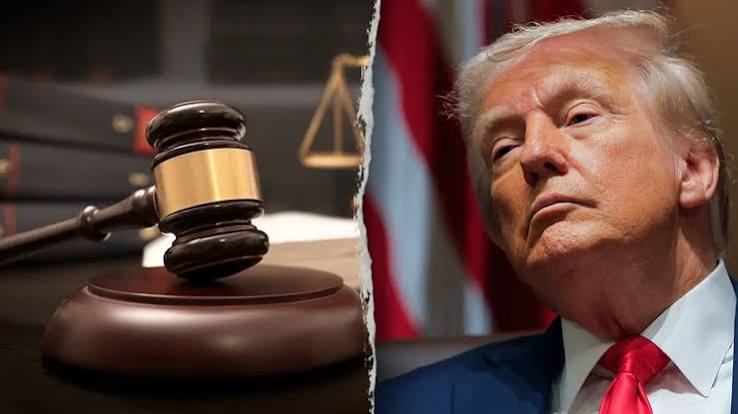
A federal judge in New York has ordered the Trump administration to cancel all remaining taxpayer-funded television advertisements featuring President Donald Trump, three weeks before Americans vote in the November 3 midterm elections. Judge Jennifer Rochon of the Southern District of New York issued a temporary restraining order on Sunday night, barring the administration from creating, placing or airing the disputed adverts for 14 days. The order also stops the Department of Homeland Security from spending any more of the $20 million set aside for the campaign.
“Defendants shall not enter into, renew, or expand any agreement authorizing the development, creation, dissemination, placement, or airing of the challenged advertisements,” Rochon wrote. She directed the administration to cancel every scheduled slot, including adverts due to air on Sunday evening. In granting the order, the judge found that the plaintiffs were likely to succeed on the merits, would suffer irreparable harm without relief, and that the balance of equities and the public interest favoured them.
The case was brought by the government watchdog group Common Cause, alongside Robert Hunter, the Service Employees International Union Local 32BJ and the Empire State 32BJ SEIU PAC. They argued that the adverts exceeded the purposes authorised by Congress and breached restrictions on publicity and propaganda. The Democratic National Committee has filed a separate lawsuit challenging the same spots.
The figures in court filings show how far the campaign had gone before the judge stepped in. The government told the court it had already spent $19 million of the $20 million budget, meaning about 95 per cent of the money was gone before the order was issued. The administration produced at least 13 campaign-style adverts, some of which ran on CBS, CNN, MS NOW, Fox News and Fox. The money came from DHS appropriations tied to immigration enforcement, with the buy handled through Customs and Border Protection.
The content of the adverts drew much of the anger. The first, broadcast in late September, showed Trump declaring that “America will never be a communist country.” Another featured black and white footage of him walking down a hallway while warning of a “final battle”, with an onscreen line stating that it was paid for by the US Government. The plaintiffs also pointed out that one of the adverts was almost identical to a spot made for Trump’s 2024 presidential campaign.
The White House has defended the spending, describing the adverts as public service announcements of the kind previous presidents have run. Trump said on Truth Social last week that he and his campaign would pay for the adverts, and he announced that his MAGA Inc. political action committee would fund future spots. The White House later clarified that the post did not refer to reimbursing the money already spent.
Government lawyers had argued that the court did not need to act at all. The Manhattan US Attorney’s Office, which is defending the administration, told the judge on Saturday that the adverts would not run beyond Sunday and that there were no plans for further purchases. Rochon rejected the argument that this made the request moot, noting that the adverts had continued to air days after officials first said there were no plans to buy more.
Criticism has come from both parties. Democratic Senator John Hickenlooper described the adverts as “illegal” and “propaganda”, while some senior Republicans expressed reservations about the use of public funds. Common Cause welcomed the ruling, saying the court had acted swiftly “to prevent more taxpayer dollars from being used for such blatantly unlawful political propaganda.”
The legal question is an old one in Washington. For decades, Congress has written into annual spending laws a ban on using appropriated money for publicity or propaganda purposes it has not authorised. The Government Accountability Office has enforced that rule before, finding in 2015 that the Environmental Protection Agency broke it through a social media campaign promoting a water regulation.
Trump is not on the ballot in November, but control of both chambers of Congress is at stake, and he has been campaigning for Republican candidates across the country. The restraining order runs until about October 25, nine days before polling day, unless the court extends it. Any attempt to resume the publicly funded campaign would require government lawyers to have the order lifted, while the full lawsuits are yet to be heard.