
A single declaration about power stretching beyond 2031 has drawn the ruling All Progressives Congress into an old Nigerian argument, one that a far larger party lost badly barely a decade ago.
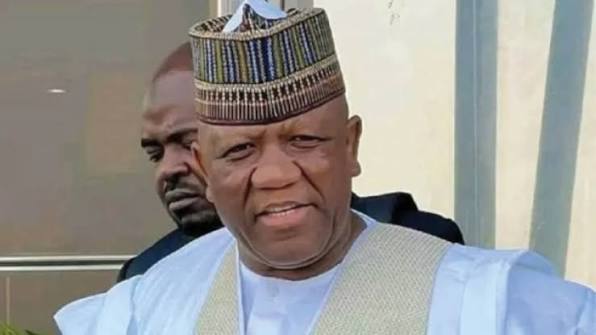
Senator Abdul’Aziz Yari, the newly appointed Director General of the APC Presidential Campaign Council, told supporters on his return from an overseas trip that President Bola Tinubu would be re elected in 2027 and that the party would keep the presidency long after his second term. “Today, we have seen him as president today, and by God’s grace, he shall be the president come 2027,” the former Zamfara governor said at the Nnamdi Azikiwe International Airport, Abuja. He added: “We pray that our party will continue to be the party to lead the country after President Tinubu’s second term,” insisting that the APC was “synonymous with keeping to our words.”
The remarks, made as Nigeria’s earliest ever general election draws near, immediately drew fire from opposition parties and elder statesmen who dismissed the projection as premature.
The boast came barely 24 hours after the Presidency unveiled a 223 member campaign council chaired by Tinubu, with Vice President Kashim Shettima and National Chairman Nentawe Yilwatda among its principal officials, and Imo Governor Hope Uzodimma as secretary. The list has drawn its own controversy. The appointment of Nigeria Revenue Service Chairman Zacch Adedeji to the fund raising directorate has raised questions over the propriety of a serving revenue official holding a partisan role, with former senator Dino Melaye threatening legal action. The inclusion of former ministers Betta Edu and Ngozi Olejeme, both linked to unresolved financial misconduct allegations, has also attracted scrutiny.
The sharpest rebukes recalled history. Founding APGA National Chairman Chekwas Okorie reminded Yari that such confidence had been heard before. When the Peoples Democratic Party stood at the height of its power, its then National Chairman, Vincent Ogbulafor, declared in 2008 that the party would rule Nigeria for 60 years. That forecast collapsed in 2015, when the PDP, after 16 unbroken years in office from 1999, lost the presidency to the APC and Muhammadu Buhari. It remains the only time in the Fourth Republic that an incumbent Nigerian president, Goodluck Jonathan, has been defeated at the polls.
The party that once styled itself Africa’s largest is today a shadow of that force. It has been consumed by factional battles and court disputes, and by late 2025 had gone roughly 17 years without a substantive national convention, its planned Ibadan gathering derailed by conflicting judgments. Okorie’s warning was pointed. “Let us not arrogate powers that belong to God to ourselves because we are in government today,” he said.
Opposition spokesmen pressed the same theme. The African Democratic Congress, the platform now associated with former Vice President Atiku Abubakar, described the APC council as a “special purpose vehicle” rather than a genuine party, according to its National Publicity Secretary, Bolaji Abdullahi. The Nigeria Democratic Congress spokesman Osa Director said the country was “used to such empty boasts,” again invoking the 60 year pledge. Former presidential candidate Peter Ameh said the claim betrayed “overconfidence” and “a complete disconnect from the harsh economic realities” facing ordinary Nigerians. The PDP said Yari should first deliver the mandate handed to him before predicting outcomes years away.
The dispute is unfolding against a fixed and unusually early timetable. Following the repeal of the Electoral Act 2022 and enactment of the Electoral Act 2026, the Independent National Electoral Commission moved the presidential and National Assembly elections to 16 January 2027, with governorship and state assembly polls on 6 February. The dates were brought forward from February and March after Muslim stakeholders objected that the original schedule fell within Ramadan. It is the first January presidential poll since Nigeria returned to democratic rule in 1999. Official campaigning opened on 19 August 2026.
Recent results offer a note of caution to any party counting its victories early. In the Osun governorship election of 15 August 2026, the incumbent, Ademola Adeleke, secured a second term on the Accord Party platform with 511,067 votes, or 50.8 per cent, defeating the APC’s Bola Oyebamiji, who polled 444,815 votes despite heavy backing from the ruling party. The Social Democratic Party cited that outcome as evidence that voters had grown “emboldened” to decide contests themselves. Its spokesman, Rufus Aiyenigba, said it was “not in Senator Yari’s place to make such a declaration.”
The APC, for its part, insists its record justifies the confidence. Presidential spokesman Bayo Onanuga said the party had “delivered on our campaign promises” and set the economy “on a path of economic progress.” Critics dispute that reading. Okorie noted that when Tinubu removed the petrol subsidy in 2023, he likened the resulting hardship to labour pains that would soon yield relief. “Almost four years on, the labour pains have worsened with no signs of delivery in sight,” Okorie said.
Whether the APC can sustain its dominance beyond 2031 is not a question any campaign official can answer today. What the record establishes is that ruling party longevity in Nigeria has proved fragile before, that opposition fragmentation, the very weakness the APC hopes to exploit, cut both ways when it destroyed the PDP from within, and that the verdict Yari has pre empted belongs, by law, to voters who go to the polls on 16 January 2027.