
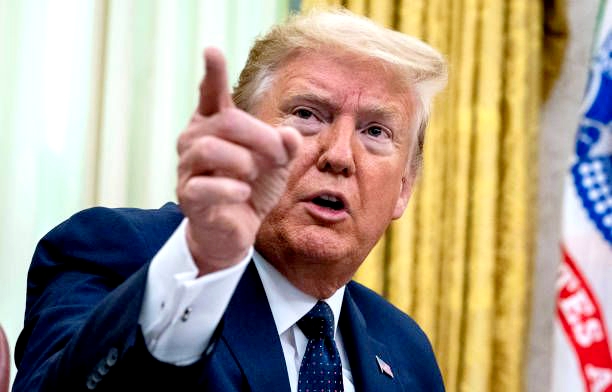
President Donald Trump has declared he is not ready to negotiate a ceasefire with Tehran, asserting that the current terms for ending the two-week-old conflict are “not good enough.” In an interview with NBC News on Sunday, Mr. Trump claimed that while Iran appears keen to reach an agreement, Washington will continue its military campaign to secure more favorable conditions. The President even suggested the U.S. might strike Iran’s Kharg Island oil hub again “just for fun,” despite earlier reports that the facility had already been decimated by American and Israeli bombardments.
The refusal to seek a diplomatic exit comes as the Israel Defense Forces (IDF) launched a “wide-scale” wave of airstrikes against regime infrastructure in western Iran. These latest sorties follow a series of escalatory threats from Tehran; the Islamic Revolutionary Guard Corps (IRGC) recently branded Prime Minister Benjamin Netanyahu a “criminal” and vowed to “pursue and kill” him. Since the start of Operation Epic Fury on 28 February, Israel has been targeted by at least 250 Iranian ballistic missiles, resulting in 12 deaths and widespread destruction.
Despite the intense military activity, a surreal sense of normalcy is reportedly returning to parts of the Iranian capital. Five days before Nowruz, the Persian New Year, shoppers have begun returning to the Tajrish bazaar, and local cafes have reopened. Residents were seen using ATMs and even electric hoverboards in the streets, marking the busiest civilian activity since the opening salvoes of the war killed Supreme Leader Ali Khamenei. However, the political situation remains murky, with Mr. Trump questioning whether the new leader, Mojtaba Khamenei, is “even alive” given his lack of public appearances.
The economic fallout of the conflict remains acute as the Strait of Hormuz operates under a de facto blockade. Mr. Trump has called for an international naval coalition—including China, Japan, and the UK—to escort tankers through the waterway and restore global oil supplies. While the Pentagon has dispatched the USS Tripoli and 2,500 Marines to the region, U.S. allies have remained noncommittal. Japan’s ruling party noted that the legal threshold for such a deployment is “extremely high,” while the UK Ministry of Defence is still “discussing options.”
The human cost of the war is reaching a breaking point. Iranian health officials report over 1,200 fatalities from U.S. and Israeli strikes, while the UN refugee agency estimates that 3.2 million people have been displaced within Iran. In Iraq, the U.S. Embassy in Baghdad has urged all American citizens to leave immediately after a missile struck a helipad within its compound. The mission warned that Iran-aligned groups continue to pose a significant threat to Western interests across the Green Zone.
As the war enters its third week, the Pentagon confirms it has hit more than 15,000 targets across Iran. With oil prices hovering above $100 and regional air defences in Saudi Arabia and the UAE working overtime to intercept daily barrages, the “total defeat” claimed by the White House remains elusive. The conflict has transitioned into a grinding war of attrition, with both sides dug in for a long-term confrontation that shows no sign of moderation.