
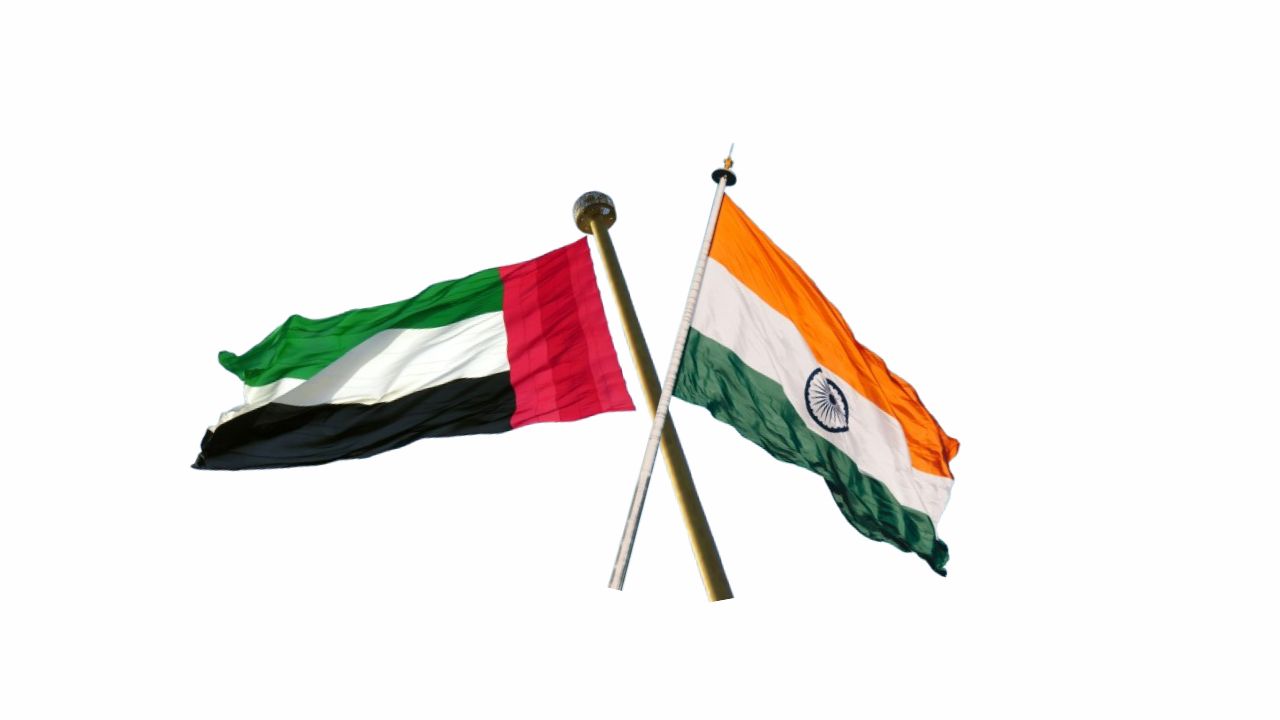
India and the United Arab Emirates signed a series of major defence and energy pacts on Friday to shield their economies from the escalating US-Israeli war on Iran. Prime Minister Narendra Modi met UAE President Sheikh Mohamed bin Zayed Al Nahyan in Abu Dhabi to formalise the agreements during a brief stopover. The diplomatic rush follows recent drone and missile strikes that targeted Emirati oil facilities. The attacks highlight the vulnerability of global trade routes as regional instability threatens the economic stability of major Asian importers.
The freshly inked Strategic Defence Partnership Framework shifts the bilateral relationship from a quiet trading alliance into a firmer security pact. Both nations agreed to deepen military industrial collaboration, share advanced technology, and coordinate cyberdefence systems. New Delhi intends to expand maritime security operations and information exchanges to protect joint shipping assets. Modi explicitly condemned the recent strikes on the Gulf state as unacceptable, declaring that India stands shoulder to shoulder with the UAE.
The commercial pressure driving this sudden alignment is immense. India imports 90% of its crude oil, and the bulk of these shipments travel through the contested Strait of Hormuz. The current conflict has already caused Indian fuel inventories to drop by 15%, forcing domestic retail fuel prices up by 3% this month. In response, the new agreements allow the Abu Dhabi National Oil Company to expand its crude storage capacity within India’s strategic petroleum reserves to 30 million barrels. The countries will also work together to establish new gas reserves to insulate New Delhi from sudden supply cutoffs.
Financial diplomacy accompanied the military arrangements. Abu Dhabi announced a $5 billion investment package to reinforce Indian infrastructure and banking institutions. The capital injection includes $3 billion from Emirates NBD into RBL Bank, alongside separate $1 billion allocations for infrastructure projects and local financial firms. The financial commitments underscore the UAE’s desire to anchor its wealth in South Asia as its own regional neighbourhood becomes increasingly volatile.
The strategic shift comes at a critical moment for the global energy market. The UAE recently left OPEC, a move that allows Abu Dhabi to increase its independent production capacity and secure long-term buyers. India is an ideal customer, consuming nearly 40% of its imported liquefied petroleum gas from Emirati suppliers alone. By locking in these long-term supply agreements and expanding storage, both capitals are trying to build a reliable energy corridor that bypasses regional blockade points.
Beyond fuel and guns, the meeting produced agreements to build a major ship repair cluster at Vadinar in Gujarat to handle rising maritime traffic. The two leaders also launched a virtual trade corridor to automate customs procedures and cut logistics costs between their ports. A separate computing agreement will see the nations build an eight-exaflop supercomputer cluster to boost joint artificial intelligence research. The technical deals show that while war fears brought the leaders together, economic integration remains the long-term goal.