
Online shopping has always been messier than it should be. You find a product on Google Search, open the retailer’s site in a new tab, get distracted, lose the tab, and start over. Or you build a cart on one site, realise a better deal exists elsewhere, and end up juggling three browser windows and two wishlists before giving up entirely.
Google just announced a direct fix for that problem. At Google I/O 2026 on May 19, the company introduced Universal Cart, an AI-powered shopping hub that follows you across Search, Gemini, YouTube, and Gmail, keeps your products in one place, and actively works in the background to save you money before you ever reach checkout.
Here is everything you need to know about how it works, what it can do, and when you can use it.
What is Google Universal Cart?
Universal Cart is a single, persistent shopping cart that works across Google’s entire ecosystem of products. Add an item while searching on Google. Add another while chatting with Gemini. Find something on YouTube or spot a deal mentioned in a Gmail receipt. Every product lands in the same cart, regardless of where you found it or which retailer sells it.
That cross-surface persistence is the first major shift. The second is what happens once a product is in your cart.
Google’s own description: The moment you add a product to your cart, it gets to work in the background, finding deals and price drops, giving you insights on price history, and alerting you when an item is back in stock.
Universal Cart runs on Gemini’s reasoning models. That means the cart does not just store items. It thinks about them, monitors them, and flags anything relevant before you commit to buying.
What Can Universal Cart Actually Do?
The feature set announced at I/O 2026 covers several distinct capabilities, each designed to solve a different frustration that online shoppers regularly face.
Price tracking and deal alerts
The moment a product enters your cart, Universal Cart begins monitoring it. It tracks price drops across retailers, surfaces price history so you can judge whether a deal is real, and sends alerts when stock levels change. If an item sells out and comes back, you hear about it. If the price drops below what you paid, you know immediately.
This replaces the manual habit of bookmarking products and returning to check prices, or relying on third-party browser extensions to do the same job.
Hardware compatibility checks
This is one of the most genuinely useful features announced. Google demoed a scenario where a user building a custom PC added components from multiple retailers into the same cart. Universal Cart automatically flagged a compatibility issue, identifying that a processor was incompatible with a selected motherboard, and suggested alternatives before any money changed hands.
The same logic applies to other product categories where parts or accessories need to match. It is the kind of check that currently requires manual research or a knowledgeable friend. Universal Cart handles it automatically, in the background, without being asked.
Single-point checkout
Products from multiple retailers sit in one cart. Checkout uses Google Pay. Participating merchants include Nike, Sephora, Target, Ulta Beauty, Walmart, Wayfair, and Shopify stores, including Fenty and Steve Madden.
Rather than visiting each retailer’s site separately and re-entering payment details, you confirm your purchase through a single interface. Google applies your Google Wallet perks and card benefits automatically, which means loyalty rewards and card-linked offers get used without requiring you to remember they exist.
Gmail integration
Universal Cart reads relevant emails with your permission. Promotional deals, shipping updates, and price-match offers that land in your inbox can surface directly in the cart experience, connecting your email activity to your shopping intent without requiring you to copy information between apps.
What is the Agent Payments Protocol, and Why Does It Matter?
Universal Cart is the consumer-facing product. Behind it sits a payments framework called the Agent Payments Protocol, or AP2, that powers the more advanced autonomous purchasing features.
AP2 allows Gemini to make purchases on your behalf, but only within the guardrails you set. You tell the agent which brands you want, which specific products qualify, and the maximum amount it can spend. The agent acts only when all your criteria are met. Nothing gets bought outside those boundaries.
The accountability layer: AP2 creates a tamper-proof digital link between you, the merchant, and the payment processor. Both sides see the same transaction record, which means returns and disputes have a clear, shared paper trail from the start.
Google describes this as privacy-preserving by design. The digital mandates built into AP2 ensure the agent is demonstrably acting on your behalf, not making independent decisions with your money.
The protocol is rolling out to Google products over the coming months, starting with Gemini Spark. Google has also donated AP2 to the FIDO Alliance, signalling its intent to make it an open industry standard rather than a proprietary system.
The Infrastructure Behind It: Universal Commerce Protocol
Universal Cart sits on top of the Universal Commerce Protocol, or UCP, an open standard Google launched at the National Retail Federation conference in January 2026. More than 60 partners signed on at launch, including PayPal, Mastercard, Visa, and American Express.
UCP is what allows an AI agent to communicate with a merchant’s inventory, apply loyalty discounts, and complete a checkout without a human navigating a traditional storefront. The protocol is compatible with other major industry standards and designed so that merchants retain full ownership of their customer relationships and transaction data.
UCP is already expanding beyond its initial US rollout. Checkout through the protocol is coming to Canada and Australia in the coming months, with the UK planned for later. New verticals beyond retail are also in the pipeline, starting with hotel bookings and local food delivery.
Which Retailers Are In?
Google confirmed the following launch partners for Universal Cart checkout:
- Nike
- Sephora
- Target
- Ulta Beauty
- Walmart and Sam’s Club
- Wayfair
- Shopify merchants, including Fenty and Steve Madden
Walmart’s partnership goes deeper than basic integration. Walmart described agent-led commerce as the next great evolution in retail and confirmed that shopping through Gemini gives customers access to Walmart’s full inventory, pricing, and delivery options without leaving the Google experience.
When Is Universal Cart Rolling Out?
Google confirmed the following rollout schedule:
- Summer 2026: Universal Cart goes live in Search and the Gemini app for US users
- Later in 2026: YouTube and Gmail integrations follow
- International: UCP-powered checkout expands to Canada and Australia in the coming months, then the UK
- AP2 autonomous purchasing: Arrives in Google products starting with Gemini Spark over the coming months
Pricing for the Universal Cart feature itself is not applicable. It is a free capability within Google Search and Gemini for users who shop through Google’s ecosystem. Payment processing uses your existing Google Pay and Google Wallet setup.
How Does This Compare to Amazon and Other Competitors?
Amazon recently merged its Rufus chatbot and Alexa assistant into a unified shopping interface, embedding AI directly into its search bar. OpenAI-backed rivals are building their own AI checkout flows. The race to own the default AI shopping layer is accelerating across every major platform.
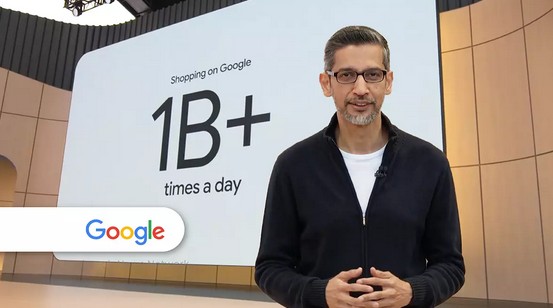
Google’s advantage is distribution. People shop across Google more than one billion times a day, and the Shopping Graph that powers Universal Cart contains over 60 billion product listings. No other company has a comparable combination of shopping intent data, AI capability, and cross-platform reach.
The risk Google manages is trust. Giving an AI agent permission to buy on your behalf requires confidence that the guardrails actually hold. The AP2 audit trail and user-set spending limits are Google’s answer to that concern.
The Bottom Line
Universal Cart is Google’s most ambitious attempt yet to own the entire shopping journey, from the moment you discover a product to the moment it ships to your door.
The combination of persistent cross-merchant carts, background price monitoring, AI compatibility checks, and AP2-powered autonomous checkout represents a genuine shift in how online shopping works. The fragmented tab-juggling approach that most people use today has a smarter, faster alternative arriving this summer.
If you use Google Search, Gemini, or Gmail regularly, Universal Cart will start showing up in your shopping experience whether you opt in consciously or not. The better question is how quickly you will wonder how you managed without it.