


What Are the Best Brain Exercises to Clear Mental Fatigue During Menopause?
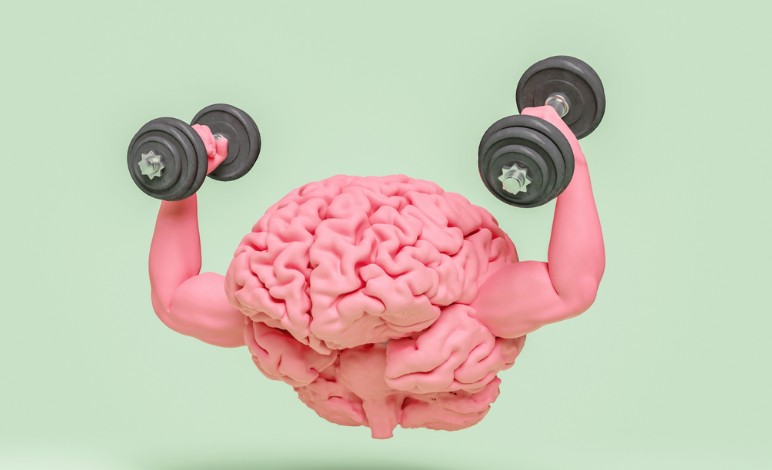
You walk into a room and forget why you went there. You lose your train of thought mid-sentence. You read the same paragraph three times and still cannot absorb it. You used to be sharp. Now your brain feels like it is running through wet concrete.
This is menopause brain fog. It is real, it is common, and it is not a sign that something is permanently wrong with you.
Up to 60% of women report noticeable cognitive changes during perimenopause and menopause. Memory lapses, poor concentration, and persistent mental fatigue are among the most distressing symptoms women experience during this transition. Yet they are also among the least talked about.
The brain is highly responsive to estrogen. When estrogen drops, it affects memory consolidation, processing speed, and mental clarity. But here is what matters most: your brain retains the ability to adapt, rewire, and strengthen throughout your life. The right exercises, practiced consistently, can cut through the fog and restore mental sharpness.
These are the best ones.
Why Menopause Causes Mental Fatigue
Estrogen does far more than regulate your cycle. It supports the production of acetylcholine and serotonin, two neurotransmitters that play a direct role in memory and focus. It also helps maintain blood flow to the brain and supports the hippocampus, the region responsible for learning and memory.
When estrogen levels fall, all of this gets disrupted. Add poor sleep from night sweats, elevated cortisol from stress, and nutritional shifts, and you have a perfect storm for mental fatigue.
The encouraging news is that this decline is largely functional, not structural. The brain is not damaged. It is adapting to a new hormonal environment, and you can actively support that adaptation.
- Dual-Task Training
Dual-task training challenges your brain to handle two things at the same time. It directly strengthens the prefrontal cortex, the area responsible for focus, planning, and working memory. This is exactly the area that takes the biggest hit during menopause.
Try this: recite the alphabet while walking and tapping alternate knees with each letter. Or count backwards from 100 in threes while doing light stretches.
These tasks feel awkward at first. That awkwardness is the point. The cognitive friction is what drives neuroplasticity.
Start with five minutes daily and build from there. Research on dual-task training in older adults shows measurable improvements in working memory and attention within six to eight weeks.
- Learn Something Genuinely New
Reviewing what you already know does not build new neural pathways. Learning something you have never done before does.
Pick a skill that requires active concentration. A new language, a musical instrument, a craft like pottery or watercolour painting, or even a new genre of cooking. The specifics matter less than the effort involved in acquiring the skill.
Language learning is particularly effective. Apps like Duolingo make it accessible, but sitting down with a tutor or a structured course is more cognitively demanding and therefore more beneficial. Even 20 minutes a day of genuine language practice activates memory encoding, recall, pattern recognition, and attention simultaneously.
The brain grows in response to challenge. Give it one.
- Mindfulness Meditation
Mindfulness is not just a stress management tool. It is a direct intervention for mental fatigue and attention problems.
A landmark study published in Psychological Science found that just two weeks of mindfulness training improved working memory capacity and reduced mind-wandering, two of the most common complaints during menopause.
Start with guided meditation. Apps like Headspace or Insight Timer offer 10-minute sessions designed for beginners. The practice trains your brain to notice when attention drifts and bring it back. Over time, this builds sustained focus and reduces the mental exhaustion that comes from a constantly scattered mind.
Aim for 10 to 15 minutes daily. Consistency matters far more than duration.
Read Also: Why Am I So Bloated All of a Sudden During Perimenopause?
- Strategic Reading and Summarising
Passive reading, scrolling articles or skimming social media, gives your brain almost nothing to work with. Active reading is a different matter.
Choose a book, an article, or a long-form piece on a topic that genuinely interests you. Read a section, then close the page or book and write or speak a brief summary in your own words. No notes. Just recall.
This technique, called retrieval practice, is one of the most evidence-backed methods for strengthening memory. It forces your brain to reconstruct information rather than simply recognise it, which builds stronger memory traces.
Do this once a day with whatever you are reading. Even five minutes of active recall after reading produces significantly better retention than re-reading the same material twice.
- Puzzles and Structured Problem-Solving
Crosswords, Sudoku, logic puzzles, and strategy games like chess or even certain video games all engage the prefrontal cortex and the hippocampus. They are not a cure for brain fog, but regular engagement builds cognitive reserve, the brain’s ability to cope with challenges and recover from disruption.
The key is to progress in difficulty. Once a puzzle feels easy, it stops being a growth stimulus. Push into slightly harder territory regularly.
Word-based puzzles like crosswords and Scrabble are particularly good for verbal memory and language retrieval, the exact functions that often feel sluggish during menopause.
Spend 15 to 20 minutes on structured puzzles three to four times a week. It is a small investment with a meaningful cognitive return.
- Physical Exercise as a Brain Tool
This is not about fitness. It is about your brain.
Aerobic exercise increases the production of BDNF, brain-derived neurotrophic factor, a protein that supports the growth and survival of neurons. It also increases blood flow to the prefrontal cortex and hippocampus and helps regulate cortisol, which when chronically elevated, actively impairs memory.
A brisk 30-minute walk produces measurable improvements in cognitive performance within hours of the activity. Over weeks and months, regular aerobic exercise has been shown to increase the size of the hippocampus, literally growing the memory centre of the brain.
Dance-based exercise like Zumba or dance fitness classes is especially useful because it combines aerobic activity with coordination, rhythm, and memory of movement sequences. It trains the brain and the body simultaneously.
- Social Engagement and Conversation
Isolation is one of the fastest ways to accelerate cognitive decline. Active conversation, especially with people who challenge your thinking, is one of the most powerful and underrated brain exercises available.
Joining a book club, a community class, a discussion group, or even scheduling regular calls with a friend who pushes you intellectually all count. Conversation requires real-time processing, rapid recall, listening, and response formulation. It is cognitively demanding in the best possible way.
If social anxiety or low mood is making this difficult, that is worth addressing directly. Menopause-related mood changes can create a withdrawal loop that worsens cognitive fatigue over time.
Build the Habit, Not Just the Knowledge
Reading about brain exercises does not improve your brain. Doing them does.
Pick two from this list. Commit to them for four weeks before adding more. Track how you feel week by week: your clarity, your concentration, your ability to follow a conversation or hold a complex thought.
Mental fatigue during menopause is not your new normal. It is a signal that your brain needs support. Give it structured challenge, good sleep, regular movement, and genuine social connection, and it will respond.
Your brain is not declining. It is adapting. Work with it.