
House Orders Security Chiefs to Explain Defence Spending
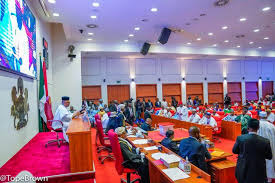
Nigeria’s House of Representatives has summoned the Chief of Defence Staff, Chief of Army Staff, Chief of Naval Staff, Chief of Air Staff and the Minister of Finance to appear before it and give a full account of funds released for security operations. The move comes amid widespread concern that massive budgetary allocations have failed to curb the rising tide of banditry, kidnappings and attacks on communities, schools and places of worship, especially in the North West.
Lawmakers adopted motions highlighting the worsening situation despite years of substantial resources committed to defence and internal security. Recent budget figures show defence and security allocations exceeding N5 trillion for 2026, continuing a pattern of multi trillion naira commitments in prior years. Yet monitoring reports indicate persistent large scale kidnappings and violence across the North West and other zones.
Ibe Osonwa, representing Abia on the Labour Party platform, led debate on the impact on education. He noted that abductions of schoolchildren have forced thousands out of classrooms and deepened Nigeria’s out of school children crisis, with UNICEF estimates placing the national figure at around 18.3 million, including 10.2 million at primary level. He described current responses as largely reactive and warned that schools and places of worship, once regarded as safe havens, have become soft targets. Osonwa cited Section 14(2)(b) of the 1999 Constitution, which places on the government the primary duty of protecting citizens’ lives and property.
Sulaiman Gumi, representing Zamfara on the All Progressives Congress platform, painted a grim picture of conditions in his state and neighbouring areas. He described the situation as a humanitarian crisis driven by armed banditry and kidnappings. Gumi cited the recent abduction of seven students from the Federal Polytechnic in Kaura Namoda, where one escaped but six others remain in captivity, along with two senior lecturers still held despite ransom payments.
The House resolved to invite the service chiefs and the Finance Minister to brief members on the exact amounts appropriated and released for security, as well as the measurable impact of those expenditures. Lawmakers said the session would allow Nigerians to understand how public funds have been utilised and why desired results remain elusive.
In separate resolutions, the House urged President Bola Tinubu to deploy a comprehensive and aggressive strategy to clear bandits and kidnappers from their hideouts and secure the release of all captives. It called on the Minister of Defence to deploy additional troops and operational equipment to Zamfara and other affected North West states. The House condemned in the strongest terms the continued attacks on schools and churches and transmitted an urgent appeal to the President, reminding him of his constitutional oath to protect lives and property.
Lawmakers also advocated non kinetic measures, directing the ministries of agriculture, education, environment and humanitarian affairs to implement programmes addressing the socio economic drivers of criminality. The committees on defence, national security and intelligence, army and other relevant panels were mandated to oversee implementation and report back within two weeks.
The resolutions underscore growing legislative scrutiny of accountability and effectiveness in the security architecture, with members stressing that Nigerians deserve clarity on why banditry and kidnappings continue to threaten lives, livelihoods and national stability despite sustained high levels of spending.