
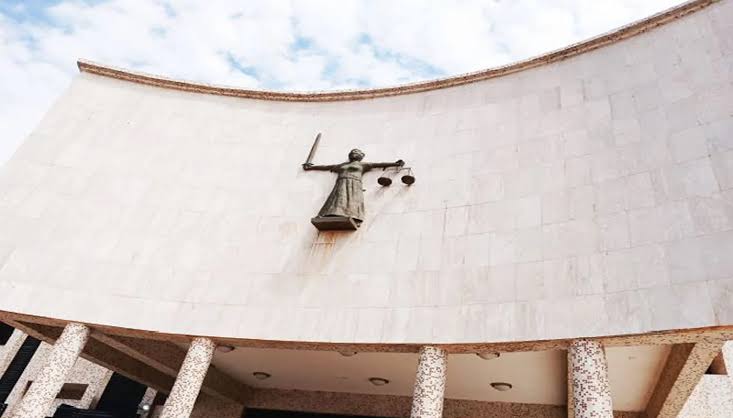
The Federal High Court in Gombe has ordered the Gombe Geographic Information System and its immediate past Director General, Kabiru Usman Hassan, to release documents connected to the redesign of the Shehu Abubakar District Layout, ruling that the agency breached the Freedom of Information Act by failing to act on a citizen’s request for the records.
Justice Amina Mohammed, presiding over Federal High Court No. 1, delivered the judgment on Wednesday after finding that the respondents did not answer the request of the applicant, Nafi’u Abubakar, within the timeframe fixed by the FOI Act, 2011. The court awarded the applicant N200,000 in costs.
The suit, filed on January 8, 2026 by the applicant’s counsel, Barrister M. U. Faruk, was brought under Sections 1, 2, 4, 7 and 20 of the Act. Barrister Musa Adamu Kumo appeared for the respondents. The applicant had asked the court to determine whether he was entitled to public records on the award of the layout redesign contract, including the list of companies that expressed interest, published calls for expressions of interest, bids submitted, the name of the successful contractor, the contract value, evidence of payment, letters of award and acceptance, and the project profile.
The court held that the applicant made a valid request received by the agency on December 9, 2025, and that the respondents failed to prove any response within the statutory period. “The respondents failed to establish that Exhibit R1 was ever served on the applicant and, in any event, failed to respond within the statutory period prescribed by the Act,” Justice Mohammed ruled, adding that they were “deemed, by operation of law, to have refused the applicant’s request.”
She directed the agency to provide the documents within 14 days, or furnish written reasons for any lawful refusal under Section 7. The court, however, declined the applicant’s claim of N100 million in general damages and N5 million as cost of action, holding that the FOI Act exists “to secure access to information and promote accountability in public institutions, not to provide a basis for punitive enrichment.” Relying on the Supreme Court decision in Iyere v. Bendel Feed and Flour Mill Ltd. (2008), the judge noted that the applicant placed no material before the court establishing special injury or pecuniary loss.
The ruling lands against a backdrop of persistent official reluctance to honour information requests. Signed into law by former President Goodluck Jonathan on May 28, 2011, the FOI Act requires public institutions to respond to requests within seven days and to publish key records proactively, positioning Nigeria among the few African countries with a statutory right to information. In practice, enforcement has leaned heavily on litigation.
Compliance data underscores the gap. In the implementation report submitted to the National Assembly on March 24, 2026 by the Attorney General of the Federation, Lateef Fagbemi (SAN), more than 90 percent of federal public institutions filed no report at all on how they handled requests in 2025, as mandated by Section 29 of the Act. The National Broadcasting Commission recorded the highest volume with just 40 applications for the year, a figure that itself illustrates how thinly the law is used. A separate compliance list published on the Ministry of Justice website named over 170 institutions, among them universities, ministries and agencies, that failed to submit their 2025 returns.
Transparency advocates, including Media Rights Agenda and the Right to Know coalition, have long argued that weak records management and outright refusals blunt the Act’s promise. The Gombe judgment adds to a slowly growing body of court decisions compelling disclosure, and signals that procurement records at the subnational level remain within reach of citizens willing to litigate.