
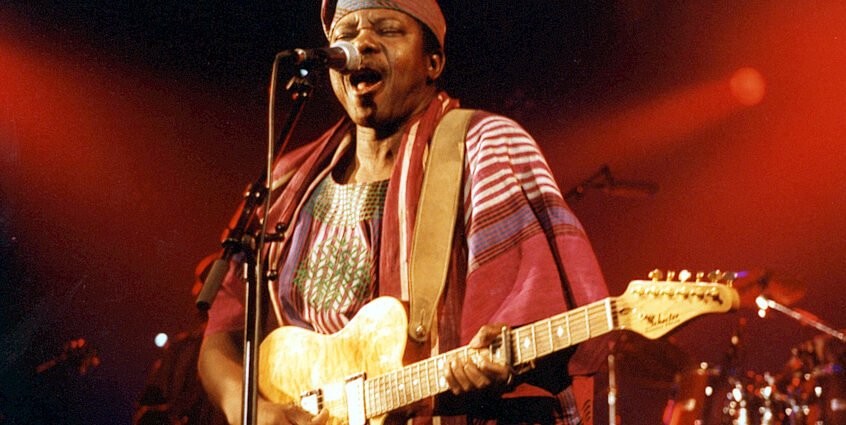
King Sunny Ade has turned 80 after more than six decades in music, with a career that took jùjú from Nigeria to international audiences and earned him two Grammy nominations.
King Sunny Ade, one of Nigeria’s most prominent jùjú musicians, turned 80 on Tuesday, September 22, 2026, after more than six decades in the music industry. Born Sunday Adeniyi Adegeye in 1946, the musician has built a career around jùjú music and become one of the Nigerian artistes to take the genre to audiences outside the country.
His 80th birthday has attracted tributes from government officials, musicians, fans and others who have followed his career since the early years of Nigerian popular music. President Bola Tinubu, in a birthday message issued by the State House, described Sunny Ade as an icon of Nigerian and African music and praised his contribution to the country’s cultural heritage.
The President said Sunny Ade had transformed jùjú music into a globally recognised Nigerian cultural treasure and had brought Nigerian music to audiences around the world.
A career that began in the 1960s
Sunny Ade’s professional music career took shape in Lagos during the 1960s. He joined Moses Olaiya’s Federal Rhythm Dandies before establishing his own band, the Green Spots, in 1967. The group later became known as the African Beats.
Through the band, Sunny Ade developed the musical style that would establish him as one of the leading figures in modern jùjú music. His performances brought together guitars, talking drums, percussion, vocals and other instruments. He also became known for energetic stage performances and coordinated movement by members of his band.
By the 1970s, he had become an established name in Nigerian music. His career also developed during a period when indigenous Nigerian genres played a major role in the country’s social and entertainment life.
Taking jùjú beyond Nigeria
A major turning point came in the early 1980s when Sunny Ade signed with Island Records. The deal brought his music to a wider international audience. His albums Juju Music and Synchro System were released through the label, with Synchro System earning a Grammy nomination in 1983. He later received another Grammy nomination for his 1998 album Odu.
His international career placed jùjú music before audiences in Europe, North America and other parts of the world. The development was significant for Nigerian music at a time when contemporary Nigerian artistes did not have the level of international visibility that exists today.
President Tinubu referred to this aspect of Sunny Ade’s career in his birthday message, saying, “Through your extraordinary talent, creativity, discipline and enduring passion, you transformed juju music into a globally recognised Nigerian cultural treasure.”
The President also highlighted the musical elements that became associated with Sunny Ade, including his use of guitars, talking drums and other traditional instruments. “Your distinctive sound, masterful blend of guitar, talking drums and other traditional instruments, mesmerising dance steps, and innovative approach to music have earned you a distinguished place in the history of African arts and entertainment,” Tinubu said.
More than 60 years of music
Sunny Ade’s career has now stretched across several generations of Nigerian musicians. He began performing professionally when the Nigerian music industry was operating in a very different environment from today’s streaming-driven market.
During his career, the industry moved through vinyl records, cassettes, compact discs and, eventually, digital platforms. Sunny Ade remained active through those changes and continued to be associated with live performances and jùjú music.
His career has also included several recognitions. He was inducted into the Hard Rock Café Hall of Fame in 2016 and the Headies Hall of Fame in 2021. His contribution to music has also been recognised through national honours and other cultural acknowledgements.
Birthday tributes
As Sunny Ade marked his 80th birthday, tributes came from across Nigeria. The Ondo State Governor, Lucky Aiyedatiwa, described him as a distinguished son of Ondo Kingdom and a cultural ambassador who had taken the state’s heritage and Nigerian jùjú music to audiences around the world.
“Through your remarkable musical career, you have not only attained global recognition for juju music but have also remained a great promoter of our culture, language and values.” Lucky Aiyedatiwa said. President Tinubu also acknowledged Sunny Ade’s influence on younger generations of musicians and practitioners in Nigeria’s creative industry.
In his birthday message, the President said Sunny Ade’s music had contributed to the preservation of Nigerian cultural identity and the projection of the country’s traditions internationally. The tributes have also highlighted the place of jùjú music in Nigeria’s cultural history.
A musician from another era
Sunny Ade’s 80th birthday comes as Nigerian music occupies a much larger space on the international stage. Afrobeats artistes now perform across Europe, North America and other parts of the world, while Nigerian music has become a major part of global popular culture.
Sunny Ade’s international career predates that period. His work brought jùjú music to international audiences decades before the current global expansion of Nigerian popular music. His recordings and performances introduced listeners outside Nigeria to a style built around the Yoruba language, percussion, guitars, talking drums and traditional musical structures.
For Nigerian audiences who have followed his career from the early years, the milestone also marks a rare span of time in the country’s music history. He has remained a recognisable name from the era of highlife and traditional popular music through the emergence of newer genres.
At 80, King Sunny Ade’s career now covers more than six decades. From the Green Spots in 1967 to the African Beats, his international record deal in the 1980s and his continued place in Nigerian music, his career has followed the development of the country’s music industry across generations.
The King of Jùjú has now entered his ninth decade, with a musical career that began in the 1960s and took a distinctly Nigerian sound to audiences around the world.