
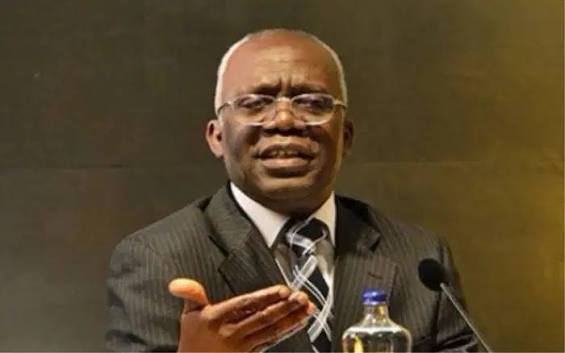
Human rights lawyer and Senior Advocate of Nigeria, Femi Falana, has called for the prosecution of those responsible for electoral violence, warning that political killings could persist ahead of the 2027 general elections unless security agencies and judicial authorities address the culture of impunity surrounding such incidents.
Falana spoke on Monday, November 23, during Channels Television’s Politics Today, following the deadly political violence in Delta State involving the convoy of former Deputy Senate President, Ovie Omo-Agege. The incident has renewed concerns over the safety of political gatherings and the enforcement of electoral laws as preparations for the next general elections gather momentum.
The senior lawyer argued that the failure to hold perpetrators accountable for previous incidents of political violence had weakened public confidence in the justice system. He maintained that the prospect of arrest, prosecution and punishment would discourage individuals from resorting to violence during political campaigns.
According to the Omo-Agege Campaign Organisation, four members of its campaign team were killed during the incident in Uduere community, Ughelli North Local Government Area. Among the victims was Moses Anaughe, an aide to the former deputy senate president and a former commissioner at the Federal Character Commission.
Omo-Agege, the Nigeria Democratic Congress (NDC) candidate for Delta Central Senatorial District, described the incident as an assassination attempt and called on the Inspector General of Police to take over the investigation. However, allegations over responsibility for the attack remain disputed, with the NDC and the All Progressives Congress (APC) trading accusations.
The Delta State Government subsequently imposed an indefinite curfew across Ughelli North. Secretary to the State Government, Kingsley Emu, said the restriction would operate daily from 6pm to 6am until further notice, while the state police command confirmed that investigations were underway
Falana urged the Nigerian Bar Association (NBA) and civil society organisations to take a more active role in ensuring that electoral offenders are brought to justice. He also proposed that the NBA mobilise lawyers to assist the Independent National Electoral Commission (INEC) with prosecutions, given the commission’s existing burden of election related litigation.
Nigeria’s experience with previous elections provides context for Falana’s concerns. Following the 2023 general elections, police records indicated that 774 suspected electoral offenders were arrested, while INEC received 215 case files for prosecution.
By March 2024, the NBA disclosed that volunteer lawyers were handling cases involving 196 suspects accused of offences ranging from voter inducement and electoral malpractice to assault and destruction of election materials. Those figures represented arrests and prosecutions, rather than convictions, and did not establish how many offenders were eventually punished. Punch Newspapers
The European Union Election Observation Mission’s final assessment of the 2023 general elections also identified weaknesses in the enforcement of electoral laws. The mission noted that INEC depended on investigative agencies to provide case files before it could effectively prosecute offenders, despite being responsible for electoral prosecutions. EEAS
The latest violence comes against the background of declining electoral participation. According to INEC, voter turnout during the 2023 presidential election stood at approximately 26.72 per cent, meaning that barely one in four registered voters participated.
Although electoral violence cannot solely account for low voter turnout, insecurity, logistical difficulties and declining public confidence remain important considerations in efforts to improve participation and protect the credibility of elections.
INEC has also expressed concern over inflammatory political rhetoric ahead of the 2027 polls, warning that threatening language could endanger electoral officials and undermine peaceful participation.
Beyond electoral security, Falana called on political parties and candidates to direct their campaigns towards governance rather than ethnic and religious divisions. He identified unaccessed basic education funds, compulsory health insurance, enforcement of child rights legislation, petroleum subsidy controversies, crude oil repayment commitments and delayed refinery rehabilitation as matters deserving greater public scrutiny.
The immediate challenge in Delta remains establishing responsibility for the attack through a credible investigation. Falana’s intervention, however, raises a wider question about whether Nigeria’s institutions can move beyond arresting suspected electoral offenders to securing timely prosecutions and enforcing the law before the 2027 elections.