
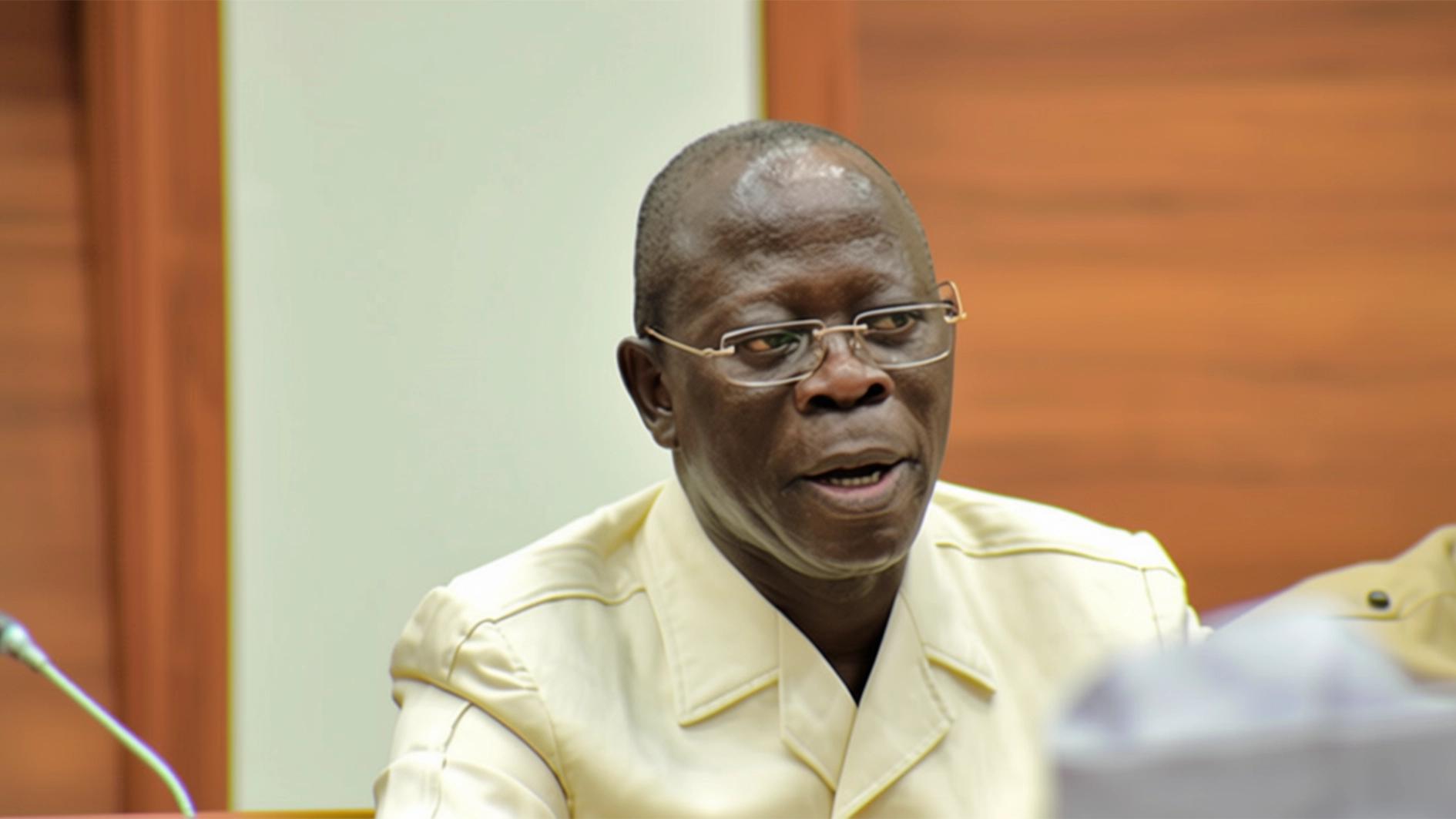
Senator Adams Oshiomhole has thrown his weight behind the use of lethal force against armed criminals, faulting the Inspector General of Police, Olatunji Disu, for sounding apologetic about the shooting of suspects and insisting that officers should open fire on gunmen without hesitation.
The Edo North lawmaker, who spoke on Monday during an interview on TVC News, questioned why the police chief had moved to soften his earlier position. “That’s why when this IG was saying he didn’t say ‘shoot at sight,’ why is he apologetic? Shoot at sight. If you see a criminal, shoot on sight,” Oshiomhole said.
His comments followed days of controversy over remarks by Disu at a security stakeholders’ meeting at the Government House in Makurdi, Benue State, on July 24. The Nigeria Police Force later clarified that the Inspector General did not order officers to shoot on sight, explaining that he had referred to Force Order 237, the operational guideline that sets the legal conditions for the use of firearms. In a statement on July 25, the Force said officers had been briefed on the order and understood when weapons could be deployed in line with established Rules of Engagement.
Oshiomhole also commended the Department of State Services for challenging a court ruling that handed life imprisonment rather than death sentences to convicted offenders. “I have said that judges should implement the law, not their personal sentiment. I’m also happy that the DSS is doing its job. They have appealed the judgment where people who should have been condemned to death were given life imprisonment,” he said.
Turning to the 2027 general election, the former Edo State governor described insecurity as the single biggest threat to President Bola Tinubu’s return bid, arguing that the administration had already steadied the economy. “See, the president has put all the necessary macroeconomic tools in place. The only limiting factor is this insecurity,” he said, adding that Nigerians wanted to see consistent and deliberate effort.
He urged the President to set the service chiefs a firm deadline and a clear benchmark for ending the killings. “There has to be a benchmark to measure what we give them and the results that we get, and whether it’s commensurate. It is better he beats down their necks than anything else,” he said. He cited the ongoing recruitment of 20,000 additional personnel into the armed forces and the creation of new army divisions as evidence of the President’s resolve.
The debate plays out against a grim security backdrop, particularly in Benue, one of the North Central states worst hit by farmer and herder violence. On the night of June 13, 2025, gunmen stormed the community of Yelewata in Guma Local Government Area, killing scores of residents. State officials initially confirmed 59 deaths, while rights groups and community leaders put the toll at between 100 and 200, with about 3,000 people displaced. In February 2026, prosecutors filed 57 terrorism related charges at the Federal High Court in Abuja against nine men accused of planning the raid, which claimed roughly 150 lives. Amnesty International has documented near daily killings across Benue, Plateau, Zamfara and Katsina states since 2023.
Oshiomhole dismissed suggestions that Tinubu had been insufficiently visible in office, saying he had watched the President address forums, preside over meetings and speak on national issues. He added that the opposition was free to criticise the government but should expect a robust reply. “If they cast a stone, we have a right to return that stone,” he said.
He linked the rise of Peter Obi as a political force to public anger during the last election cycle, which he tied to the tenure of the late former President Muhammadu Buhari, who died in London on July 13, 2025, at the age of 82. “Last time they voted in anger… But that situation is what produced Obi,” he said.