
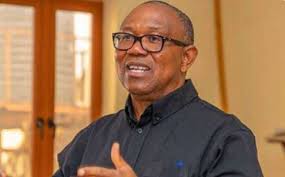
Peter Obi has raised the stakes in Nigeria’s opposition politics with a stark declaration that he may not survive to contest the 2027 presidential election, tying his fears directly to what he described as sustained pressure from the Tinubu administration on his person and his businesses.
The former Anambra State governor, now the presidential candidate of the Nigeria Democratic Congress, made the comment during an interview on the programme “With Chude,” a clip of which was shared on X by media entrepreneur Chude Jideonwo on Wednesday. Asked whether there was a chance he might not stand as a candidate in 2027, Obi went further than the question anticipated. “Not even a candidate. I might not even be alive. I’m telling you,” he said. “Every single thing I do for a living, this government is frustrating it. Deliberately so. Everything. So, there is even a possibility, if they have the opportunity, I will not be alive.”
Obi was careful to draw a line around the statement, stressing that he was not levelling a formal charge against anyone but recounting what he cast as a pattern of obstruction in his daily affairs. “It’s not an accusation,” he clarified, framing the remarks as an account of lived experience rather than evidence of a plot.
The comments land at a delicate moment in the realignment of Nigeria’s opposition. Obi contested the 2023 election on the Labour Party platform, riding the youth-driven Obidient movement to a third-place finish with roughly a quarter of the vote, behind President Bola Tinubu of the All Progressives Congress and former Vice President Atiku Abubakar. Official results credited Tinubu with about 8.79 million votes, Atiku with roughly 6.98 million and Obi with about 6.1 million.
Since then, his political home has shifted more than once. Obi joined the African Democratic Congress on 1 January 2026 as part of a broad coalition assembled to unseat Tinubu, an alliance that also drew in Atiku and other heavyweights. That arrangement later frayed, with Obi citing internal wrangling and legal disputes that, in his telling, distracted the platform from national concerns. He was subsequently named the flagbearer of the Nigeria Democratic Congress, a party that secured official registration earlier in 2026, at a special convention in late May.
The 2027 general election is scheduled for 16 January that year, with Tinubu widely expected to seek a second term. Against that backdrop, opposition figures have repeatedly accused the government of narrowing the political space, allegations the presidency has consistently rejected. Obi’s latest remarks are likely to feed that broader contest over whether dissent is being squeezed ahead of the vote.
His statement has already stirred strong reactions across the political divide, with supporters treating it as a warning about the safety of opposition voices and critics dismissing it as political theatre. What is not in dispute is that Obi has chosen unusually blunt language to describe his standing, and that the coming months will test both his claims and the durability of the opposition project he now fronts.