
by Fatima Zahra Yahaya
When the system designed to protect the poor becomes the very thing people fear most.
On 6th January 2026, Chimamanda Ngozi Adichie lost her 21-month-old son at a Lagos private hospital. She accused the hospital of criminal negligence, alleging that after sedating her child, the anaesthesiologist switched off his oxygen and carried him on his shoulder to the ICU without proper monitoring. “We brought in a child who was unwell but stable,” she wrote. “And suddenly, our beautiful little boy was gone forever.” The case shook Nigeria. But while Adichie’s story reached millions because of who she is, thousands of similar stories happen quietly every year to families nobody writes about.
In Kano, a mother of five named Aishatu Umar died in 2025 after surgical scissors were left inside her abdomen during a routine operation. She visited hospital after hospital complaining of pain. Nobody found the scissors until two days before she died. In Lagos, twin nine-month-old boys, Timothy and Testimony, died on Christmas Eve 2025, hours after receiving routine immunisations at a primary healthcare centre. Their father described healthy babies going in and not coming out.
These are not rare tragedies. They are a pattern. And the pattern points to a system that is quietly falling apart under the weight of years of neglect. The question Nigerians are being forced to ask, quietly, painfully, is no longer just “Can I afford healthcare?” It is “Can I trust it?”
The Numbers Tell a Difficult Story
Nigeria’s public healthcare system is underfunded in ways that make failure almost inevitable. In 2025, the government allocated only five percent of the national budget to health, far below the 15 percent minimum Nigeria committed to under the 2001 Abuja Declaration. In 2026, that share dropped further to 4.2 percent, even as cholera and diphtheria outbreaks continued across multiple states. The money was never enough. And what little exists is not always reaching the places it is supposed to reach.
Data from the National Primary Health Care Development Agency (NPHCDA) reveal that 85% of Nigeria’s Primary Healthcare Centres are in distress despite billions of naira in disbursements over recent years. Many facilities lack nurses, clean water, and functional laboratories. These are not remote villages in the middle of nowhere. These are the facilities that ordinary Nigerians, the ones who cannot afford private hospitals, rely on every single day.
Nigeria currently has approximately one doctor for every 5,000 patients, against the World Health Organisation recommendation of one doctor per 600. The gap between those two numbers is not just a statistic. It is the gap where people wait too long, get misdiagnosed, or are sent home without the care they came for.
The Doctors Are Leaving
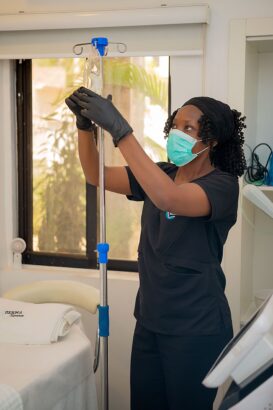
A building can be repaired. An exhausted and understaffed workforce is much harder to rebuild. As of April 2025, Prof Ali Pate, the Coordinating Minister of Health, said over 16,000 Nigerian doctors left the country in the last five to seven years. That number would have increased by now. The nurses are leaving too, crossing borders in search of better pay, better conditions, and a system that does not ask them to perform miracles with nothing.
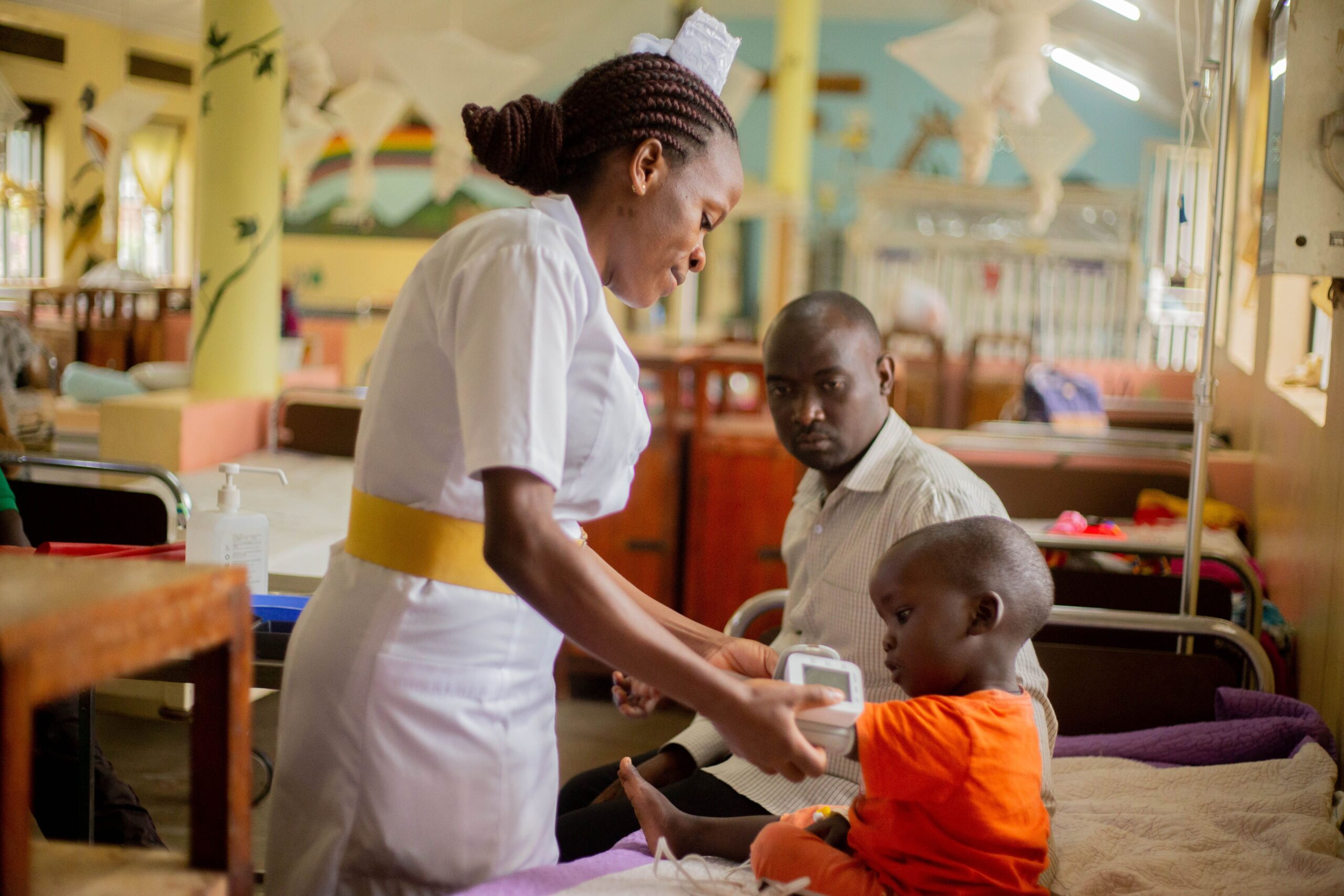
The doctors and nurses who remain are not indifferent. They are overwhelmed. They are working with broken equipment, unpaid salaries, and staffing levels that make safe care nearly impossible to deliver consistently. A nurse managing an entire ward alone is not a failure of character. It is the result of a system that has been stretched far beyond what any human being can reasonably handle.
Experts have noted that the rising cases of medical negligence across the country are not mainly about individual carelessness. They reflect years of government neglect and weak oversight. When a doctor is managing five times more patients than is safe, errors become more likely. That is not an excuse. It is the reality of a system that was never given what it needed to succeed.
When Public Care Fails, Private Care Is Out of Reach
The natural assumption is that people who cannot access safe public care will simply go private. For most Nigerians, that assumption is completely disconnected from reality. In the June Consumer Price Index report released by the National Bureau of Statistics, Nigeria’s health inflation reached 28.62 percent year-on-year in early 2026, compared to a headline inflation rate of 15.06 percent. Healthcare costs are rising nearly twice as fast as the overall cost of living. Private hospitals charge fees that most working Nigerians cannot afford, and the gap between what care costs and what people earn has never been wider.
As of December 2024, the DG of the National Health Insurance Authority, Kelechi Ohiri, reported that fewer than 20 million Nigerians have health insurance, out of a population of over 220 million. For most Nigerian families, a serious illness is not only a medical event. It is a financial crisis. It is the choice between treating a child and paying rent. Between seeking a diagnosis and putting food on the table. Between trusting a public facility and staying home, hoping the illness passes on its own, because the alternative costs money the family simply does not have.
The Normalisation of Failure
What is perhaps most striking about Nigeria’s healthcare crisis is not the statistics. It is how ordinary all of this has become. Nigerians have developed a language for it. “Government hospital? God forbid.” “Na Nigeria be this.” The dark humour of people who have stopped expecting better, not because they do not deserve better, but because decades of disappointment have quietly lowered what feels possible.
A mother in Jikwoyi shared that while tests at her local Primary Healthcare Centre were cheaper than those in private laboratories, she still had to buy malaria and typhoid medications elsewhere because the facility was completely out of stock. That is the everyday version of the crisis, not the dramatic, visible failures that make headlines, but the grinding invisible ones. The drugs that are never there, the lone nurse managing an entire ward, or the oxygen that ran out before the patient was revived.
What Needs to Change
The crisis is not beyond fixing. Yet fixing it requires honesty about what is broken and the political will that has, so far, been largely absent. Healthcare spending must move toward the 15 percent of the budget target Nigeria committed to in 2001, but has never met. Primary Healthcare Centres must be properly staffed, stocked, and supervised, not just funded on paper and left to fall apart quietly. Conditions for healthcare workers must improve to the point where staying in Nigeria feels like a real choice, not a sacrifice. And universal health coverage must move from something discussed at conferences to something ordinary Nigerians can actually feel.
Chimamanda Adichie’s son should not have died the way he did. Neither should Aishatu Umar, Timothy, Testimony, or the thousands of Nigerians whose deaths never make headlines because their families are not famous enough for anyone to notice. Healthcare is not a privilege. It is a right, and Nigeria has a very long way to go before it starts treating it like one.
Fatima Zahra Yahaya is a Political Science and International Relations student at the University of Abuja and a freelance content writer. She writes on Nigerian youth, education, public policy, and social issues. Her works are widely published. She holds certifications in Content Marketing, SEO, and Digital Marketing from HubSpot Academy and is passionate about amplifying the voices and realities of young Nigerians.
__________
https://budgetoffice. gov. ng/ index.php/2026-appropriation-bill-details/2026-appropriation-bill-details/viewdocument/1004
https://www.premiumtimesng. com/ health/health-interviews/847409-2026-proposed-budget-tinubu-raises-health-allocation-but-misses-abuja-declaration-target.html
https://guardian. ng/featured /85-phcs-in-distress-without-doctors-despite-n55-4b-budget-in-4yrs
https://www.who. int/data/gho /data/indicators/indicator-details/GHO/current-health-expenditure-(che)-as-percentage-of-gross-domestic-product
https://punchng. com/16000-doctors-left-nigeria-in-seven-years-minister)https://guardian.ng/news/less-than-20-million-nigerians-have-health-insurance-nhia