
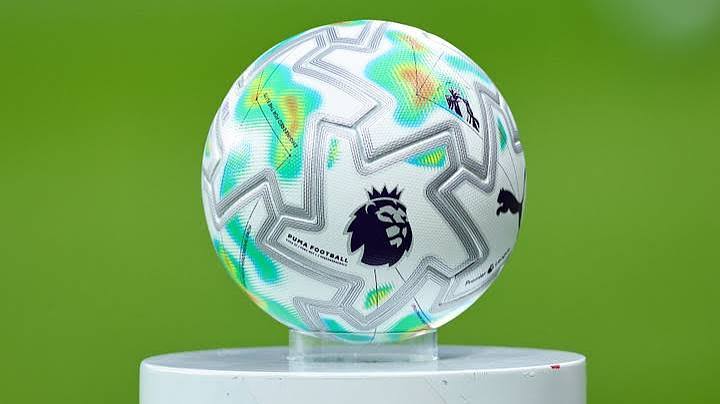
English football’s top flight will look and feel noticeably different when the ball rolls out on August 22, 2026, as the Premier League rolls out one of the most far-reaching packages of law changes and refereeing directives it has confirmed in years. The measures, agreed with the International Football Association Board (IFAB) and the Football Association (FA), target the twin frustrations of time-wasting and player safety, while sharpening how the Video Assistant Referee (VAR) is deployed.
At the centre of the overhaul is a tougher injury-treatment protocol. Any outfield player who receives assessment or treatment on the pitch must now stay off the field for at least 60 seconds after play restarts, with the team playing on temporarily short-handed. It is a doubling of the 30-second rule the Premier League previously operated, and is aimed squarely at players who go to ground to break an opponent’s rhythm.
A separate trial closes a loophole long exploited through goalkeepers, who cannot easily be removed for treatment. Under the new system, if play stops for a goalkeeper injury, the head coach must nominate an outfield teammate to leave the pitch within 10 seconds for a minimum of one minute of active play. Where a coach fails to act in time, the captain must step off. According to the body that manages match officials, Pro Ref, the trial is “designed to address occasions where goalkeeper injuries have been used to disrupt momentum, slow the game down or create opportunities for tactical instruction.” It will run across the men’s and women’s professional game, including the EFL, the Women’s Super League and the National League.
Pace of play is further addressed by a five-second countdown on throw-ins and goal kicks. A player who deliberately delays a throw-in surrenders it to the opposition, while a delayed goal kick concedes a corner. Substituted players, separately, must leave the field within 10 seconds.
Officiating guidance has also been recalibrated. Hair-pulling, treated as violent conduct and an automatic red card during the 2025/26 campaign, now carries a graded sanction. A pull deemed to carry excessive force or brutality remains a red card, but one “without excessive force and/or brutality” will draw only a yellow. The revision follows a season in which three players were dismissed in the top flight for the offence, including debate over inconsistent calls involving Lisandro Martínez and Dango Ouattara.
Protection has been widened elsewhere. Referees will take a firmer line on holding, pulling and wrestling by defenders at corners and set pieces, and will penalise challenges on goalkeepers where an attacker makes a clear action with no intent to play the ball that impairs the keeper. On VAR, officials may now intervene to overturn an incorrect second yellow card that produces a sending-off, though the technology still cannot recommend or award a second caution the on-field referee did not first issue. Notably, the Premier League has declined to adopt the optional IFAB provision, used at the 2026 World Cup, that would let VAR review wrongly awarded corners.
The timing is deliberate. The 2026/27 season begins a week later than usual, opening with champions Arsenal hosting newly promoted Coventry City at the Emirates on August 21, a scheduling shift built in to give players 33 clear days of recovery after the expanded 48-team World Cup in the United States, Canada and Mexico. The campaign runs until May 30, 2027, comprising 33 weekend and five midweek rounds.
Whether the changes deliver cleaner, faster football or fresh controversy will become clear once officials begin applying them under match pressure.