
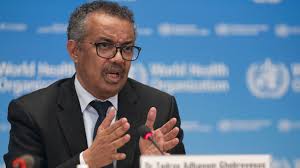
The head of the World Health Organisation visited Uganda this week as a deadly Ebola outbreak that crossed in from the neighbouring Democratic Republic of Congo continued to spread, with both countries now recording a sharp rise in confirmed infections and deaths.
WHO Director-General Tedros Adhanom Ghebreyesus made the trip after the global health body declared a public health emergency of international concern over the outbreak. The WHO determined on May 17 that the Ebola disease caused by Bundibugyo virus in the DRC and Uganda constituted a public health emergency of international concern, though it did not meet the criteria of a pandemic emergency. The DRC Ministry of Health first confirmed the outbreak in Ituri Province in north-eastern DRC on May 15.
The scale of the crisis has grown rapidly. As of June 4, the DRC Ministry of Health reported a total of 381 confirmed cases, including 64 confirmed related deaths, with 233 individuals hospitalised in isolation as of June 3. Ituri remains the most affected province, with 359 confirmed cases across 17 health zones, while 19 confirmed cases have been recorded in North Kivu and three in South Kivu.
In Uganda, the figures have also climbed. As of June 5, the country had reported a total of 19 confirmed cases, including two deaths, with three new cases that day identified as contacts of confirmed patients. At least seven of the Ugandan cases were linked to local transmission events and five had travel links to the DRC.
During his visit, Tedros said Ugandan authorities had responded swiftly. “I am in Uganda, where the government has mounted a prompt and capable response to the outbreak of Ebola,” he wrote on X. “Screening at the borders helped detect cases arriving from neighbouring DRC, and the country’s surveillance, testing and case management systems are doing steady work.” He met a senior Ugandan health ministry official early in the visit.
The WHO chief also recently travelled to the DRC. He arrived there on May 28 to support the ongoing response. On May 22, the WHO assessed the risk of the outbreak as very high at the national level in the DRC, high at the regional level, and low at the global level.
This is the 17th Ebola outbreak to hit the DRC, a central African country of more than 100 million people. It is the country’s second outbreak of Bundibugyo virus, a species first identified in Uganda in 2007, and comes only months after the previous Ebola outbreak in the DRC ended in December 2025. Previous Bundibugyo outbreaks have carried mortality rates of roughly 25 to 50 percent. There is no specific licensed vaccine or treatment for the Bundibugyo strain.
The outbreak is unfolding in difficult conditions. The affected areas are marked by insecurity, population displacement, mining-related movement, and frequent cross-border travel, all of which raise the risk of further spread. A medical doctor from the United States, exposed while caring for patients in the DRC, tested positive on May 17 and was transferred to Germany for treatment.
Tedros said the WHO was supporting Uganda alongside the Africa Centres for Disease Control and Prevention and other regional partners “as the country leads this response,” adding, “With continued collaboration, I am confident this outbreak can be brought under control.”