
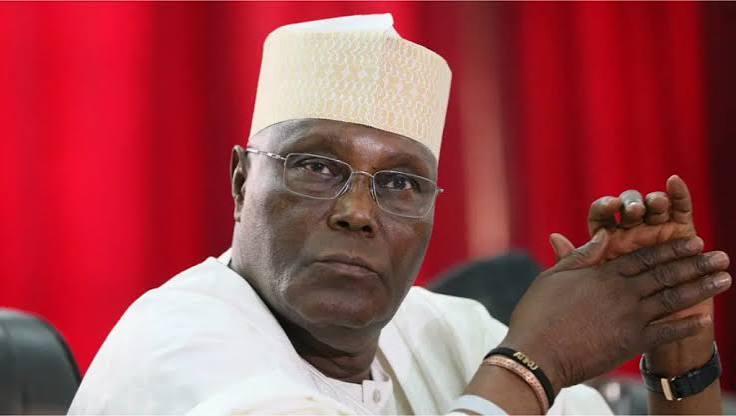
Fresh disclosures that the Federal Government breached its 2024 borrowing ceiling by N4.79 trillion have handed the opposition new ammunition, with former Vice President Atiku Abubakar declaring that the Tinubu administration has “completely lost control of the nation’s finances.”
The presidential candidate of the African Democratic Congress spoke on Wednesday through his Senior Special Assistant on Public Communication, Phrank Shaibu, describing the figures as “fiscal vandalism.” His statement seized on the latest Fourth Quarter and Consolidated Budget Implementation Report from the Budget Office of the Federation, which showed that new borrowings for 2024 reached N12.62 trillion against an approved N7.83 trillion, an overshoot of 61.2 per cent.
Atiku argued that Nigerians were sold a different promise. “Nigerians were promised that the painful removal of fuel subsidy, repeated tax hikes and other harsh economic measures would reduce borrowing and restore fiscal stability,” he said, insisting the country was instead witnessing “endless borrowing, ballooning debt and unprecedented waste.”
The Budget Office data lends weight to concerns about the fiscal gap. Government revenue closed the year at N20.98 trillion, N4.90 trillion short of the N25.88 trillion target, even after climbing 68.11 per cent from N12.48 trillion in 2023. Expenditure held near plan at N34.49 trillion, only N561.29 billion below estimate, which pushed the deficit to N13.51 trillion, well above the approved N9.18 trillion. New borrowing, according to the report, financed roughly 36 per cent of the entire 2024 budget.
A further point drew Atiku’s attention. The government recorded N3.19 trillion in “budget support” that had no provision in the approved budget and whose source, the Budget Office noted, was not disclosed. Atiku said the item fit “a disturbing pattern,” which he linked to fake agencies, padded and duplicated allocations, funds concealed under the Service Wide Vote, and heavy spending on luxury vehicles while schools, hospitals and security agencies remained starved of funds.
He also pointed to a contradiction between rising income and rising debt. Citing what he described as an oil windfall of about N7.98 trillion from firmer crude prices, the former Vice President said the government still chose to borrow, warning that debt servicing alone consumed N12.36 trillion, more than 52 per cent above budget. “Nigeria is fast approaching the dangerous point where government exists primarily to borrow in order to repay previous borrowings,” he said. “This is not governance. It is a debt addiction.”
The broader trend supports the alarm. Debt Management Office figures put total public debt at N159.28 trillion as of December 31, 2025, up N14.61 trillion or 10.1 per cent year on year from N144.67 trillion in December 2024, translating to about N724,000 for every citizen. The Budget Office itself flagged that the net present value of debt to GDP had reached 61.22 per cent at end 2024, above Nigeria’s self imposed 40 per cent threshold and the 56 per cent benchmark for comparable economies.
The intervention is consistent with Atiku’s recent posture. He had earlier faulted the government’s borrowing spree despite the oil windfall and previously alleged that withheld security funds contributed to killings across the country. The government has repeatedly defended its reforms as necessary to stabilise the economy and widen revenue.
Atiku closed with a familiar appeal for restraint. “The Nigerian people cannot continue paying today’s taxes to service yesterday’s loans while tomorrow’s generations inherit only debt,” he said, calling for a government that “lives within its means, eliminates waste, restores transparency, blocks leakages.”