
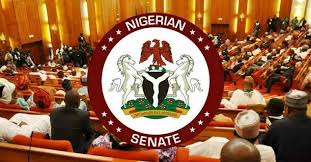
A tense confrontation erupted in the Nigerian Senate on Wednesday, exposing deep divisions over newly amended standing rules that reshape eligibility for presiding offices in the 11th National Assembly. The clash pitted Senate President Godswill Akpabio against Senator Adams Oshiomhole, representing Edo North, just one day after the chamber voted to restrict leadership contests to lawmakers with at least two consecutive terms.
Trouble began when Akpabio commenced the reading of the Votes and Proceedings of Tuesday’s sitting. Oshiomhole raised a point of order, but the Senate President promptly reminded him that such interventions are not permitted at that stage under the Senate Standing Orders 2023 (as amended). “We should not just go home, buy forms and come here without knowing the rules,” Akpabio told the chamber.
When Oshiomhole persisted, Akpabio called on former Chief Whip Senator Orji Uzor Kalu to clarify the rule. Kalu confirmed that no point of order is allowed during the consideration of Votes and Proceedings. Senate Whip Senator Tahir Monguno then intervened, warning that disciplinary measures could be invoked if the disruption continued. Akpabio issued a direct warning: “Oshiomhole, if you become unruly, we will use the rules to take you out of the Senate.”
After approximately 15 minutes of disorder, calm was restored. Senator Adamu Aliero moved for adoption of the Votes and Proceedings, seconded by Senate Minority Leader Senator Abba Moro. The proceedings continued without further incident.
The confrontation is widely linked to the Senate’s closed door session on Tuesday, during which lawmakers amended Orders 4 and 5 of the Standing Rules. The revised Order 4 mandates that nominations for presiding officers must follow a strict hierarchy based on seniority and legislative experience. Order 5 provides that “a senator shall not be eligible to contest for any principal office of the Senate unless he has served as a senator for at least two consecutive terms immediately preceding nomination.”
This provision effectively disqualifies first term senators from vying for the positions of Senate President or Deputy Senate President when the 11th Assembly convenes in June 2027. Under the new rules, only senators who served in both the 9th and current 10th Senate meet the eligibility threshold. In addition to Oshiomhole, the amendment is expected to affect other prospective aspirants, including Imo State Governor Hope Uzodimma and Kabiru Marafa, who are eyeing Senate seats in 2027 but would be ineligible to contest presiding offices.
The Senate also revised its legislative calendar, increasing plenary sittings from three to five days weekly. Committee meetings are now scheduled for Mondays through Fridays, with plenary sessions held on Tuesdays, Wednesdays, and Thursdays from 11:00 a.m. to 3:00 p.m.
The amended rules represent a significant institutional shift, consolidating leadership influence among ranking lawmakers while narrowing the path for political newcomers and returning heavyweights. Observers note that the changes reinforce parliamentary continuity but have also sparked accusations of exclusion, setting the stage for further internal contestation as the 2027 general elections approach.