
Governor Abdulrazaq Drags Saraki To Court Over Educational Qualification Post
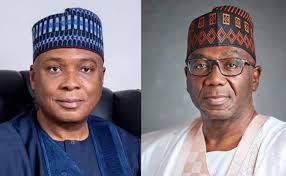
Kwara State Governor Abdulrahman Abdulrazaq has sued former Governor Bukola Saraki at the Kwara State High Court over a social media post alleged to constitute criminal defamation and cyberbullying. The case centres on a statement published by Saraki on April 17, 2026, which questioned the governor’s educational qualifications.
Lawyers for Saraki, led by Jimoh Mumini SAN, appeared before Justice M. O. Folorunso on Tuesday to challenge the proceedings. The government’s lawyers requested a bench warrant and court order to compel Saraki’s appearance, arguing that the post could cause a breakdown of public peace. Saraki’s counsel countered that the processes were improperly filed, the high court lacked jurisdiction, and the post represented an exercise of freedom of speech and the right of reply as leader of the opposition to the governor’s party.
After hearing arguments from both sides, the court adjourned the matter to July 3, 2026, for a ruling on the applications.
This case fits into a pattern of political tensions in Kwara State between the Saraki and Abdulrazaq families, which dates back to the late 1970s. Saraki served as governor from 2003 to 2011 before becoming Senate President, while Abdulrazaq has held the governorship since 2019. Critics of the current administration have frequently accused it of using legal processes to target opposition voices.
The suit coincides with ongoing security challenges in the state. In February 2026, suspected militants attacked Woro and Nuku communities in Kaiama Local Government Area, killing over 160 people and abducting 176 residents, many of whom remain in captivity four months later. Similar incidents of banditry and kidnappings have affected other parts of Kwara and neighbouring states in the North Central and North West regions, with national data showing increased attacks and fatalities linked to such groups in 2025 and 2026.
Saraki’s team described the case as a diversion from pressing governance issues, including the unresolved abduction of the Woro residents and broader insecurity across two of the state’s three senatorial districts. They urged supporters to remain calm and law-abiding while expressing confidence in the judiciary.
The development occurs ahead of the 2027 general elections, when political rivalries and coalition dynamics are expected to intensify. Legal observers anticipate that the July 3 ruling on jurisdiction could determine the case’s trajectory, with possible appeals if the matter proceeds. Similar defamation suits involving politicians in other states have often highlighted tensions between free speech protections and laws against incitement or defamation.