
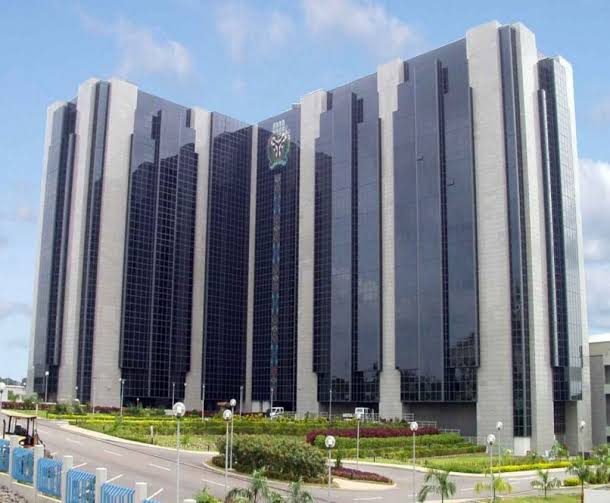
Nigeria’s economy remained firmly cash-driven in May 2026, as the volume of money circulating outside the banking system rose to N5.19 trillion, exposing the limits of the Central Bank of Nigeria’s years-long campaign to wean the country off physical cash.
Latest money and credit statistics from the CBN showed that currency outside banks increased by N109.34 billion, or 2.15 per cent, from N5.08 trillion in April 2026 to N5.19 trillion in May. On a year-on-year basis, the figure rose by N559.16 billion, or 12.07 per cent, from the N4.63 trillion recorded in May 2025.
The proportion tells the sharper story. Currency outside banks accounted for 91.27 per cent of total currency in circulation in May 2026, up from 90.03 per cent in April. In practical terms, more than nine out of every ten naira in circulation sat in the hands of households, businesses and operators in the informal economy rather than inside the formal banking system. The ratio, however, eased slightly from the 92.40 per cent posted a year earlier.
Total currency in circulation itself rose from N5.65 trillion in April to N5.69 trillion in May, a monthly increase of N43.59 billion, while bank reserves fell from N34.60 trillion in April to N33.76 trillion in May.
The persistence of cash carries real consequences for policy. Cash kept outside the formal banking system limits the ability of banks to intermediate funds through deposits and credit creation, weakening monetary policy transmission.
The figures sit awkwardly beside Nigeria’s otherwise booming digital payments record. Electronic payment transactions reached an all-time high of N1.07 quadrillion in 2024, a 79.6 per cent jump from the N600 trillion recorded in 2023. That momentum carried into 2025, with e-payments hitting N284.99 trillion in the first quarter alone, a 17.7 per cent year-on-year rise, while Point-of-Sale transactions surged 209 per cent to N10.45 trillion. Yet the channels have expanded without displacing the demand for paper money.
The current cash pile contrasts sharply with the chaos of early 2023, when the CBN’s botched naira redesign triggered a nationwide scarcity that left depositors stranded and businesses paralysed. The cash crunch of March 2023, alongside the revised cashless policy that limited daily withdrawals, was a major driver of the e-payment surge that followed. Three years on, cash has not only returned but climbed past pre-crisis levels.
The CBN has set itself an ambitious target to reverse the trend. At the launch of the Nigeria Payments System Vision 2028 in Abuja, Governor Olayemi Cardoso said the bank plans to cut cash outside the banking system to below 40 per cent of total currency in circulation by 2028.
“I would like to see a situation where we will reduce cash outside the banking system to less than 40 per cent of money in circulation,” he said.
Using April 2026 figures as a benchmark, hitting that target would pull roughly N2.83 trillion back into the formal system and onboard 50 million more Nigerians by 2028. The roadmap also envisages deploying more than 10 million QR-code and tap-to-pay points nationwide.
The timing matters. The Vision 2028 plan arrives ahead of the 2027 general elections, scheduled for January and February, amid renewed concerns over vote-buying and cash-intensive campaigns. The federal government is also reportedly weighing a tighter cashless regime to curb the surge in kidnappings, since ransom payments rarely re-enter the banks.
For now, the gap between Cardoso’s 40 per cent ambition and the prevailing 91 per cent reality remains vast, leaving the digital transition a work very much in progress.