
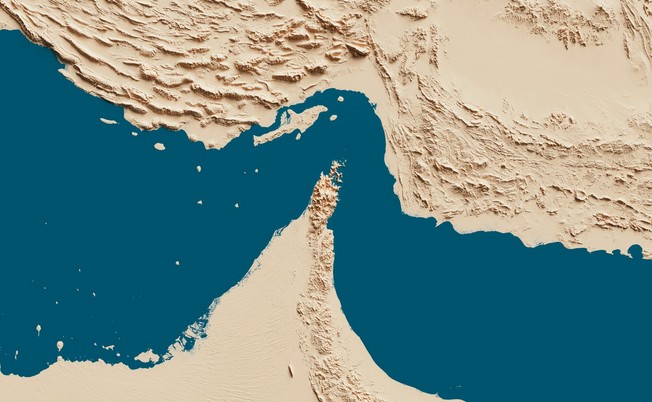
Global oil prices have eased after a sudden intraday spike triggered by a fresh attack in the Strait of Hormuz. International benchmark Brent crude fell 1.80 per cent on Friday to trade at $74.11 per barrel for August delivery. The reversal followed a brief 4 per cent rally on Thursday after a merchant vessel came under fire in the critical waterway. The International Maritime Organisation immediately halted its ambitious plan to evacuate thousands of stranded sailors following the security breach. Financial markets quickly stabilized as traders calculated that the overall regional truce remains intact despite localized disruptions.
The sudden maritime incident occurred near the Omani coast when an unknown projectile struck an active cargo vessel. The strike severely dented global hopes for a swift return to normal commercial shipping across the Persian Gulf. Prior to the attack, transit volumes through the corridor had surged to their highest levels since early March. Ship-tracking platforms recorded seventy successful commercial crossings on Wednesday alone, representing a twofold increase from previous days. This brief recovery followed a major diplomatic agreement signed last week between the United States and Iran to end their four-month war.
United States intelligence officials quickly attributed the provocative projectile strike to Iranian forces or their local proxies. The incident highlights the extreme fragility of the tenuous ceasefire currently underpinning Middle East energy corridors. Following the attack, the Persian Gulf Strait Authority issued a stern warning to international shipping conglomerates. The Iranian-led body stated that any commercial vessel utilizing maritime routes outside its designated regulatory framework loses all safety guarantees. This protectionist stance complicates ongoing diplomatic efforts to turn the fragile truce into a permanent peace settlement.
The brief maritime escalation triggered severe, immediate losses across major Asian financial and equity markets on Friday. South Korea’s Kospi index suffered a punishing 8 per cent drop, while Japan’s Nikkei 225 fell 4.6 per cent. Taipei’s benchmark index shed more than 3 per cent, and Hong Kong’s Hang Seng Index slipped 1.9 per cent. Global investors remain highly sensitive to any structural threats facing the strategic waterway. Roughly one-fifth of global oil and liquefied natural gas supplies pass through the narrow channel during regular peacetime operations.
Energy analysts state that restoring absolute security through the passageway remains paramount to stabilizing global crude supplies. Onshore oil storage tanks across the Gulf region currently hold exceptionally high crude stocks due to months of maritime blockades. Local producers urgently need international tankers to enter the channel and offload these massive accumulated inventories to resume normal extraction. Brent prices are currently hovering just 2 per cent above their pre-conflict baseline. However, continuous security updates from Oman keep insurance premiums for commercial hulls prohibitively expensive.
The UN maritime agency will maintain its evacuation suspension until regional forces guarantee verifiable safety corridors for civilian crews. The pause leaves thousands of international mariners trapped aboard merchant vessels in the high-risk zone for longer than anticipated. Representatives from global shipping councils have urged both Washington and Tehran to establish clear demilitarised transit zones immediately. The current market calm depends entirely on whether this week’s missile strike remains an isolated incident. A secondary attack will almost certainly send crude prices back toward wartime highs.