
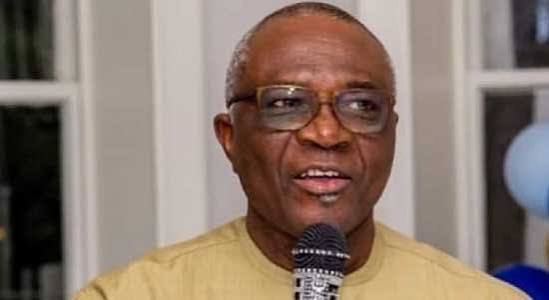
The Presidency has widened the net in the unfolding controversy over a bogus presidential agency, vowing on Friday to hunt down and prosecute the government insiders who allegedly allowed Prince Adeniyi Adeyemi Matthew to run a fictitious body for months without detection. What began as a forgery case has now hardened into a public contest over accountability, with the Presidency pressing its case even as the accused man insists he was lawfully appointed.
Senior Special Assistant to the President on Media and Publicity, Temitope Ajayi, set the tone in a post on his X handle, describing Adeyemi as an “irredeemable con artist” and calling for the criminal network behind the scheme to be dismantled. According to Ajayi, investigators from the Department of State Services, the Police and the Economic and Financial Crimes Commission had been tasked with tracing how the fraud took root.
“What is not in doubt is that internal collaborators enabled Adeniyi to get this far,” Ajayi said. “That is precisely what investigators from the DSS, the Police and the EFCC must now unravel. The criminal network within the affected institutions must be dismantled, and everyone found to have played a role should be arrested and prosecuted.”
At the heart of Ajayi’s intervention is a claim that Adeyemi is weaponising public distrust of government to escape justice. “In Nigeria, the easiest and most believable allegation anyone can throw at a public officer is corruption,” he said. “Once that accusation is thrown into the mix, the water is polluted, the lines are blurred, and everyone is kept busy arguing over distractions rather than the real issues.” He added that Adeyemi “understands Nigerian public psychology, and he is exploiting it expertly to shield himself,” describing the attempt to link the Chief of Staff to the President, Femi Gbajabiamila, to the matter as “his last straw.”
Ajayi conceded that the scheme exposed real weaknesses in the system, but argued that the same system eventually caught the fraud. He said officials of the Nigerian Investment Promotion Commission, alongside the Ministry of Foreign Affairs, flagged the anomaly after Adeyemi’s purported council began hosting diplomatic meetings without coordination. “That is a system functioning as it should,” he said. “It is a system capable of detecting an aberration.”
The official account, first laid out in detail by the Special Adviser to the President on Information and Strategy, Bayo Onanuga, on July 1, traces the case back to late 2025. According to the Presidency, Adeyemi paraded himself as Director-General of a non-existent body called the Presidential Foreign Intervention Promotion Council, also referenced as the Presidential Economic Advisory Council, operating from the Federal Secretariat Complex in Abuja.
The Presidency said suspicion first mounted after Adeyemi convened a meeting with ambassadors at the Wells Carlton Hotel in Abuja on October 10, 2025, without notifying the Ministry of Foreign Affairs, a breach of diplomatic procedure that triggered correspondence among the Office of the National Security Adviser, the Office of the Secretary to the Government of the Federation and the Office of the Chief of Staff. Gbajabiamila petitioned the DSS and the Police on October 17, 2025, alleging that appointment letters bearing his falsified signature, seals and reference numbers were being used to legitimise the fictitious agency.
Police arrested Adeyemi on October 27, 2025, at his Abuja office, and searches of the office and his residence in Suleja reportedly turned up documents described as forged government records. Investigators said he told them one Dolapo Tanimola had helped procure his appointment letter, but that Tanimola had died in a hotel fire days before the arrest.
The Nigeria Police Force filed an eight-count charge against Adeyemi and two accomplices, identified only as Femi and Anu and said to be at large, at the Federal High Court in Abuja on November 27, 2025, under the charge marked FHC/ABJ/CR/2025. The counts include conspiracy, forgery of presidential appointment documents, forgery of official State House letterheads and impersonation. Count Five alleged that he “falsely personate as the Director-General” of the council. The Presidency said Adeyemi maintained 34 bank accounts in the names of fictitious government bodies, and that he fraudulently opened a Central Bank of Nigeria account by misleading the Office of the Accountant-General of the Federation, though investigators found that no government money passed through it. He is due back before the Federal High Court on July 27, 2026.
Part of what has kept the story alive is the question of budgetary provision. A search of the Budget Office’s published 2026 Appropriation details lists an entity described as “Presidential Economic Advisory Council/Presidential Foreign Intervention Promotion Council” under code 0111062001, with a total allocation of about N1.303bn, comprising N802.98m for personnel, N200m for overhead and N300m for capital expenditure. That figure sits well below the sums thrown around in the wider dispute.
Human rights lawyer Femi Falana had earlier challenged the Presidency, arguing that it lacked the constitutional authority to exonerate anyone and calling for the Independent Corrupt Practices and Other Related Offences Commission to independently investigate both Gbajabiamila and Adeyemi. Falana also demanded an explanation for how N24bn was allegedly budgeted for the non-existent agency and how it managed to open a CBN account.
Adeyemi, for his part, has gone on the offensive. Speaking on Channels Television’s Politics Today by telephone, he denied wrongdoing and said he was ready to defend himself. “Definitely, if I am wrong, let the court of law do that; if I am right, let the court of law do the right thing,” he said, insisting he held a valid letter of appointment and that Gbajabiamila was aware of it. He questioned whether he could have moved around the country for years meeting government officials if the agency did not exist, adding, “Nigeria is not a banana republic.”
He has also levelled specific allegations, claiming that Gbajabiamila demanded 48 per cent of the agency’s take-off grant, which he put at N27,395,510,136, and that he had paid N400m through a proxy toward securing the appointment, with a balance of N200m outstanding. Gbajabiamila has denied any knowledge of Adeyemi or the council, and the Presidency has maintained that these claims surfaced only after Adeyemi was granted police bail.
The controversy has drawn in opposition voices. The Nigeria Democratic Congress, through its National Publicity Secretary, Osa Director, called on President Bola Tinubu to remove Gbajabiamila to allow what it described as a full and impartial investigation, and urged the setting up of an independent panel to examine the agency’s alleged budgetary allocations, account openings and staffing. The party also asked that the circumstances of Tanimola’s death and Adeyemi’s claim of surviving an assassination attempt on the Abuja-Kaduna Expressway on September 7, 2025, be probed, and that Adeyemi be granted witness protection.
Former Vice President and African Democratic Congress presidential candidate, Atiku Abubakar, weighed in as well, framing the episode as evidence that the government had been, in his words, held hostage by fraudsters. As at the time of the latest exchanges, neither the Presidency nor Gbajabiamila had responded to the fresh demands from the NDC.
Friday’s statement was the third official response from the Presidency on the saga, following Gbajabiamila’s public disclaimer in June, which alerted foreign missions, financial institutions and multilateral organisations that the council had no official standing, and Onanuga’s detailed July 1 account.
The episode lands in a country where impersonation of government authority is neither new nor rare. Nigeria has recorded repeated cases of individuals forging official letters, cloning agency identities and exploiting bureaucratic gaps to solicit funds or diplomatic favours, and the ease with which official-looking documents can be produced has long troubled anti-fraud agencies. What sets the Adeyemi matter apart is its scale and reach, from an office inside the Federal Secretariat to a meeting with foreign envoys and an account at the apex bank.
For now, the facts remain contested and the central allegations, on both sides, are yet to be tested in court. The Presidency insists the system worked by eventually exposing the fraud, while critics argue that the very fact of its survival for months points to deeper institutional failure. The July 27 hearing at the Federal High Court is likely to become the next flashpoint in a story that has already blurred the line between a criminal prosecution and a political storm.