

Oyedele Defends Borrowing As Debt Servicing Drains Half Of Revenue
Nigeria parted with almost a billion dollars to keep its foreign creditors satisfied within the opening two months of 2026, a fresh sign that the weight of external obligations is pressing harder on the country’s finances even as macroeconomic indicators show tentative signs of steadying.
Figures drawn from the Central Bank of Nigeria’s February 2026 Economic Report put the outflow at $440m in January and $480m in February, bringing the combined foreign loan repayment bill for the period to $920m. The pace of repayment rose alongside a broader increase in capital leaving the economy. According to the CBN, “Capital outflows increased, mainly on account of higher capital transfers in the review period. Total capital outflow rose to $2.75bn, from $1.63bn in the preceding month.”
The apex bank traced the bulk of the jump to capital transfers rather than debt alone. “The development was driven mainly by a 91.53 per cent increase in capital transfers to $2.26bn, relative to the level in the preceding month. Outflow through loan repayments also rose to $0.48bn from $0.44bn in January 2026,” it stated. In terms of composition, the bank noted that capital transfers made up 82.18 per cent of total outflows, loan repayments 17.45 per cent, and dividend repatriation the balance, with dividend outflows declining over the period.
Put differently, debt repayments accounted for close to one-fifth of all capital that exited the country in February, a share that speaks to how firmly servicing costs have embedded themselves in Nigeria’s external accounts. The banking sector drove most of the outflows at 45.96 per cent, trailed by financing at 26.10 per cent, oil and gas at 15.72 per cent, telecommunications at 3.51 per cent and manufacturing at 2.62 per cent. Geographically, Lagos accounted for 62.90 per cent and the Federal Capital Territory 37.04 per cent, with Ondo, Ogun and other states sharing the remainder.
The strain is not new. The CBN’s own records show external debt service climbing from $4.66bn in 2024 to $5.21bn in 2025, an increase of roughly 11.9 per cent, and that sum consumed more than 72 per cent of the country’s total international payments last year. Placed against 2024, when debt took 62.58 per cent of foreign outflows, the trajectory points to an economy channelling an ever larger portion of its scarce foreign exchange toward past borrowings.
Yet the bank insisted the external position held firm through the review window. It reported that “despite heightened geopolitical risks and trade tensions, the external sector recorded a higher trade surplus and capital inflows, due largely to lower import bills and increased capital transfers.” Foreign reserves, it added, edged up to $50.12bn in February from $48.88bn in January, offering import cover of 9.61 months, comfortably above the three-month international benchmark.
Looking ahead, the International Monetary Fund’s 2026 Article IV Consultation report projects Nigeria’s public external debt rising from $51.9bn in 2025 to $66.5bn in 2026 and further to $72.6bn by 2027, an increase of nearly 40 per cent within two years. That forecast sits close to Debt Management Office data placing the external stock at $51.86bn as of December 31, 2025. The Fund expects interest payments on public debt to grow from $2bn in 2025 to $3bn by 2027, while debt service continues to swallow more than half of Federal Government revenue, estimated at 53.2 per cent in 2025 and projected at 53.7 per cent in 2026 before easing slightly to 52.4 per cent in 2027.
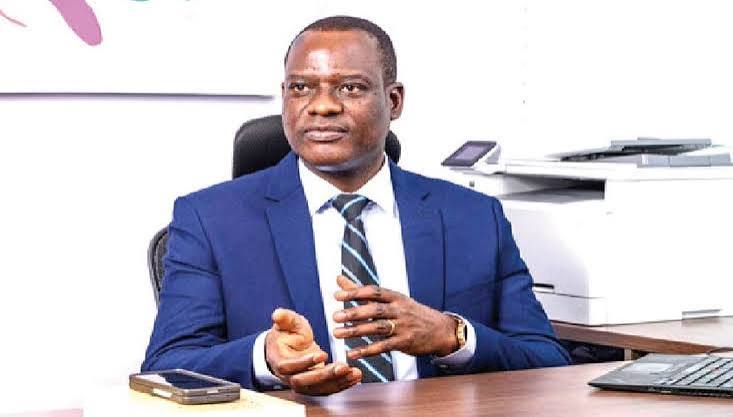
Against this backdrop, the Minister of Finance and Coordinating Minister of the Economy, Taiwo Oyedele, has pushed back at critics of the government’s borrowing appetite. Speaking in Abuja at the Fellowship Award Ceremony and Second Biennial Conference of the Capital Market Academics of Nigeria, he argued that the volume of debt matters far less than its purpose. “When analysts go on TV and join the populist view to accuse the government of borrowing, you are doing a disservice. The relevant question is never simply how much debt,” he said. “It is always debt for what and at what cost, against what return, and repaid on what terms. A nation, a state, or a business that borrows to finance a productive asset generating returns above the cost of that capital is not behaving recklessly; it is behaving rationally.”
Whether that logic reassures markets already demanding higher yields to hold Nigerian paper remains an open question, one likely to shape fiscal debate well into the second half of 2026.