
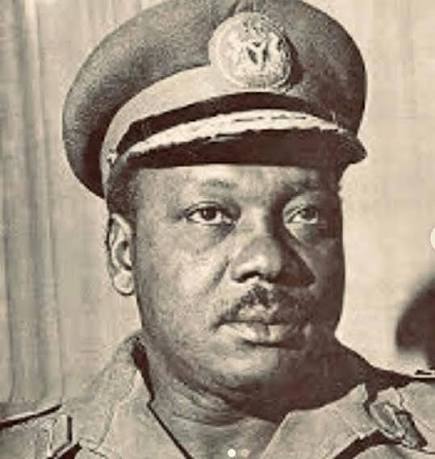
Nearly sixty years after Major General Johnson Aguiyi-Ironsi was dragged from a government guest house in Ibadan and shot, his family has placed a pointed demand before the Nigerian state: apologise, compensate, and reconcile.
The appeal came from the head of the family, Imo Aguiyi-Ironsi, a nephew of the late leader, during an interview on Arise News on Thursday. “I think the family needs apology. The family needs to be compensated. We need sincere apology. We need sincere reconciliation,” he said, insisting that his uncle “wasn’t part of the January 1966 coup” and died only “because of his position as the most senior military officer.”
To understand why that grievance still burns, the events of 1966 need retelling.
Aguiyi-Ironsi, born in 1924 and then General Officer Commanding the Nigerian Army, was not a coup plotter. On January 15, 1966, a group of young majors, several of them Igbo, toppled the First Republic. They killed Prime Minister Abubakar Tafawa Balewa, Northern Premier Ahmadu Bello, Western Premier Samuel Akintola and Finance Minister Festus Okotie-Eboh, along with senior officers. The victims were overwhelmingly northern and western, and the plot was quickly branded an “Igbo coup” in the North.
Ironsi rallied loyal troops, crushed the mutiny, and took power on January 16, 1966, becoming the country’s first military Head of State. His tenure lasted barely six months.
Two decisions hardened opinion against him. He declined to promptly try the January plotters, and in May 1966 he promulgated Decree No. 34, which scrapped Nigeria’s federal structure for a unitary one. Northern officers, already suspicious, read the decree as confirmation of a design for Igbo domination.
The reckoning came at dawn on July 29, 1966. A counter-coup, widely credited to Lieutenant Colonel Murtala Muhammed and a circle of northern officers, tore through barracks in Abeokuta, Ibadan, Lagos, Kaduna and Kano. Ironsi was in Ibadan as the guest of the Military Governor of the West, Lieutenant Colonel Adekunle Fajuyi. Both men were seized and killed. Fajuyi, by most historical accounts, refused to abandon his guest. Their bodies were dumped in bush near Ibadan and recovered only much later.
Lieutenant Colonel Yakubu Gowon emerged as Head of State on August 1, 1966, and swiftly reversed Decree 34. But the violence did not stop with the officers. Reprisal massacres of Igbo civilians swept the North in the following months, with estimates running into the tens of thousands. That bloodletting drove millions eastward and set the country on the road to the civil war of 1967 to 1970, a conflict that claimed more than a million lives.
For the family, the unresolved point is official silence. Successive governments have marked Ironsi’s memory without ever accepting responsibility for how he died. President Bola Tinubu has publicly honoured him as a symbol of unity and courage, while former President Olusegun Obasanjo, speaking around the sixtieth anniversary of the killing, urged that history be restored to Nigerian classrooms so such episodes are neither forgotten nor repeated.
What the family now seeks goes beyond tribute. “He occupied the seat of head of state for only six months, and he was taken away from us,” Imo Aguiyi-Ironsi said, appealing to those “in positions to make this happen.”
Whether the Federal Government will formally respond remains unclear. No administration has previously offered the apology or compensation the family seeks, and the demand revives a broader national argument about accountability for the events that fractured the young republic and still shape its politics of ethnicity, memory and reconciliation today.