
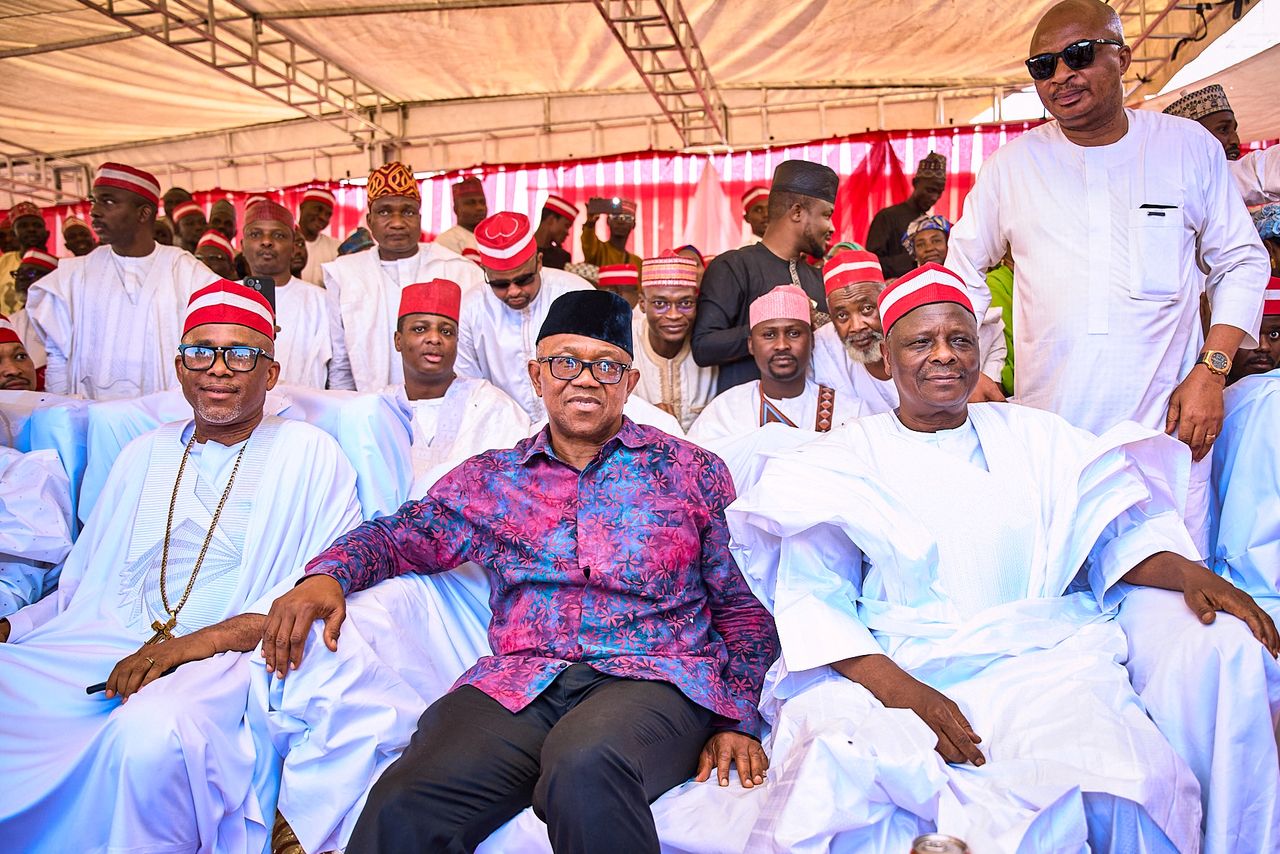
A leadership contest inside the Obi Kwankwaso (OK) Movement has exposed how fragile Nigeria’s most talked about opposition coalition has become, barely months after it was unveiled as a platform meant to fuse two of the country’s most energetic political support bases ahead of the 2027 general election.
The dispute burst into public view after a statement signed by Jackie Wayas, who described herself as National Convener of the movement, announced the appointment of former Inter Party Advisory Council chairman Peter Ameh as National Director General. The announcement was immediately contested by rival figures within the group, including the movement’s Director General, John Ughulu, who dismissed the claim and insisted that those behind it, including former National Publicity Secretary Justin Ijeh, had already been removed from their positions.
The disagreement traces back to how the OK Movement was formed. Public records show it was launched in Abuja on April 20, 2026, by supporters of former Anambra State Governor Peter Obi and former Kano State Governor Rabiu Kwankwaso, who described it as a coalition of the Obidient Movement, the Kwankwasiyya structure, the New Nigeria People’s Party and the African Democratic Congress. At inception, the group said it had built structures across all 36 states and the Federal Capital Territory, with state and zonal coordinators already appointed, positioning itself as a grassroots vehicle capable of merging northern and southern opposition constituencies that had operated separately since the 2023 election cycle.
That early cohesion has since given way to competing claims of authority. Ughulu maintains that the movement was conceived as a long term political structure, one intended to outlast the 2027 election and continue into 2031, and says Obi personally appealed to him not to take the internal disagreements to the press. Ijeh, for his part, has stepped back from his spokesman role, arguing that differences among political actors are normal but should be resolved privately rather than aired publicly, given what he called the movement’s primary objective of winning elections.
The timing of the crisis is significant. It comes only weeks after Peter Obi emerged as presidential candidate of the Nigeria Democratic Congress, with Kwankwaso as his running mate, a development the Obidient Movement has defended against separate court pronouncements it alleges are aimed at frustrating Obi’s candidacy. National Coordinator of the Obidient Movement, Dr Yunusa Tanko, has publicly rejected reports that he was removed over financial impropriety, describing the claims as unfounded, while Obi’s media office, through aide Idris Zekeri, has attributed the swirl of rumours to what it called coordinated attempts by political opponents to manufacture division within the coalition.
Kwankwaso’s spokesman, Ladipo Johnson, has acknowledged the internal wrangling but characterised it as a distraction rather than a threat capable of derailing the alliance’s 2027 ambitions, while confirming that Obi had been briefed on the dispute and was displeased with how it had unfolded.
The episode illustrates a recurring pattern in Nigerian opposition politics, where loosely structured support movements built around personality alliances rather than formal party machinery have historically struggled to survive the transition from mobilisation to electoral discipline. With the OK Movement positioned as a bridge between the Obidient base built around the 2023 Labour Party campaign and Kwankwasiyya’s northern structure, analysts following the coalition’s trajectory note that unresolved questions over who controls its Director General office and its funding architecture could shape how effectively it coordinates grassroots mobilisation heading into 2027.
For now, no faction has produced documentary evidence resolving who holds legitimate authority over the OK Movement’s leadership, leaving the dispute unsettled even as opposition parties continue separate consultations aimed at forming a united front against the ruling All Progressives Congress ahead of next year’s presidential contest.