
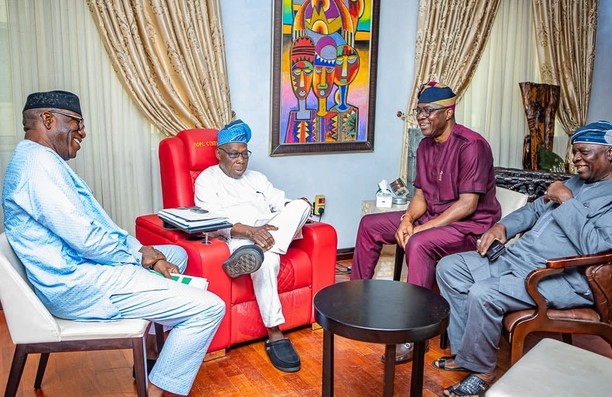
Oyo State Governor Seyi Makinde, former Ekiti State Governor Kayode Fayemi, and former Osun State Governor Olagunsoye Oyinlola met former President Olusegun Obasanjo at his Abeokuta residence to map strategy for the 2027 general elections. The closed-door consultation underlines growing unease within opposition circles over the direction of the country under President Bola Tinubu. Cross-party talks in Abeokuta usually herald major political realignments. Power in Nigeria moves through quiet rooms. The three leaders sought Obasanjo’s counsel to explore building a broader coalition against the ruling All Progressives Congress. The visit shows how political figures now look past old party lines to build fresh alliances.
Makinde remains the sole People’s Democratic Party governor in the South-West region. His presence alongside Fayemi, a prominent figure in the ruling party, signals deep friction within existing party structures. Both men face internal battles within their own political camps. Neither leader trusts his party executive today. Oyinlola brings administrative weight and military connections to this emerging alliance. Together, they represent an attempt to forge a South-West bloc capable of steering national negotiations.
Obasanjo has long played kingmaker in national election cycles. His endorsement carried significant weight in past presidential contests. He continues to urge politicians to focus on governance rather than partisan squabbles. Senior statesmen rarely host such meetings for mere courtesy. The former president retains vast networks across the northern political establishment. His advice will shape how these leaders engage potential allies across the country.
Opposition parties currently suffer from deep structural divisions following the 2023 election results. The main opposition party remains split between rival factions competing for central control. Meanwhile, smaller opposition groups face relentless internal legal fights over their leadership structure. Fragmented opposition forces cannot win presidential elections. The Abeokuta talks aim to bridge these gaps before the formal campaign season begins. A united opposition front offers the only viable path to challenge the incumbent administration effectively.
Economic hardship across the country adds urgency to these political manoeuvres. Soaring inflation and subsidy removals have strained household budgets in every state. Opposition figures hope to turn public dissatisfaction into a powerful voting bloc. Electoral victory requires more than shared grievances. The group must build a coherent policy platform that convinces voters beyond regional boundaries. Without a clear economic blueprint, early consultations will fail to yield voting power.
The Abeokuta meeting marks the start of a long realignment process before 2027. More key political actors will likely visit the former president in the coming months. These discussions will test whether regional actors can build a national consensus. Nigerian political alliances remain fragile and unpredictable. Power brokers must balance personal ambitions against collective goals to secure victory. The race for 2027 has begun in earnest.