
Adeyemi Demands Right to Testify in PFIPC Probe
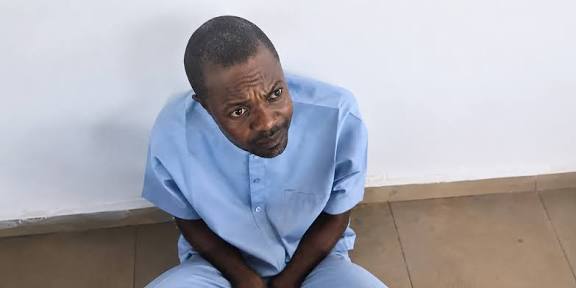
Prince Adeniyi Matthew Adeyemi, the embattled figure at the centre of the Presidential Foreign Investment Promotion Council controversy, has formally asked the House of Representatives to grant administrative clearance that would allow him to appear and testify before its ad hoc investigative panel.
In a statement issued by his legal team led by Festus Akhigbe, Adeyemi, who remains in custody, argued that any legislative report on the matter produced without his direct input would be “fundamentally flawed, incomplete and a breach of the constitutional right to fair hearing.” He maintained that he is being framed as an “isolated mastermind impostor who single handedly fabricated a Federal Government agency,” and insisted that institutional actions by multiple government bodies tell a different story.
The legal team listed a series of official steps that, according to them, validated the council’s existence. The Office of the Secretary to the Government of the Federation formally acknowledged documentation and facilitated office allocations within the Federal Secretariat Complex. The Office of the Accountant General of the Federation and the Central Bank of Nigeria acted on official papers to issue administrative budget codes, grant self accounting status, post federal civil service staff and open operational accounts. The Office of the Head of the Civil Service of the Federation approved an establishment structure and granted recruitment waivers that enabled the onboarding of 314 personnel. The Budget Office of the Federation and the National Assembly processed documentation that led to the insertion of a N1.302 billion allocation in the 2026 Appropriation Act, which was passed by both chambers and signed into law by the President. Heads of major security agencies attended programmes organised by the council, while the Economic and Financial Crimes Commission allocated a property to it, requested a N300 million processing consideration and presented a plaque of recognition.
The lawyers described it as “an administrative impossibility for an unassisted individual” to mislead so many agencies. They alleged that Adeyemi is being made a scapegoat to cover institutional lapses, procedural breakdowns and internal approvals within the government structure. They formally requested that the panel, chaired by Yusuf Gagdi, issue the necessary clearance so their client can appear in person.
The controversy erupted after the Presidency publicly disowned the PFIPC, stating that it was never established through any law, executive order or presidential directive, despite operating for years as a Federal Government agency under Adeyemi’s leadership. The body engaged government institutions, foreign investors and diplomatic missions while presenting itself as responsible for attracting foreign intervention and investment. It operated from the Federal Secretariat in Abuja and secured the N1.302 billion vote in the 2026 budget, broken down into approximately N803 million for personnel, N200 million for overhead and N300 million for capital projects.
President Bola Tinubu directed the Independent Corrupt Practices and Other Related Offences Commission to investigate the establishment, operations and funding of the council and to report within 30 days. The probe is examining how the entity obtained official recognition, secured budgetary allocations, operated bank accounts and allegedly used government documents and insignia without lawful authorisation. Police investigations have focused on allegations of forgery, impersonation and related offences linked to Adeyemi.
The House of Representatives opened its own inquiry after lawmakers raised questions about how an entity later declared unauthorised entered the national budget and operated for years without detection. At recent hearings, the committee disclosed that it had uncovered about 29 documents it described as forged. The Inspector General of Police, Olatunji Disu, informed the panel that Adeyemi could not be produced because a court clearance was required given his custody status under a subsisting remand order.
Director General of the Budget Office Tanimu Yakubu told the committee that the office did not create the PFIPC but processed submissions based on existing government records and administrative codes. He further stated that none of the N1.3 billion appropriated was released or spent because statutory conditions for expenditure were never met. Personnel funds, where due, would have been paid through the federal payroll system, and overhead provisions were withheld after concerns over the council’s legal status arose in June 2026.
The Ministry of Foreign Affairs told the panel that it had reported the council and Adeyemi to the Office of the National Security Adviser in October 2025 after discovering discrepancies in documents, and that it rejected requests for collaboration on a proposed World Investment Summit. The Office of the Head of the Civil Service has acknowledged insufficient due diligence before issuing an establishment and recruitment waiver.
The PFIPC affair has expanded beyond the question of one individual’s actions into a wider examination of budget scrutiny, inter agency coordination, document verification and oversight within the federal bureaucracy. The ongoing investigations by the ICPC and the National Assembly are expected to determine how the council came into existence, whether public funds were improperly accessed, and the extent of any institutional failures. Adeyemi’s request to testify places the issue of fair hearing at the centre of the legislative process as the committee prepares to conclude its work.
PFIPC, Adeniyi Matthew Adeyemi, House of Representatives, Yusuf Gagdi, Presidential Foreign Investment Promotion Council, ICPC Probe, N1.302 Billion Budget, Federal Secretariat, Fair Hearing, Institutional Oversight