


Naira Gains at Official Window, Slips in Parallel Market
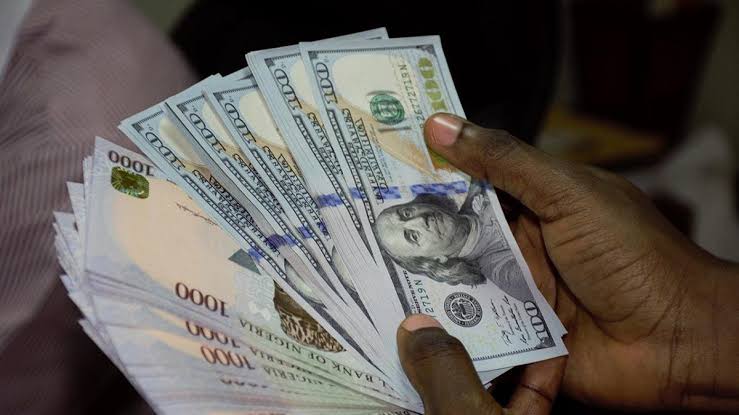
Nigeria’s foreign exchange market pulled in two directions on Tuesday, as the naira weakened in the parallel market even while strengthening at the official window, reopening a spread that had been narrowing for much of the year.
Figures reported by Vanguard showed the currency depreciating to N1,420 per dollar in the parallel market from N1,408 on Monday, a loss of N12 in a single session. At the Nigerian Foreign Exchange Market (NFEM), however, data from the Central Bank of Nigeria put the indicative rate at N1,362 per dollar, down from N1,365 on Monday, representing a N3 appreciation for the naira. The divergence widened the margin between both markets to N58 per dollar from N43 the previous day.
Interbank turnover at the NFEM rose by 13.97 per cent to N156.2 million on Tuesday from N137.05 million on Monday, following an earlier sharp jump of 132.3 per cent from N58.99 million recorded at the close of the previous week. Independent market trackers quoted street dealers in Lagos, Abuja, Kano and Port Harcourt buying dollars at about N1,410 and selling between N1,415 and N1,425, depending on location and transaction size.
The one day slip does not, on its own, reverse what has been an unusually steady year for the currency. The naira closed 2025 at roughly N1,430 per dollar at the official window, having appreciated by about seven per cent from N1,535 at the end of 2024. That was its first full year appreciation since 2012, when it firmed marginally from N158.99 to N157.29, ending a run of consecutive annual losses stretching from 2013 through 2024.
Data compiled by the trading platform African Markets showed the naira strengthening from N1,422.63 per dollar in January 2026 to N1,374.76 by the end of June, a gain of 3.36 per cent that made it the second best performing currency in Africa over the first half of the year. Of 17 major African currencies tracked, only four appreciated over the period while 13 lost ground against the dollar. The currency touched a two year high near N1,348.95 at the official window on February 12.
Volatility has also compressed. Analysis by Meristem Securities put the average official rate in 2025 at N1,519.63 per dollar, marginally weaker than the N1,486.03 average of 2024, but noted that exchange rate volatility fell sharply to 0.53 per cent. The firm projected a 2026 trading band of N1,350 to N1,528.57 per dollar.
Three factors have carried the recovery, and all three are visible in official data.
The first is reserves. CBN Governor Olayemi Cardoso told the Senate Committee on Banking, Insurance and Other Financial Institutions in July that gross external reserves stood at $52.73 billion as at July 9, 2026, up 7.9 per cent from $48.88 billion in January. “Gross external reserves increased by 7.9 percent to $52.73billion as at July 9, 2026, from $48.88billion in January 2026, while net external reserves rose by 900 percent to over $40billion which was $3.99billion in 2023,” he said. CBN data showed reserves at $52.02 billion on July 20, the highest level since January 2009, when the country held about $52.01 billion, and above the bank’s own full year projection of roughly $51.04 billion. The apex bank has put current cover at about 11 months of imports.
The second is crude. The Nigerian Upstream Petroleum Regulatory Commission reported that crude oil and condensate output averaged 1,735,398 barrels per day in June 2026, a fourth consecutive month of growth. Crude alone came in at 1.56 million barrels per day, equal to 104 per cent of Nigeria’s 1.5 million barrels per day OPEC quota and the highest crude only figure since April 2020. Peak combined output touched 1.89 million barrels in the month. NUPRC spokesperson Eniola Akinkuotu attributed the performance to “stable production operations across most producing assets and the absence of any major pipeline outages during the period under review.”
The third is the external balance. The CBN’s Balance of Payments report showed the current account surplus expanding by 255.7 per cent quarter on quarter to $4.98 billion in the first quarter of 2026, from $1.40 billion in the fourth quarter of 2025, driven by crude export earnings that rose to $8.11 billion from $6.77 billion, gas exports of $2.53 billion and refined product exports of $2.37 billion.
The same balance of payments data flagged the weak link. Personal transfers from Nigerians abroad fell to $5.30 billion in the first quarter of 2026 from $5.72 billion in the preceding quarter, with the CBN attributing part of the shortfall to leakages that push remittances outside regulated channels. Cardoso told the BusinessDay CEO Forum in Lagos in July that the bank is targeting about $1 billion monthly in formal diaspora inflows by year end, up from above $600 million currently. “We are expecting that by the end of the year, we will hit about a billion dollars a month from diaspora remittances,” he said.
That gap between formal and informal channels is precisely where the parallel premium lives. Retail demand from importers settling invoices, families paying school fees and medical bills abroad, and travellers buying cash remains poorly served by the official window, keeping street quotes elevated even when the interbank rate firms.
At its 306th meeting held in Abuja on July 20 and 21, the Monetary Policy Committee retained the Monetary Policy Rate at 26.5 per cent, held the Cash Reserve Ratio at 45 per cent for commercial banks and 16 per cent for merchant banks, and left the asymmetric corridor at plus 50 and minus 450 basis points. The rate had been trimmed from 27 per cent earlier in the year after headline inflation eased to 15.06 per cent in February.
The National Bureau of Statistics put headline inflation at 15.91 per cent in June 2026, marginally below 15.93 per cent in May and far below the 25.29 per cent of June 2025. Month on month inflation slowed to 1.66 per cent from 1.75 per cent, though food inflation accelerated on a monthly basis to 3.75 per cent from 2.98 per cent. The composite Purchasing Managers’ Index rose to 50.1 points in June from 49.6 in May, returning the reading to expansion territory.
Not every forecast points upward. BMI projected in February that the naira would weaken from about N1,354 per dollar to roughly N1,550 by the end of 2026, describing the early year rally as temporary. The CBN’s own 2026 macroeconomic outlook cautioned that “a sharp deterioration in global financial conditions or sudden capital reversals could re-ignite volatility.”
For now, the market is reading Tuesday’s move as noise within a broader trend rather than a turn. Whether that holds will depend on how much of the reserve buffer the CBN is willing to deploy, and whether formal channels can absorb the retail demand that continues to leak into the street.