

“No Officer Is Above The Law” Police Say As AIG Jimoh, VDM Face FCID
Two invitations issued days apart from the same police department have placed one of Nigeria’s most senior officers and one of its loudest online critics on the same investigative table, and reopened an uncomfortable national argument about who polices the police.
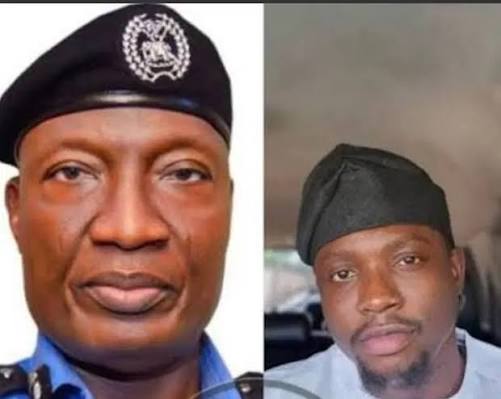
The Nigeria Police Force confirmed on Tuesday, August 4, 2026, that the Assistant Inspector-General in charge of the Force Criminal Investigation Department, Abuja, had invited AIG Moshood Olohundare Jimoh, head of Zone 2 Command covering Lagos and Ogun states, for questioning over allegations raised against him by the social media activist Martins Vincent Otse, better known as VeryDarkMan or VDM. The Force also confirmed that on July 30, 2026, the FCID in Abuja issued a formal letter of invitation to Otse, asking him to appear and substantiate the claims he has made publicly.
The disclosure came in a statement by the Force Public Relations Officer, CSP Ani Iniedu, who framed the twin invitations as evidence that rank offers no shield. “These steps reflect the Force’s standing commitment to investigate all credible allegations of misconduct, regardless of the rank of the officer involved or the public profile of the complainant, through its established channels, including the Force CID, the Force Complaint Response Unit, and, where applicable, the Office of the IGP,” the statement read.
Police said the underlying criminal matter has already been investigated and is before a court of competent jurisdiction following legal advice from the Directorate of Public Prosecutions, and that it would not be relitigated on social media. “The Force will not try this case in the media, nor will it allow its outcome to be shaped by public campaigns or commentary seeking to prejudge the officers or parties involved,” Iniedu said.
The Force added that its disciplinary architecture is anchored on the Constitution, the Police Act 2020, Police Regulations, Force Orders and other administrative procedures, which apply equally to all officers. It acknowledged the constitutional right of citizens to demand accountability, but drew a line. “Allegations must be formally submitted, investigated, and objectively assessed,” the statement said. “Any officer found culpable following investigation will face sanction in accordance with the law.” It added, “Equally, where allegations are established to be false and calculated to damage the reputation of an officer or the institution, the Force reserves the right to pursue appropriate legal remedies.”
The statement closed with a formulation the Force has repeated in similar controversies: “The Nigeria Police Force remains an institution founded on law, discipline and accountability. No officer is above the law, and no genuine complaint is ignored; nor will any officer be sanctioned outside the procedures the law prescribes.”
The controversy traces back to two killings in the Eti-Osa axis of Lagos. Sheriff Ishola Salami, a youth leader, was killed on April 18, 2023. Sixteen months later, on August 26, 2024, Prince Kazeem Ademola Akinloye, son of the Ojomu of Ajiran, was killed along Chevron Drive in the Agungi area. Both deaths occurred in daylight, and both remained unresolved for long stretches.
Police records cited publicly indicate the file was reopened after fresh evidence emerged. Two principal suspects, Safiu Fatai, also known as Fabo, and Yusuf Ismaila, alias Bariga, were arrested on January 24 and February 6, 2026, respectively. On February 19, 2026, the Lagos State Police Command declared the businessman Hammed Tajudeen Akanbi wanted over alleged involvement. Prosecutors would later allege that the suspects said Akanbi paid N2 million for the 2023 killing, an allegation that remains untested at trial.
An ex parte application filed on March 30 produced a Federal High Court order on April 10, 2026, authorising steps to secure Akanbi’s arrest. He was picked up by INTERPOL operatives in a hotel in Cotonou, Benin Republic, on April 15, 2026, and repatriated. On May 22, 2026, he was arraigned before Magistrate Lateef Owolabi on a six-count charge including conspiracy to commit murder, membership of an unlawful society and threats of violence. He pleaded not guilty, was remanded for ten days, and the file was duplicated to the DPP, with the matter adjourned to June 4, 2026 for advice. Nothing alleged against him has been proven, and he retains the presumption of innocence.
Otse entered the picture in July 2026 with a series of videos alleging that Akanbi was wrongly implicated and that investigators manipulated evidence. He argued that the suspects’ initial statements did not name Akanbi, and that later confessional statements implicating him were obtained under pressure or torture. He publicly challenged AIG Jimoh to release the original statements. “I say this with my full chest. You are extremely corrupt and a threat to the justice system of this country,” he said in one widely circulated post, adding that if his allegations could be proved false, he should be charged with criminal defamation.
Jimoh, who was Commissioner of Police in Lagos when the investigation was conducted, has denied wrongdoing, including in a television appearance in which he maintained that the case was already in court and that the Command had evidence against the suspect. Police documents referenced in press accounts state that the investigation began after a petition to the Inspector-General by Chief Rotimi Williams’ Chambers on behalf of the Ojomu Chieftaincy Family, and that on January 8, 2026 the IGP’s Principal Staff Officer conveyed a directive instructing the then Lagos CP to investigate. Those records also deny that Jimoh had personal contact with Akanbi after the arrest, stating the suspect remained in INTERPOL and SCID custody until transfer to Zone 2.
Two civil society bodies, the Centre for Human and Socio-Economic Rights and the South West Youth Alliance, publicly dismissed the corruption allegations, with CHSR President Comrade Alex Omotehinse saying Jimoh’s handling of the case had strengthened public confidence. From the other direction, Akanbi’s counsel, Adedotun Ajulo and Damian Ukpa, told a press conference in June that their client was the victim of a media trial rooted in long-running land and chieftaincy disputes in Ajiran, and confirmed a petition to the Police Service Commission accusing Jimoh of abuse of office, criminal defamation and violating the presumption of innocence. None of these competing claims has been established by any court or disciplinary authority.
Otse himself has already resisted one summons. Days before the FCID letter surfaced publicly, he rejected an invitation to appear before police in Lagos, arguing in a video recorded outside FCID headquarters in Abuja that any inquiry involving him should hold in the capital, and saying he would take petitions to the National Assembly, the ICPC and the Office of the National Security Adviser.
The dispute lands on well-documented terrain. The third national corruption survey, produced by the National Bureau of Statistics with UNODC and released in July 2024, estimated that roughly N721 billion, about 1.26 billion dollars or 0.35 per cent of GDP, was paid in cash bribes to public officials in 2023, with an average bribe of N8,284. Police officers ranked third by contact rate at 20 per cent, behind health workers at 30 per cent and public utility officers at 24 per cent. More than one in three interactions between citizens and officials, 34 per cent, involved bribery either paid or requested and refused. Reporting improved, rising from 3.6 per cent in 2019 to 8.6 per cent in 2023, yet confidence in government anti-corruption efforts fell by more than ten percentage points in all six geopolitical zones over the same period.
Internal discipline has its own record. The Police Service Commission, chaired by DIG Hashimu Argungu (retd), announced this year the dismissal of four senior officers and sanctions against 31 others, including ten reductions in rank, two compulsory retirements, ten severe reprimands and seven exonerations. In December 2024, the Commission worked through 109 pending disciplinary matters, 23 appeals and petitions and 13 court judgments, dismissing 18 senior officers. In October 2025, it reinstated officers including ACP Grace Obiageli Ejiofor after reviewing 24 appeals, and separately dismissed petitions against a Deputy Inspector-General as baseless. The pattern shows a system that sanctions, but also one that reverses itself often enough to keep public confidence brittle.
Otse’s own history with enforcement agencies is part of why this case resonates. He was detained after a police invitation over a uniform video in October 2024, and an Abuja Chief Magistrate issued a bench warrant on March 13, 2025 over alleged criminal defamation of gospel singer Mercy Chinwo after he missed a March 5 summons. On May 2, 2025, EFCC operatives arrested him at a GTBank branch in Abuja; he was released on May 7 after five days, following protests and the #FreeVDM campaign, with his counsel Deji Adeyanju noting no formal charge had been filed at the point of release.
The legal backdrop remains contested. The Cybercrimes Act of 2015, amended on February 28, 2024 to narrow Section 24 on cyberstalking, has continued to draw criticism. Reporters Without Borders documented at least eight journalists arrested, prosecuted or detained under the law between February and September 2024, after the amendment. The Committee to Protect Journalists has recorded dozens of Nigerian journalists facing cybercrime-related action, including the remand of Secret Reporters journalist Stanley Ugagbe in July 2026. A fresh amendment bill, HB 2740, sponsored by Hon. Akintunde Rotimi, passed first reading in the House of Representatives on April 22, 2026, seeking to shield journalists and whistleblowers from vague interpretations of Section 24.
Three processes are now running in parallel and will not resolve at the same speed. The criminal trial of Akanbi proceeds on DPP advice. The FCID administrative review of Jimoh will determine whether any case answerable under Police Regulations exists, with the Police Service Commission holding the constitutional power to discipline officers of his rank. And the FCID’s invitation to Otse tests whether allegations made to millions of followers can be converted into evidence admissible in a formal proceeding.
The Force has stated that culpable officers will be sanctioned and that false allegations may attract legal remedies. Both outcomes remain open. What is already clear is that the case has become a live measure of whether Nigeria’s internal police accountability machinery can produce a result the public accepts, at a moment when the same public reports declining faith in official anti-corruption action.